What to Eat on the Mediterranean Diet: A Complete Food List
A practical, categorised reference for the Mediterranean diet - what to eat freely, what to moderate, and what to keep occasional - with notes on why each category matters and how to build a weekly shopping list from it.
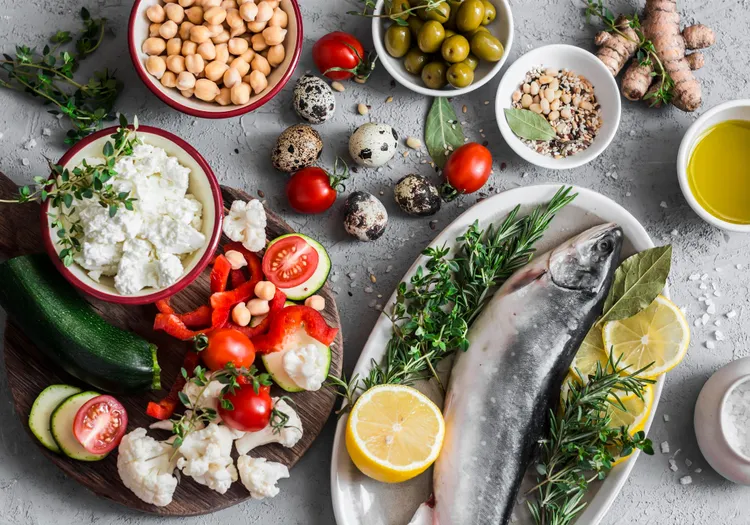
The Mediterranean diet does not have a banned foods list. It has a frequency structure: some foods appear at every meal, some a few times a week, some a few times a month. Understanding that structure is more useful than memorising what you can and cannot eat, because it tells you how to build a meal rather than just what ingredients to buy.
Eat Freely: The Foundation Foods
Vegetables
There is no upper limit on vegetables in a Mediterranean diet. Tomatoes, courgettes, aubergines, peppers, leafy greens, fennel, artichokes, cucumbers, onions and garlic appear constantly across Mediterranean cuisines. Aim for at least two to three different vegetables per meal, cooked or raw. Variety matters more than volume: different vegetables provide different polyphenols, fibres and micronutrients.
Legumes
Chickpeas, lentils (green, red, black, Puy), white beans (cannellini, butter beans, gigantes), fava beans and split peas are eaten several times a week. Canned legumes are completely acceptable and enormously practical - rinse and drain before using. Dried legumes are cheaper and have a slightly better texture; soak overnight and cook from scratch when time allows.
Whole Grains
Wholegrain bread, brown rice, farro, bulgur wheat, barley, oats and wholegrain pasta. Not refined white pasta in large portions - whole or semi-whole grains in moderate portions alongside significant vegetables. Bread is eaten with most meals, typically to accompany rather than to dominate.
Olive Oil
The primary fat source. Used for sauteing, roasting, dressing salads, dipping bread and finishing dishes. Extra virgin for dressing and low-to-medium heat cooking; a lighter olive oil for higher heat. Used in generous quantities, not measured out cautiously.
Fresh Fruit
Eaten as a snack and as dessert - figs, grapes, citrus, pomegranates, stone fruits, melon. The default sweet course in traditional Mediterranean meals is a piece of fruit, not a baked good. This is one of the most significant practical differences from Western eating patterns.
Nuts and Seeds
Almonds, walnuts, pine nuts, pistachios and sesame (as tahini) feature regularly - as snacks, as cooking ingredients, as toppings. A small handful of walnuts or almonds daily is consistent with the diet and contributes to its omega-3 and polyphenol content.
Herbs and Spices
Oregano, thyme, rosemary, basil, flat-leaf parsley, mint, bay, cumin, coriander, cinnamon, sumac, za'atar, smoked paprika. Mediterranean cooking flavours with herbs and spices rather than salt, which is why food tastes complex without being overly salty.
Eat Regularly: Two to Four Times Per Week
Fish and Seafood
At least twice a week, prioritising oily fish: sardines, mackerel, anchovies, salmon, sea bass, sea bream, tuna (fresh or tinned), prawns and mussels. Fresh is excellent; tinned and preserved fish - anchovies, sardines, tinned tuna - are equally valid and often more practical.
Eggs
Three to four eggs per week is consistent with the Mediterranean diet. Used in omelettes, baked into dishes like shakshuka, or as the protein in a simple supper with vegetables and bread.
Poultry
Chicken and turkey appear several times a week - grilled, roasted or braised, ideally with the skin on for flavour. Processed poultry products are not part of the diet.
Dairy
Greek yoghurt, labneh, feta, halloumi, pecorino, parmesan, mozzarella and ricotta in moderate amounts. A spoonful of yoghurt at breakfast, a crumble of feta over a salad. Full-fat versions are the traditional and recommended choice.
Eat Occasionally: A Few Times Per Month
Red Meat
Lamb, beef, pork - typically in smaller portions than the Western norm, often as a flavouring in a dish rather than the centrepiece. A slow-cooked lamb and white bean stew where the lamb is secondary to the beans and vegetables is a good model. Processed red meat is minimal.
Sweets and Pastry
Baklava, halva, fruit tarts, biscuits and cakes exist in Mediterranean food culture and are eaten with pleasure - but infrequently, at celebrations and on weekends, rather than as a daily habit. The daily sweet is fruit.
Refined Grains and Processed Food
White bread in large quantities, white pasta as a main course, processed breakfast cereals, packaged snacks - these are peripheral to the traditional diet and should be peripheral to yours.
Not sure how much to eat overall? Consillar's nutrition calculators include a TDEE calculator, macro calculator, and protein calculator to give you a personalised starting point.
Building a Weekly Shopping List
A practical Mediterranean shopping list each week: two to three types of seasonal vegetables (enough for every meal), one or two cans of legumes plus dried lentils, one or two portions of fish, a dozen eggs, a tub of Greek yoghurt, a block of feta, wholegrain bread, a bag of whole grains (rice, farro or bulgur), olive oil, tinned tomatoes, fresh herbs, lemons and garlic. Red meat once every week or two at most.
For the pantry items worth keeping permanently stocked, the Mediterranean pantry guide covers 12 ingredients that make it possible to cook a proper Mediterranean meal on any night without a specific shopping trip. For the full picture of how these foods fit into an eating pattern, see the Mediterranean diet beginner's guide.
Before you write your shopping list, Consillar's meal prep planner can map out a full week of meals against your calorie goals so you only buy what you will actually use.
Latest