How to Make Strawberry Jam Without Pectin
Classic strawberry jam made with just fruit, sugar, and lemon juice. No commercial pectin needed - just the right technique and a cold saucer.
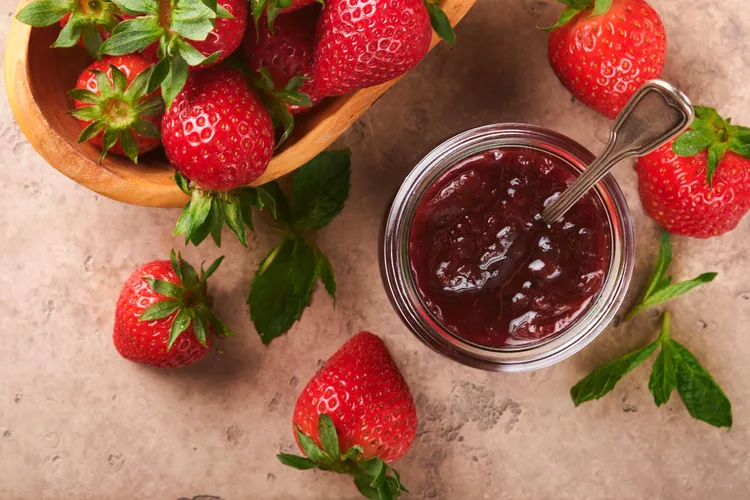
Strawberries are low in natural pectin, which is why so many recipes call for commercial pectin. You do not need it. What you need is enough lemon juice to raise the acid level, a full rolling boil, and patience with the wrinkle test. From 1kg of strawberries you will get roughly 4 to 5 standard 340g jars.
Recipe: Classic Strawberry Jam
Makes: approximately 4 to 5 x 340g jars | Prep: 20 minutes | Cook: 25 to 35 minutes
Ingredients
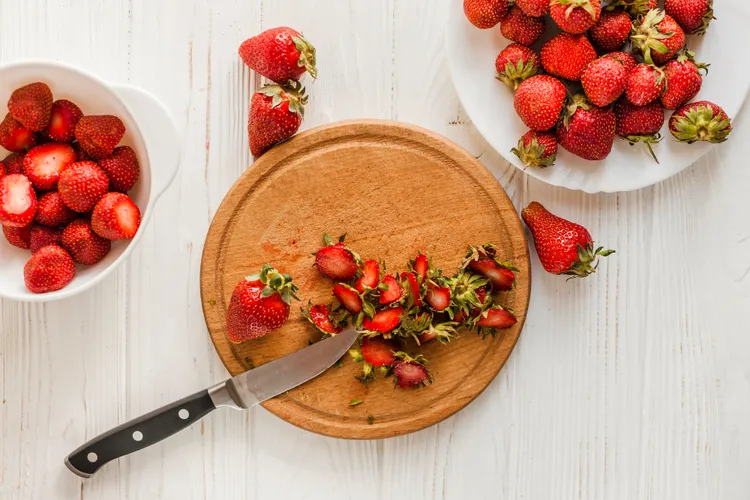
- 1kg fresh strawberries, hulled and halved
- 800g white granulated sugar
- 3 tablespoons fresh lemon juice (from about 2 lemons)
- 1 teaspoon unsalted butter (optional, reduces foam)
Instructions
- Put two small saucers in the freezer now. You will need them for the wrinkle test.
- Sterilise your jars. Wash in hot soapy water, rinse, then place upright in a 120-degree-Celsius oven for 15 minutes. Leave in the oven until you need them.
- Combine strawberries, sugar, and lemon juice in a large heavy-based pan. Stir over low heat until the sugar fully dissolves, 10 to 15 minutes. The mixture will become syrupy and you should feel no grit when you run a spoon along the bottom.
- Add butter if using. Increase heat to high and bring to a full rolling boil - one that does not subside when you stir. Skim off any foam that rises.
- Boil hard for 8 minutes, then start testing. Drop a teaspoon of jam onto a cold saucer, wait 30 seconds, then push it with your finger. If the surface wrinkles, you have a set. If it is still liquid, boil for another 2 to 3 minutes and test again.
- Most batches reach set between 10 to 20 minutes of rolling boil, depending on the water content of the strawberries. Check every 2 to 3 minutes once you hit 10 minutes.
- Remove from heat. Leave to stand for 5 minutes - this helps strawberry pieces stay suspended rather than floating to the top.
- Ladle into warm sterilised jars, filling to within 5mm of the rim. Wipe rims clean. Seal immediately with lids.
Why Lemon Juice Matters Here
Strawberries are low in both pectin and acid. The lemon juice does two jobs: it provides the acid needed for the pectin gel to form, and it brightens the flavour. Even in low-pectin fruit, there is enough natural pectin to work with if the acid level is right. Do not skip it or substitute with bottled lemon juice, which has less consistent acidity than fresh.
Reading the Wrinkle Test
Take the pan off the heat while you test - jam keeps cooking. A clear wrinkle after 30 seconds on a cold saucer means you are done. A very firm wrinkle after 10 seconds means you have slightly over-set - it will still taste good but will be firmer. Liquid jam that shows no wrinkle means more cooking time. Return the pan to the heat and boil for another 3 minutes before testing again.
Variety Matters More Than You Think
Different strawberry varieties have meaningfully different pectin levels. Older garden varieties and British-grown strawberries typically have better flavour and slightly higher pectin than out-of-season imported fruit. The best strawberries for jam are small, slightly underripe, and deeply fragrant. Large, uniformly shaped supermarket strawberries make adequate jam but you will often need to boil longer to reach set.
If you are using imported or late-season strawberries, add an extra tablespoon of lemon juice and consider halving a cooking apple into the batch during the initial simmer. Remove it before adding sugar. The pectin it contributes is invisible in the finished jam but significantly improves the set.
Maceration: The Optional Step Worth Taking
Macerating strawberries - combining them with the full sugar measure and leaving overnight before cooking - produces a noticeably better jam. The sugar draws out the juice, creating a syrup that concentrates flavour. When you cook it, the jam reaches set faster because some of the water has already been drawn out. The colour stays brighter and the fruit pieces stay more intact if you want a chunky jam. It requires planning ahead but takes no additional effort.
Controlling Texture: Chunky vs Smooth
For chunky jam, halve or quarter strawberries and resist the urge to stir aggressively. For a smooth jam, crush the fruit thoroughly with a potato masher before cooking, or blend briefly after the fruit is soft but before adding sugar. Either approach works with this recipe - it is a matter of preference.
The Rest Period Explained
Leaving the jam to stand for 5 minutes off the heat before jarring is specifically to prevent strawberry pieces from floating to the top of the jar. During boiling, fruit pieces lose density and tend to rise. A brief rest allows the jam to cool slightly and thicken enough to hold the fruit in suspension more evenly. Stir gently once before jarring to redistribute the pieces.
Storing Strawberry Jam
Sealed jars keep in a cool, dark cupboard for up to 12 months. Once opened, refrigerate and use within 4 to 6 weeks. If you did not water bath can the jars, keep them refrigerated even before opening and use within 3 months. For the full breakdown on shelf life and storage, see the homemade jam storage guide.
This recipe is part of the complete guide to making jam at home, which covers pectin, sugar ratios, setting point, and every technique you need for consistent results.
Nutrition (per tablespoon, approx. 20g)
- Calories: approximately 50 kcal
- Carbs: 13g (of which sugars 13g)
- Protein: 0g
- Fat: 0g
Gifting and Labelling
Strawberry jam is one of the most universally appreciated homemade gifts. Use 200ml jars for gifting - they are one or two servings per person and the smaller format means the recipient eats it fresh rather than leaving a large jar open in the fridge for months. Label with the date made. A simple handwritten label on brown paper beats a printed one every time. Include the batch date so they know how fresh it is and a note that it keeps for 12 months sealed or 6 weeks once opened.
Using Strawberry Jam in Cooking
Beyond toast and scones, strawberry jam has genuine kitchen utility. A tablespoon stirred into a vinaigrette adds sweet acidity that works well with bitter greens and goat cheese. Warmed and thinned with a splash of water, it becomes a quick sauce for ice cream or cheesecake. Swirled into yoghurt for breakfast. Spread inside a crepe with ricotta and lemon zest. The jam you made from 1kg of summer strawberries will outlast summer in more ways than one.
Why This Works Without Commercial Pectin
Commercial pectin is a concentrated extract, usually from apple or citrus peel. It makes jam-making faster and more predictable, particularly for low-pectin fruit. But it also makes the finished jam taste slightly different - cleaner, sometimes thinner in flavour. Jam made without added pectin, cooked longer to extract the fruit's own pectin and concentrate its flavour, tastes more like the fruit. It takes more attention and a reliable wrinkle test, but the result is worth it. For the full technique and context on pectin in jam-making, see the complete homemade jam guide.
Pairing Suggestions
Classic strawberry jam works on toast, scones, and pancakes. Beyond those: a teaspoon swirled into Greek yoghurt for breakfast. Spread inside a sponge cake with whipped cream. A tablespoon stirred into sparkling water with ice for a fast summer drink. Warmed gently and spooned over vanilla ice cream. Used as a filling for doughnuts or thumbprint biscuits. The flavour of a well-made strawberry jam without pectin - intensely fruity, slightly tart, not too sweet - holds up to all of these in a way that a very sweet, commercial-pectin jam does not. It also makes an excellent gift. A 200ml jar labelled with the date and packed with a handwritten note costs almost nothing to produce and is received better than most purchased gifts. For the full context on jam-making technique, see the complete homemade jam guide.
Pro Tips for Better Strawberry Jam
Hull strawberries close to cooking time, not hours in advance. Cut fruit oxidises and loses colour even before cooking starts. For the deepest red colour in the finished jam, cook quickly at high heat rather than slowly at a lower simmer - the faster the water drives off, the less time the colour pigments have to degrade. Adding the butter at the start (before the boil begins) works better than adding it mid-way - it gets distributed into the jam from the first bubble rather than sitting on top as a foam suppressant.
If your strawberries are very large, quarter rather than halve them. Smaller pieces release juice faster and the fruit softens more evenly. Very large strawberry halves can still be slightly firm when the jam sets, which is a texture issue rather than a flavour one but worth avoiding. For a completely smooth jam with no chunks, blend the cooked fruit before adding sugar - this is less traditional but produces a jam with excellent spreadability that some people prefer.
The wrinkle test is more reliable than the thermometer for strawberry jam specifically because strawberries vary so much in water content. A very ripe, juicy punnet of summer strawberries will take 20 minutes of rolling boil to set. A slightly underripe supermarket punnet in March might set in 10. The thermometer tells you you are in the right range. The wrinkle test tells you the actual state of the pectin gel. Trust the wrinkle. For the complete setting point method with all three tests explained, see the jam setting point guide.
Strawberry Jam and Food Safety
Strawberry jam is one of the safest foods to make at home because its combination of high sugar and added lemon juice creates a very hostile environment for harmful microorganisms. The main risk in strawberry jam is mould from inadequate sterilisation or a failed seal, not bacterial pathogens. Mould is visible before you eat it. As long as you sterilise properly, seal correctly, and discard any jar showing mould or a failed seal, strawberry jam is a low-risk preserve. The full guidance on sterilisation methods is in the jar sterilisation guide. The guidance on recognising a failed seal and what to do about it is in the jam storage guide. Between those two references and the technique here, you have everything needed for safe, reliable strawberry jam-making at home.
Quick Reference Summary
This article is one of 12 guides in the CookThisMuch homemade jam series. The complete article, The Home Cook's Complete Guide to Making Jam from Scratch, covers the full framework: pectin types, sugar ratios, setting point science, sterilisation methods, water bath canning, and storage shelf life by type. Each cluster guide in the series, including this one, covers a specific fruit, technique, or problem in depth with a tested recipe. Whether you are making your first single jar or working through a summer glut of stone fruit, the technique is the same: soft fruit first, sugar second, rolling boil to setting point, hot jar, sealed lid. The details within that sequence are what this series covers, article by article, so you have a reliable reference for every variation you will encounter in a season of jam-making at home.
All recipes in this series use standard kitchen equipment. None require specialist preserving pans, pressure canners, or commercial-grade ingredients. The most useful single investment for anyone making jam regularly is a digital sugar thermometer with a clip. Beyond that, a heavy-based pan, clean glass jars, and two cold saucers in the freezer are all you need to produce consistently good results.
Yield and Cost
From 1kg of strawberries and 800g of sugar you will get approximately 4 to 5 standard 340g jars of finished jam. At the cost of seasonal strawberries and basic white sugar, the ingredient cost per jar is a fraction of equivalent quality shop-bought jam. The yield is slightly lower than commercial jam because this recipe uses less sugar - commercial jam at 65 percent sugar gives higher yield per kilogram of fruit, but the flavour is proportionally more sugary and less fruity. The slight yield reduction is worth it. Factor in 30 to 40 minutes of active cooking time per batch. At 5 jars per batch, this is efficient work for the quality of result.
Latest