What Pairs With Tomatoes (Flavor and Ingredient Pairings)
The chemistry behind classic tomato pairings like basil and mozzarella, plus dairy, olive oil, herb, and a few unexpected combinations worth trying.
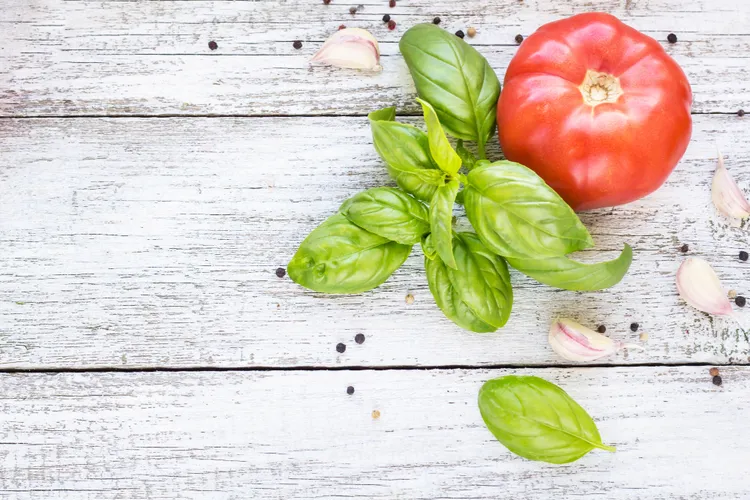
Basil and tomato didn't become a classic pairing by accident. The two share overlapping aromatic compounds, which is a big part of why the combination reads as more cohesive than most herb-and-vegetable pairings, and understanding that principle opens up other pairings that aren't as obvious.
The Classic Mediterranean Trio: Tomato, Basil, Garlic
Basil contains estragole and linalool, aromatic compounds that overlap partially with compounds naturally present in ripe tomato, which is part of the chemical explanation for why the pairing tastes unified rather than like two separate flavors placed side by side. Garlic adds a pungent, savory sharpness that contrasts with tomato's sweetness rather than competing with it, rounding out the combination into something more complete than either ingredient alone. This is the backbone of an enormous share of Italian and Mediterranean cooking for good reason.
Dairy: Mozzarella, Parmesan, Ricotta
Fresh mozzarella's mild, milky richness works as a textural and flavor counterpoint to tomato's acidity, which is the entire logic behind caprese salad, arguably tomato's second most famous pairing after basil. Parmesan brings its own glutamate load to the pairing, stacking umami on umami in a way that reads as deeply savory rather than one-note. Ricotta, softer and creamier than mozzarella, works particularly well with cooked tomato, where its mildness tempers a sauce's acidity without fully neutralizing it.
Olive Oil and Balsamic Vinegar
Olive oil is close to a structural requirement rather than an optional pairing: because lycopene is fat-soluble, olive oil isn't just a flavor addition, it's functionally improving how much of the tomato's signature nutrient your body can actually absorb, as covered in our nutrition guide. Balsamic vinegar's sweetness and acidity mirror tomato's own acid-sugar profile closely enough that the two tend to amplify each other rather than clash, which is why balsamic shows up constantly in tomato salads and roasted tomato preparations.
Alliums: Garlic and Onion
Beyond the classic tomato-basil-garlic trio, onion deserves separate mention. Sautéed onion, cooked slowly enough to soften and slightly caramelize, adds a background sweetness that complements tomato's own sugar content rather than competing with it, which is why so many tomato sauce bases start with a sautéed onion foundation before the tomatoes ever go in the pot.
Herbs Beyond Basil
- Oregano: More assertive and slightly bitter compared to basil, common in heartier, longer-cooked tomato dishes rather than fresh raw preparations.
- Parsley: A milder, grassier counterpoint that works well as a finishing herb, adding brightness without basil's stronger aromatic presence.
- Thyme: Its earthy, slightly woody notes suit slow-cooked tomato sauces and stews particularly well, standing up to long simmer times better than more delicate herbs.
Unexpected Pairings Worth Trying
A few combinations that work for less obvious reasons:
- Tomato and stone fruit (peach, nectarine): Both carry a similar acid-sugar structure, and pairing them in a summer salad plays that similarity up rather than treating them as an odd combination.
- Tomato and anchovy or fish sauce: A small amount of a fermented fish product adds a second, deeper glutamate source alongside tomato's own, intensifying umami without tasting overtly fishy when used sparingly.
- Tomato and watermelon: Both share a similar aromatic backbone, part of why watermelon-tomato salads, though unusual-sounding, have become a legitimate summer menu item at a lot of restaurants.
What to Avoid Pairing Heavily
Very bitter greens (raw kale, in particular) can clash with tomato's acidity rather than balancing it, reading as sharp against sharp rather than a genuine contrast. This isn't a hard rule, cooked or massaged kale softens the conflict considerably, but it's worth knowing why a raw kale-and-tomato salad sometimes tastes harsher than expected.
Putting Pairings Into Practice
Our Tomato and Olive Focaccia recipe layers several of these pairings at once: tomato with garlic, olive oil, and Parmesan, plus rosemary standing in for the more common basil. For a lighter application of the same principles, our Spinach & Tomato Salad uses tomato with basil, lemon, and olive oil in a simpler, more direct combination.
Sweet Pairings: Tomato in Dessert and Fruit-Forward Contexts
Tomatoes are botanically a fruit, and while savory applications dominate, their natural sugar content supports some sweeter pairings too. A small amount of good balsamic vinegar reduced to a syrup, drizzled over roasted tomatoes with a touch of honey, pushes the dish toward dessert territory, a combination more common in professional kitchens than home cooking but worth trying for anyone curious about the boundary between savory and sweet tomato preparations. Green tomato preparations in particular, being naturally more tart, have a long tradition in sweeter applications like green tomato pie in some regional American cooking.
Regional Pairing Traditions
Different culinary traditions have independently arrived at tomato pairings that reflect locally available ingredients as much as any universal chemical principle. Mexican cooking pairs tomato heavily with lime, cilantro, and chili, a combination that leans on acid and heat rather than the fat-and-herb approach common in Mediterranean cooking. Indian cooking frequently pairs tomato with warming spices, cumin, coriander, garam masala, and a dairy element like yogurt or cream, producing a completely different flavor direction from either the Mediterranean or Mexican approaches while still relying on the same underlying acid-sugar-umami structure covered in our food science guide.
Protein Pairings
Tomato's acidity makes it a natural partner for richer, fattier proteins, since the acid cuts through and balances heaviness the way a squeeze of lemon might on a fatty fish. Pork, particularly fattier cuts, pairs well with tomato-based sauces for this reason, as does duck in some classic preparations. Seafood, particularly shellfish, pairs well with tomato through shared glutamate content, both carrying natural umami that reinforces rather than competes, which is part of the logic behind tomato-based seafood stews found across multiple coastal culinary traditions.
Cheese Beyond Mozzarella and Parmesan
Feta's brininess provides a sharper, saltier contrast to tomato's sweetness than milder mozzarella, common in Greek and eastern Mediterranean tomato salads. Goat cheese's tang plays a similar role to feta but with a creamier texture, working well with roasted tomato where the cheese can soften slightly from residual heat. Aged, harder cheeses like a well-aged cheddar or gouda bring their own glutamate-rich savoriness, stacking with tomato's natural umami in a way that reads as deeply satisfying, though this combination is less traditional and more of a modern pairing worth experimenting with.
Bread and Starch Pairings
Bread's role with tomato goes beyond simply serving as a vehicle; a crusty, slightly stale bread actually absorbs tomato's juices in a way that improves the bread rather than just soaking it, the entire principle behind panzanella, the classic Tuscan bread and tomato salad. Pasta's neutral starch backdrop lets tomato sauce's flavor take center stage without competing, part of why the combination became such a dominant culinary pairing in the first place. Rice functions similarly in tomato-based rice dishes found across multiple cuisines, absorbing and carrying tomato's flavor through the starch itself during cooking.
Building Your Own Pairing Logic
The underlying principle across all of these pairings is contrast and reinforcement working together: something rich (oil, cheese, fatty protein) to round out tomato's acidity, something aromatic (herbs, alliums) to layer complexity, and often something else naturally high in glutamate (cheese, cured meat, seafood) to reinforce tomato's own umami rather than leaving it to work alone. Once this framework feels intuitive, building a new tomato pairing becomes a matter of hitting these three notes deliberately rather than guessing.
For the complete lifecycle, from seed to plate, see the complete Tomatoes: Seed to Plate guide.
A Quick Reference Table
- Classic and reliable: Basil, garlic, olive oil, mozzarella.
- Bright and acidic: Balsamic vinegar, lemon, lime.
- Savory reinforcement: Parmesan, anchovy, cured meat.
- Worth experimenting with: Stone fruit, watermelon, warming spices.
Starting From What You Already Have
The most practical way to use this guide isn't memorizing every pairing listed but recognizing the underlying categories, fat, acid, aromatic, umami reinforcement, and checking what's already in the kitchen against them. A tomato, a wedge of whatever cheese is in the fridge, a drizzle of whatever vinegar is on the shelf, and a handful of whatever herb is growing on a windowsill will very often produce something genuinely good, even without following a specific recipe.
Frequently Asked Questions
What's the most versatile single pairing to keep on hand? Garlic and olive oil together form the most broadly useful base, compatible with nearly every cuisine and cooking method covered in this guide, from a raw dressing to a slow-simmered sauce.
Why does fresh basil wilt so quickly when added to a hot dish? Basil's aromatic oils are volatile and heat-sensitive, breaking down quickly at high temperatures, which is why it's typically added at the very end of cooking or used entirely raw as a garnish rather than cooked for an extended time alongside the tomatoes themselves.
Are dried herbs a reasonable substitute for fresh in tomato pairings? For longer-cooked dishes, oregano or thyme in particular hold up reasonably well dried, since their flavor compounds are more heat-stable than basil's. For quick or raw preparations, fresh herbs generally produce a noticeably better result, since dried herbs need cooking time to fully rehydrate and release their flavor.
Does the pairing logic change for green, unripe tomatoes? Green tomatoes, being significantly more acidic and less sweet than ripe ones, often pair better with richer, fattier preparations (frying in cornmeal, for instance) and bolder, sweeter counterpoints, rather than the lighter fresh pairings that suit a fully ripe tomato.
Trusting the Framework Over Strict Recipes
Pairing guidance works best as a starting point for judgment, not a fixed rulebook. Once the underlying logic, fat to round out acidity, aromatics to add complexity, a second umami source to reinforce depth, feels familiar, deviating from any specific pairing listed here in favor of what's actually on hand is not just acceptable but often how the best home cooking happens.
Pairings Change With the Season
Early and late-season tomatoes, picked before or after peak summer ripeness, tend to be more acidic and less sweet than midsummer fruit, which shifts which pairings work best. Leaning on richer, sweeter counterpoints (a touch of honey, a longer-roasted preparation) for shoulder-season fruit, and simpler, brighter pairings for peak-season fruit that doesn't need much help, adapts the same underlying framework to what's actually available at different points in the growing season.
Pairing Tomatoes With Grains Beyond Pasta and Rice
Grains beyond the obvious pasta and rice pairings work well with tomato too. Couscous, quinoa, and farro all bring a neutral, absorbent base similar in function to rice or pasta, while offering a different texture and, in the case of farro particularly, a chewier bite that holds up well against a robust, long-simmered tomato sauce or stew rather than getting lost the way a more delicate grain might.
Trying even one or two of these grain pairings alongside the more familiar pasta and rice options is a low-effort way to keep tomato-based meals from feeling repetitive across a long growing season.
Rotating through different grains and starches keeps the same core tomato pairing principles feeling fresh across weeks of peak-season cooking.
None of these grain swaps require any change to the tomato preparation itself, only the base they're served over, making them one of the easiest ways to vary a familiar meal.
The goal isn't novelty for its own sake, it's simply having more than one reliable way to serve a familiar tomato dish when the usual pasta or rice base starts to feel routine.
A pantry stocked with a couple of grains beyond the usual pasta box makes this kind of variation an easy, low-cost habit rather than something that requires a special shopping trip each time.
Keep a mental shortlist of two or three go-to grain swaps, and reaching for tomato-based cooking on a busy week stops feeling repetitive even after using the same core pairing logic many times over.
Latest









