How Vinegar Tenderizes Meat: The Science Behind Acidic Marinades
Acid denatures proteins and helps seasonings penetrate - but the relationship between vinegar, time, and meat texture is not linear. Too much acid for too long creates chalky, dry meat. Here's the actual science and the timing guidelines that follow from it.
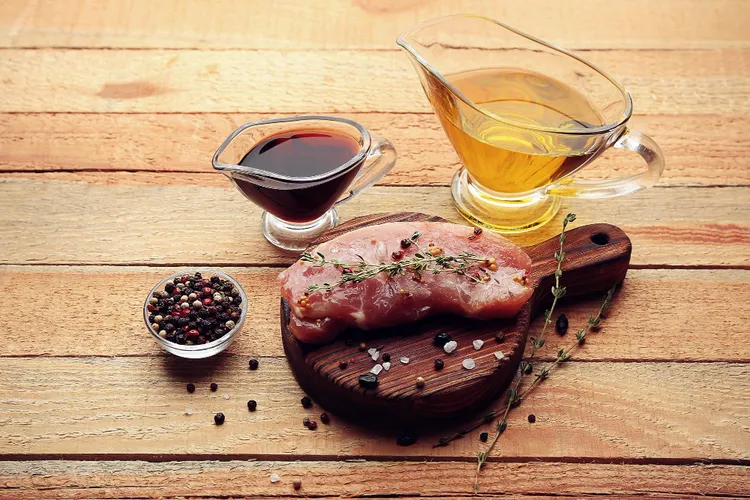
Acidic marinades work, but not in the way most recipes imply. The common shorthand - "the acid breaks down the meat, making it tender" - is accurate up to a point. Past that point, the acid continues working and the result is overmarinated: the protein surface becomes chalky or mushy, the exterior looks like it's been partially "cooked" without heat, and no amount of time on the grill or in the pan will undo it. The window of effective marinating is narrower than most people assume and varies significantly by protein type, thickness, and acid concentration.
What Acid Actually Does to Meat
Acetic acid - the active component of vinegar - denatures proteins by disrupting the hydrogen bonds that maintain their tertiary structure. On the surface of meat, this produces two useful effects. First, it softens the outermost layer of muscle fiber, creating a slightly more permeable surface that absorbs seasonings and flavors more readily. Second, it affects the myoglobin at the surface, influencing both color and texture in the final cooked product.
The problem is that these effects don't stop. As acid penetrates deeper into the meat - slowly but continuously - it keeps denaturing proteins in the interior. Extended exposure produces a texture that's often described as mealy, stringy, or dry even when the internal temperature is correct. The exterior might look and feel oddly cooked before heat is applied. None of this is visible from the outside until the meat is cut or eaten.
The concentration of acid in your marinade determines how quickly these effects occur. Red wine vinegar at 7% produces a marinade that's significantly more aggressive on protein surfaces than a marinade made with rice vinegar at 4%. A marinade that's 50% red wine vinegar applies acid at nearly 3.5% concentration to the meat surface - effective and fast. A marinade that's 10% red wine vinegar applies roughly 0.7% - much gentler and slower to act.
Timing Guidelines by Protein
Fish and Shellfish
15 to 30 minutes maximum for fillets and whole pieces. 10 to 15 minutes for anything thin or delicate. Fish proteins denature at much lower temperatures than red meat - they're also more sensitive to acid exposure by a similar margin. A long acid marinade effectively "cooks" the exterior the way ceviche does, producing a texture change before heat is applied. The lemon-butter baked salmon with asparagus uses citrus briefly - the same principle applies. Use a low-acid vinegar (rice vinegar) and keep it to no more than 20% of the total marinade volume.
Chicken Breast and Tenderloin
30 minutes to 2 hours. Beyond 2 hours in a high-acid marinade, the exterior starts to break down noticeably - the surface becomes pale and slightly mealy when cooked. If you need to marinate overnight, reduce the vinegar concentration to no more than 10% of the total marinade and use a lower-acid vinegar like ACV or rice vinegar. The flavor gains are real but modest beyond 2 hours; the texture risks increase substantially.
Chicken Thighs and Legs
1 to 8 hours. The higher fat content and connective tissue in bone-in thighs buffer the acid significantly compared to breast meat. A balsamic or ACV marinade for 4 to 8 hours produces excellent results - the exterior develops good flavor without the chalky texture problem that affects lean white meat. The balsamic chicken and mushrooms recipe uses balsamic as a braising component - the same principle of acid acting in combination with fat and heat to produce depth and tenderness.
Pork Chops and Tenderloin
1 to 4 hours for chops. Up to 6 hours for tenderloin. Pork is similar to chicken breast in its sensitivity to prolonged acid exposure - the tenderloin especially, which has very little fat. Apple cider vinegar is a natural pairing for pork: combine 3 tbsp ACV, 3 tbsp olive oil, 2 cloves minced garlic, 1 tsp brown sugar, 1/2 tsp smoked paprika, and salt. Marinate chops for 2 to 4 hours at room temperature or up to 8 hours refrigerated.
Pork Shoulder and Ribs
Overnight, up to 24 hours. The fat content and dense connective tissue of shoulder and ribs mean they can handle extended acid exposure without the texture degrading. For pulled pork, a vinegar-based mop sauce (thin ACV mixture brushed on during slow-roasting) is more effective than a pre-cook marinade - the continuous acid application during cooking helps break down collagen without giving the acid time to toughen the muscle fibers.
Beef: Steaks and Thin Cuts
2 to 8 hours for steaks up to 2 inches thick. Flank steak, skirt steak, and hanger steak benefit enormously from a red wine vinegar marinade for 4 to 6 hours - the acid tenderizes the relatively tough grain and lets garlic and herb flavors penetrate. Don't exceed 8 hours at significant acid concentration. A simple effective steak marinade: 3 tbsp red wine vinegar, 4 tbsp olive oil, 2 cloves minced garlic, 1 tsp Dijon, 1/2 tsp dried thyme.
Beef: Large Roasts
The acid in a marinade doesn't penetrate deeply enough into a large roast to meaningfully tenderize it - you'd need to marinate for days to reach the center. For large cuts, dry brining (salt applied 12 to 24 hours ahead) is more effective. If a recipe calls for marinating a whole chuck roast or brisket, treat it as a surface flavoring rather than a tenderizing process, and add more acid to the braising liquid rather than the marinade.
Lamb
2 to 6 hours for chops. Overnight in a dilute marinade for leg of lamb. Red wine vinegar pairs naturally with lamb - the tannins complement the slight gaminess of the meat. Sherry vinegar is even better if you have it: the nutty depth reinforces the flavor of the meat. Standard lamb marinade: 3 tbsp red wine vinegar or sherry vinegar, 4 tbsp olive oil, 3 cloves garlic, 1 tbsp fresh rosemary, 1 tsp ground cumin, salt, and black pepper.
Concentration Guidelines
- Short, aggressive marinade (under 4 hours): 25% to 40% vinegar by volume of total liquid. Works well for thin cuts going directly to high heat.
- Medium-duration marinade (4 to 8 hours): 15% to 25% vinegar. Good for most chicken and pork applications.
- Gentle overnight marinade: Under 15% vinegar, primarily oil, salt, and aromatics. Safe for delicate proteins over longer periods.
Vinegar Selection for Marinades
For red meat and lamb: red wine vinegar, sherry vinegar, or balsamic (the last particularly in glazed applications). For poultry: ACV, white wine vinegar, or diluted sherry vinegar. For fish: rice vinegar only, or replace entirely with citrus juice. For pork: ACV is a natural pairing. For vegetables: rice vinegar or white wine vinegar, depending on the application.
A well-executed quick marinade is the reference: the 3-minute marinade technique demonstrates that even very short acid exposure produces good results when the ratios are right. The key is the oil-to-acid balance and the protein type - not simply marinating longer.
For the full overview of vinegar types and their flavor profiles, see the vinegar renaissance guide.
Dry Brining vs. Acid Marinating
For large cuts of meat - roasts, whole chickens, thick steaks - a salt-based dry brine is almost always more effective than an acid marinade. Salt penetrates more deeply than acid over the same time period, creates a more even internal seasoning, and draws moisture back into the muscle rather than drawing it out (what an overly concentrated acid marinade does). The practical recommendation: for anything over 1 inch thick or over 500g, dry brine with salt (and aromatics if desired) for 12 to 24 hours rather than using a primarily acid-based marinade. Reserve acid marinades for thin cuts and for the surface flavoring role they actually do well. A hybrid approach - light salt brine first, then a brief acid marinade - works well for chicken thighs going on a grill.
Enzymatic vs. Acid Tenderizers
Vinegar is an acid tenderizer. A different category of tenderizer - enzymatic - works through a completely different mechanism and is worth knowing about. Papain (from papaya), bromelain (from pineapple), and actinidin (from kiwi) are enzymes that break down the myosin proteins in muscle fiber in a way that acid doesn't. Enzymatic tenderizers work deeper into the meat and at a lower concentration than acid does. Grated fresh pineapple or kiwi in a marinade for 30 to 60 minutes produces a noticeably more tender result in tough cuts than acid alone. These can be combined with vinegar - a marinade with both ACV and fresh pineapple juice gets surface acid tenderizing plus enzymatic action. Use sparingly and don't exceed 1 hour, as enzymatic tenderizers are even more aggressive than acid at breaking down proteins past the optimal point.
The Effect of Oil on Acid Marinades
Oil in a marinade doesn't tenderize, but it plays an important supporting role. Fat-soluble flavor compounds (garlic, herbs, chili) are carried by oil and deposit on the surface of the meat more effectively when oil is present. Oil also limits how quickly the acid contacts the protein surface, acting as a mild buffer that slows the acid's work slightly. This is why a marinade with a higher oil-to-acid ratio is gentler than a more acid-heavy version - the physics of the oil coating matter, not just the concentration of acid. For delicate proteins, a higher oil ratio extends the safe marinating window.
Vinegar-Based Mop Sauces and Mopping Technique
In American barbecue, "mopping" refers to applying a thin basting liquid during slow smoking or roasting - typically every 30 to 60 minutes over a 4 to 12 hour cook. A mop sauce for pork shoulder or beef brisket typically starts with ACV or cider as the primary acid (roughly 50% of the liquid), combined with butter, Worcestershire, and a rub-matching spice blend. The continuous application does several things at once: maintains moisture on the surface, adds flavor in successive layers, and continues the acid tenderization over a much longer period than a pre-cook marinade could sustain without damaging the texture. The continuous small additions are safer than a long soak because each application is thin and the cooking surface is hot, which immediately neutralizes much of the acid before it penetrates. This is distinct from a marinade - it's a cooking technique, not a pre-treatment.
Cold vs. Room Temperature Marinating
The temperature at which you marinate affects both the speed of penetration and the safety of the process. At room temperature, acid and flavors penetrate faster but food safety requires you to limit the time (2 hours maximum for chicken and pork at room temperature, 30 minutes for fish). In the refrigerator, penetration slows significantly - a 4-hour room temperature marinade is roughly equivalent to an 8 to 12 hour refrigerator marinade in terms of flavor penetration. The practical implication: if you're marinating overnight, it must be in the refrigerator, and the marinade should be more dilute (lower acid concentration) because the extended time at any acid concentration continues to work on the proteins. If you're marinating for a short time to develop surface flavor before a same-day cook, room temperature for 1 to 2 hours is efficient and safe for most proteins.
Citrus vs. Vinegar in Marinades
Lemon juice, lime juice, and orange juice are common alternatives or additions to vinegar in marinades. Both are acids that denature proteins, but citric acid (in citrus) and acetic acid (in vinegar) behave differently on the surface of meat. Citric acid evaporates and fades more quickly during cooking, leaving a brighter finish but less lingering acid character. Acetic acid persists longer and penetrates more slowly. In practice: citrus-based marinades produce a brighter, fresher flavor in the finished dish; vinegar-based marinades produce a more complex, sometimes more savory flavor that's better suited to bold, hearty dishes. Many effective marinades combine both - a squeeze of lemon plus a splash of ACV or wine vinegar gives you both the bright freshness of citrus and the depth of acetic acid in a single preparation. The lemon-butter baked salmon with asparagus uses citrus as the primary acid - adding a small amount of rice vinegar would add depth without changing the dish's character.
Latest