What Is Nasi Lemak? Malaysia's National Dish Explained
Nasi lemak is Malaysia's national dish - fragrant coconut rice served with sambal, crispy anchovies, roasted peanuts, cucumber, and a boiled or fried egg. Each component is simple; the combination is the point.
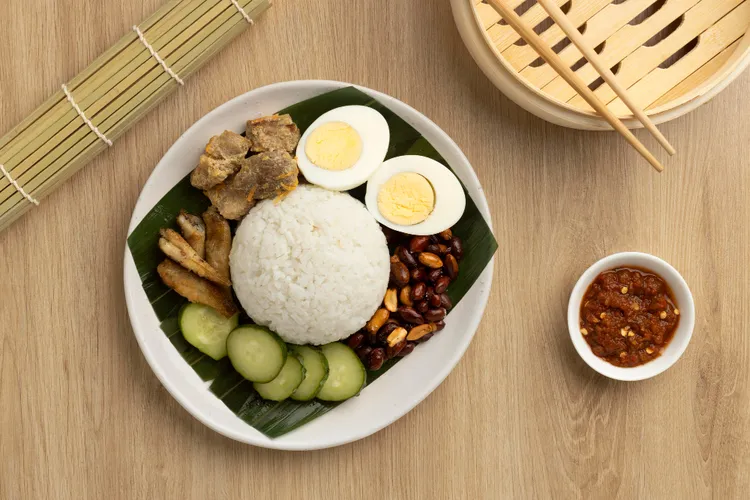
The name means "rich rice" in Malay, referring to the coconut milk the rice is cooked in. In Malaysia it's eaten at all hours - wrapped in banana leaf from a roadside stall at 7am, served on a plate at a hawker centre for lunch, dressed up with fried chicken or beef rendang for dinner. At its simplest and best, it's the base version: six components, each done well, eaten together.
The Components
Nasi lemak is an assembly dish. Make each part correctly and the whole thing comes together fast.
Coconut rice
Rice cooked with coconut milk, water, a pandan leaf, a bruised lemongrass stalk, and a slice of ginger. The ratio is roughly 1 cup rice to 3/4 cup coconut milk plus enough water to reach the standard water line. The result should be fluffy with a subtle coconut fragrance - not sticky, not wet. Approximately 240 kcal per cup cooked.
Sambal
The heart of the dish. A cooked chilli paste - sambal tumis - made with dried chilies, shallots, garlic, belacan, and tamarind. It should be sweet, sour, spicy, and slightly sticky. A generous tablespoon is around 40-60 kcal depending on sugar content. For a dedicated guide to making it at home, see the Malaysian sambal recipe.
Ikan bilis (dried anchovies)
Small dried anchovies, deep-fried until golden and crispy. Salty, crunchy, textural contrast. About 60 kcal per 20g serving. Look for them at Asian grocery stores - they keep for months in an airtight jar.
Roasted peanuts
Dry-roasted in a wok or oven. Sometimes fried alongside the anchovies. Around 90 kcal per small handful.
Cucumber
Sliced thin. The cooling element. Cuts through the richness of the coconut rice and the heat of the sambal.
Egg
Usually hard-boiled, sometimes fried. The fried version - a runny-yolk fried egg - is worth the extra step. Approximately 70-90 kcal.
Macro Breakdown (Base Version, per full plate)
- Calories: ~530 kcal
- Protein: ~14g
- Carbs: ~62g
- Fat: ~24g
Add a chicken thigh or a piece of fried fish and you're looking at 700-800 kcal with 35-45g protein. Numbers are estimates and vary with sambal sweetness and oil used for frying.
How to Make It: Step by Step
Coconut rice
- Wash 2 cups jasmine rice until water runs clear. Drain.
- Add to a pot with 1.5 cups coconut milk, 1 cup water, 1 pandan leaf (tied in a knot), 1 bruised lemongrass stalk, 1 slice ginger, 1/2 tsp salt.
- Bring to a boil, stir once, reduce to the lowest heat, cover, and cook 15 minutes.
- Rest covered for 10 minutes. Fluff with a fork. Discard the aromatics.
Sambal (quick version)
- Blend 8 dried chilies (soaked in hot water 20 min), 4 shallots, 3 garlic cloves, 1 tsp belacan into a paste.
- Fry in 3 tbsp oil over medium heat, stirring constantly, for 10-12 minutes until darkened and oil separates.
- Add 1 tbsp tamarind paste dissolved in 3 tbsp water, 1 tbsp palm sugar or brown sugar. Cook 5 more minutes.
- Season with salt. Should be thick, sticky, and deep red.
Ikan bilis and peanuts
- Heat oil in a wok to 180°C. Fry 80g dried anchovies for 2-3 minutes until golden and crispy. Drain.
- In the same oil (or dry-roast separately), fry 80g raw peanuts until golden. Drain and cool.
Assembly
Mound rice in the centre of the plate. Add a generous spoonful of sambal alongside. Scatter anchovies and peanuts. Add cucumber slices and a halved egg. Serve immediately.
Variations Worth Knowing
- Nasi lemak ayam goreng: Add Malaysian fried chicken. The marinade uses turmeric and lemongrass.
- Nasi lemak with beef rendang: The richest version. Slow-cooked dry curry on top of coconut rice. See the beef rendang recipe for the full process.
- Banana leaf version: Wrap everything tightly in a square of banana leaf. The leaf adds a faint grassy flavour to the rice as it steams. Use foil if you can't find banana leaves.
Meal Prep Notes
Sambal keeps refrigerated for 2 weeks and freezes well for 3 months. Make a big batch and the dish becomes a 20-minute assembly on any night. Coconut rice doesn't hold well - make it fresh or it becomes gummy. Ikan bilis should be fried the day of serving; they lose their crunch quickly once fried.
For the full context on how nasi lemak fits into Malaysian cuisine alongside rendang, laksa, and roti canai, see the Malaysian home cooking guide.
Latest