Asafoetida (Hing): The Strange Spice That Smells Terrible and Tastes Extraordinary
The dried resin that produces an alarming smell from the jar and an irreplaceable onion-garlic depth in the pan
Asafoetida has an image problem. Open a jar of it and the smell is immediate and aggressive - sulphurous, pungent, something between very strong garlic and something less pleasant. The jar goes straight back into the cupboard. The cook resolves to use it next time, when they are feeling more adventurous.
Next time never comes. The jar sits. Eventually it is thrown away.
This is one of the great missed opportunities in international cooking - because asafoetida, applied correctly in small quantities to hot fat, undergoes a complete transformation. The alarming sulphur compounds that produce the raw smell are volatile and largely evaporate in heat. What remains is a deep, warm, onion-garlic complexity - present but not identifiable, pervasive but not aggressive, the specific savouriness that makes a dal or a sabzi taste specifically Indian rather than merely spiced.
The smell from the jar is not the taste in the dish. These are different experiences entirely. And the single instruction that resolves all asafoetida confusion is: use ¼ tsp, add to hot fat or oil for 15-30 seconds before any other ingredient, never use raw.
What Asafoetida Is: Origin and Production
Asafoetida (Ferula assa-foetida) is the dried resin of the Ferula plant - a large herbaceous perennial native to Iran and Afghanistan, related to celery, fennel, and parsley. The resin is extracted by making incisions near the base of the plant stem and collecting the milky sap that exudes. This sap hardens on exposure to air into a gum-resin that is then dried and ground, or sold in lump form.
The name comes from Latin: assa (from the Persian aza, resin) and foetida (fetid, foul-smelling) - a remarkably honest description of the raw product. It is known in Hindi as hing (हींग), in Farsi as anguzah, and in English variously as asafoetida, assafoetida, asafetida, and "devil's dung" (an older, equally accurate name).
The chemical composition: Asafoetida's smell comes primarily from a group of sulfur-containing compounds - sulfides, polysulfides, and disulfides - similar to the compounds responsible for the smell of onions and garlic. When heated in fat, most of these compounds transform or volatilise, leaving behind a softer, rounder version of the same onion-garlic depth.
The Two Commercial Forms
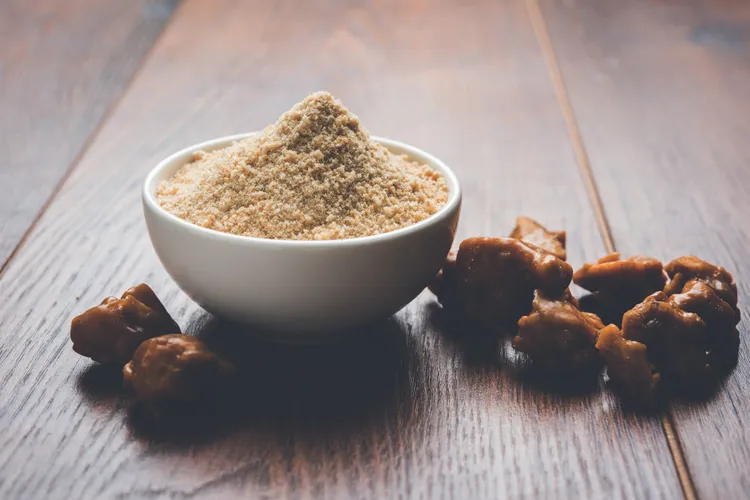
Compound asafoetida (powder): The most widely available form - pure asafoetida resin mixed with wheat flour (70-80% of the product) and sometimes gum arabic to prevent caking. The flour makes it easier to handle and reduces the intensity slightly. This is what most Indian households and most international grocery stores sell.
- Gluten content: Contains wheat. Not suitable for gluten-free cooking without confirmation.
- Labeling: Often labeled simply as "hing" or "asafoetida powder"
Pure asafoetida resin (lump asafoetida): The undiluted dried gum-resin, significantly more potent. Use in tiny quantities - approximately ¼ the amount of compound asafoetida. Available at South Asian grocery stores and specialty spice retailers. Naturally gluten-free.
The Fundamental Rule: Always Cook in Hot Fat
This is the single instruction that determines whether asafoetida is a useful ingredient or a jar-filling waste. Never add asafoetida to a dish without first cooking it in hot fat.
The method:
- Heat oil, ghee, or butter in the pan until shimmering
- Add the asafoetida - typically ¼ tsp of compound powder - directly to the hot fat
- Stir for 15-30 seconds - it will sizzle and the kitchen will briefly smell intensely of the raw compound
- Then add the next ingredients (usually onion, garlic, mustard seeds, or curry leaves)
During those 15-30 seconds in hot fat, most of the sulfur compounds responsible for the raw smell volatilise and the remaining compounds transform into something rounder and more appealing. The intensity drops dramatically; what remains is useful depth.
Why this matters: Asafoetida added raw to any preparation - stirred into cold dough, added to a finished dish, dissolved in water - retains its full sulfurous punch and the result smells aggressively of raw asafoetida rather than of the dish it was supposed to enhance. The cooking-in-fat step is not optional.
The Onion and Garlic Replacement
One of asafoetida's traditional roles in Indian cooking is as a substitute for onion and garlic in food prepared by communities that avoid them for religious reasons (Jains, certain Brahmin communities, and others following dietary restrictions that exclude alliums). A small amount of asafoetida provides the onion-garlic depth that alliums would normally contribute.
This application also makes asafoetida useful for individuals with FODMAP sensitivities - some people who react to garlic and onion (high FODMAP foods) find they can tolerate the fructan-free asafoetida in small quantities, though individual responses vary. Consult a healthcare provider for medical dietary advice.
10 Applications
1. Dal Tarka (The Most Important Application)
The tarka - the final seasoning of spiced hot oil or ghee poured sizzling over a finished dal - is where asafoetida does some of its most important work. A small amount of asafoetida in the tarka produces an onion-garlic depth that rounds the lentils and distinguishes a properly seasoned dal from a flat one.
Standard dal tarka with asafoetida: Heat 2 tbsp ghee or oil. Add ¼ tsp asafoetida - sizzle 15 seconds. Add 1 tsp cumin seeds (they pop), 2 dried red chilies, a pinch of chili flakes. Cook 30 seconds. Add 3 cloves garlic (sliced) and cook until golden. Pour immediately over the finished dal.
See the One-Pot Lentil Soup in the One-Pan collection for the tarka technique in detail, and the Dal Makhani in the Plant-Based collection.
2. Vegetable Sabzi (Dry-Spiced Vegetables)
Virtually every dry-spiced Indian vegetable preparation (sabzi) uses asafoetida in the initial tempering stage - along with mustard seeds, cumin seeds, and curry leaves.
Basic tempering for sabzi: Heat 2 tbsp oil. Add ¼ tsp asafoetida + ½ tsp mustard seeds + ½ tsp cumin seeds. When the mustard seeds pop, add curry leaves (if available) and any dried chili. Then add the vegetables.
The asafoetida in this context is the invisible savoury foundation - if you taste the sabzi before and after it is added, the without-asafoetida version tastes flat despite all the other spicing.
3. Chaas (Indian Spiced Buttermilk)
Chaas - spiced yogurt or buttermilk, diluted and seasoned - is one of the most refreshing drinks in South Asian cooking. Asafoetida is one of the key seasoning components.
Chaas recipe: Blend 200g plain yogurt with 400ml cold water until smooth. Add ½ tsp roasted cumin powder, ½ tsp ginger paste, ¼ tsp chili powder, salt, and fresh coriander. Separately, heat 1 tsp oil, add ¼ tsp asafoetida and ½ tsp cumin seeds. When the seeds splutter, pour the tempered oil into the yogurt drink. Serve cold.
The asafoetida in chaas provides a background depth that distinguishes it from plain spiced yogurt.
4. Indian Pickle (Achar) Seasoning
Asafoetida appears in the spice mix for virtually every Indian pickle - the mustard oil, chili, fenugreek, and asafoetida combination that defines the flavour of Indian achar (pickled mango, lime pickle, mixed vegetable pickle). The asafoetida is fried in the oil before the vegetables and spices are added.
5. Poha (Indian Flattened Rice Breakfast)
Poha - flattened rice flakes seasoned with mustard seeds, curry leaves, onion, and spices - uses asafoetida in the tempering stage. It is one of the most common Indian breakfast preparations and the one where many people first encounter asafoetida in everyday cooking.
6. Rajma (Kidney Bean Curry)
The Northern Indian kidney bean curry that is as foundational as dal to everyday home cooking. Asafoetida in the onion-tomato-spice base adds depth to the slow-cooked beans. Add ¼ tsp in the initial oil along with the cumin seeds, before the onion is added.
7. South Indian Rasam
Rasam - the peppery thin broth of South Indian cooking - almost always contains asafoetida in the tarka that finishes it. The asafoetida adds a background depth that balances the pepper's sharpness.
See the tamarind-based rasam recipe in the Tamarind post - add ¼ tsp asafoetida to the tempering step.
8. Kadhi (Indian Yogurt Curry)
Kadhi - a yogurt-and-chickpea flour curry, soured with yogurt, finished with a tarka - is a dish where asafoetida plays a specific role: it provides the onion-garlic depth in a curry that is made from yogurt and gram flour rather than the tomato-onion base of most Indian curries. Without asafoetida in the tarka, kadhi tastes of yogurt and chickpea flour. With it, it tastes of a complete dish.
9. Papadum Seasoning
Papadum dough - made from urad dal flour, salt, and spices - includes a small amount of asafoetida as one of the key seasonings that distinguishes papadum from plain lentil crackers. The asafoetida is in the dough itself, not in a tarka, because the high-heat frying or grilling process in papadum preparation effectively "cooks" the asafoetida even without separate tempering.
10. Sambar
Sambar - the South Indian lentil-and-vegetable soup that is the companion to idli, dosa, and rice - uses asafoetida both in the sambar powder (the spice blend) and in the finishing tarka. It is one of the most asafoetida-forward preparations in Indian cooking, where the resin's depth contributes significantly to the soup's complex character.
A Note on Quantity: The Principle of Restraint
The single most important thing to understand about asafoetida quantity is that it is used in very small amounts - typically ¼ tsp (approximately 1g) per preparation serving 4-6 people. This quantity is enough to provide the depth it offers; more produces an identifiable asafoetida flavour rather than the invisible depth that is the goal.
The common mistake of beginners encountering the ingredient: using too much because the small quantity seems insufficient. The counter-intuitive instruction is to use less, not more. A correctly seasoned dal should not smell of asafoetida; it should smell of the dal, its spices, and its aromatics, with an underlying depth that you cannot specifically identify but would notice if it were absent.
Pro Tips
- Store in an airtight container, away from other spices. Asafoetida's volatile compounds can permeate other spices through thin packaging. The original sealed container or a dedicated jar with a tight-fitting lid prevents this.
- The ¼ tsp rule. This is the standard quantity for most preparations. When a recipe specifies "a pinch" of asafoetida, it means considerably less - perhaps ⅛ tsp. When it says "a generous pinch," it means ¼ tsp. Calibrate to the recipe.
- Check for gluten if relevant. Compound asafoetida (the most common form) typically contains wheat flour. For gluten-free cooking, source pure asafoetida resin or specifically labeled gluten-free hing.
- The smell from the jar is not a quality indicator. All asafoetida smells strongly from the jar. This does not indicate a problem with the product - it is the nature of the ingredient. Quality is indicated by the colour (pale yellow to golden-brown), the texture (smooth powder without clumping), and the flavour when correctly cooked in fat.
Common Mistake: Adding Asafoetida Without Heating It in Fat Asafoetida stirred cold into a dish, dissolved in water, or added at the end of cooking retains its full sulfurous character. The transformation that makes it useful only occurs when it is cooked in hot fat for 15-30 seconds. This step is non-negotiable. Without it, asafoetida tastes of its raw self - aggressively pungent, sulphurous, and unpleasant. With it, the sulfur volatilises and what remains is the rounded, onion-garlic depth that makes Indian cooking taste the way it does.
FAQ
Q: Is asafoetida suitable for people who can't eat garlic or onion?
It is often used as a substitute for alliums in Jain and certain Brahmin cooking. However, for those avoiding garlic and onion for medical reasons (FODMAP intolerance), asafoetida is naturally fructan-free and some people with allium sensitivities tolerate it. Individual responses vary significantly - if avoiding alliums for health reasons, consult a healthcare provider before using asafoetida as a substitute.
Q: Why does my kitchen smell for hours after cooking with asafoetida?
Some residual volatile compounds do linger in kitchen air after cooking. Ventilation - a kitchen fan or open window - during the 15-30 second cooking step significantly reduces the lingering smell. The smell in the finished dish is not the same as the kitchen smell during cooking.
Q: Where do I buy asafoetida?
South Asian (Indian, Pakistani, Sri Lankan) grocery stores carry it reliably and affordably. Health food shops and online retailers (Amazon, specialist South Asian food retailers) are alternatives. It is rarely found in mainstream supermarkets in the UK or US.
🔗 Related Ingredient Deep Dives
- Curry Leaves: The Fresh Herb That Defines South Indian Cooking
- Tamarind: The Sour Backbone of Indian and Southeast Asian Cooking
- Miso: Japan's Most Versatile Fermented Ingredient
- From the One-Pan collection: One-Pot Lentil Soup: The Most Nourishing 30-Minute Dinner
- From the Street Food collection: South Asian Street Food Pantry
- World Cuisines in Your Pantry: The Ingredient Deep Dives
Latest