Butternut Squash Curry: The Weeknight Crowd-Pleaser
Golden squash, coconut milk, warming spices, and chickpeas - the plant-based curry that converts everyone at the table
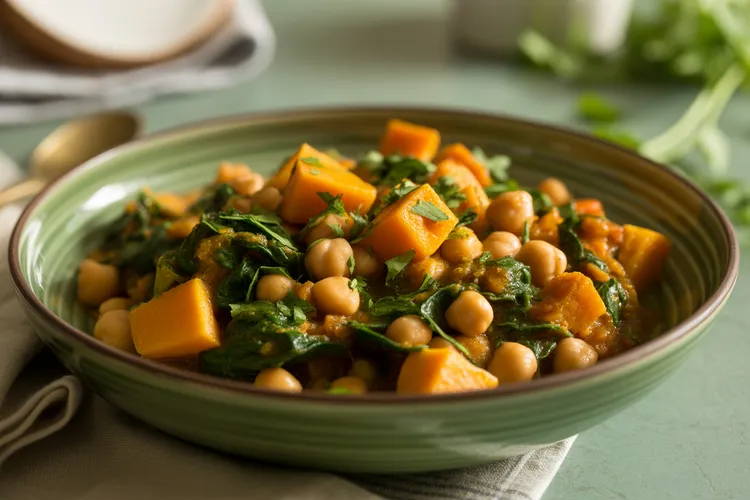
There is a version of butternut squash curry that is an afterthought - watery, underseasoned, the dish that appears on menus as a token vegetarian option and satisfies nobody. This is not that version.
This butternut squash curry is built with the same attention to depth and technique as any good curry: the aromatics cooked in oil until deeply fragrant, the spices bloomed until they change colour and smell, the squash treated as a main ingredient deserving care rather than a vegetable thrown into sauce. The result is rich from coconut cream, deeply spiced, sweet from the squash and tempered by lime, with chickpeas providing protein and spinach providing fresh contrast against the golden sauce.
It takes 40 minutes. It is better the next day. It feeds a table of meat-eaters and vegetarians simultaneously without anyone feeling like they received the compromise option.
The Technique That Makes This Curry Great
Spice Blooming (Tempering)
Every spice in this curry goes into hot oil before any liquid is added. This is blooming or tempering - a technique fundamental to South Asian and many Southeast Asian cooking traditions. Whole and ground spices added to hot fat release their fat-soluble aroma compounds (the flavour molecules responsible for spice's character) directly into the oil, which then carries those compounds throughout the entire dish.
Spices added to a sauce without blooming produce a curry that tastes of spice added to a sauce. Bloomed spices produce a curry where the spice is integrated into the flavour at a molecular level - the distinction between a curry that tastes fully cooked and one that tastes like it is still assembling itself.
The visual cue: Mustard seeds will pop. Cumin seeds will darken slightly and smell intensely toasted. Ground spices will change colour at the edges. Each of these is a signal that the blooming has happened and it is time to add the next ingredient.
Roasting vs. Simmering the Squash
This recipe offers a choice that significantly affects the final character of the dish:
Simmered squash (added raw to the sauce): absorbs the sauce's flavour fully, becomes very soft, and produces a curry where the squash has dissolved somewhat into the sauce. Easier. Produces a thicker curry.
Roasted squash (roasted at 200°C before adding to the sauce): caramelised edges, nutty depth from the Maillard browning, distinct cubes that hold their shape in the finished curry. More work, but produces a noticeably more complex flavour from the squash itself. Recommended when time allows.
The recipe gives both options. The default is roasted.
Ingredients
Serves 4-6 | Active time: 20 minutes | Total time: 40 minutes (with roasting) or 30 minutes (without)
The Curry Base
- 3 tbsp coconut oil or neutral oil
- 1 large onion, diced
- 5 garlic cloves, minced
- 3cm fresh ginger, grated
- 1 red chilli, deseeded and finely sliced (adjust to heat preference)
The Spices
- 1 tsp mustard seeds (black or yellow)
- 1 tsp cumin seeds
- 1 tbsp mild or medium curry powder - use a good-quality blend; the curry powder is the flavour backbone
- 1 tsp ground turmeric
- 1 tsp ground coriander
- ½ tsp smoked paprika - adds a subtle background depth
- ½ tsp ground cinnamon - provides warmth that complements the squash's sweetness
- ½ tsp chilli flakes (adjust to taste)
The Main Ingredients
- 1 large butternut squash (approximately 900g-1kg), peeled, deseeded, and cut into 3cm cubes
- 1 × 400g tin of chickpeas, drained and rinsed - provides protein and a textural contrast to the soft squash
- 1 × 400ml tin of coconut cream (not coconut milk - cream for richness)
- 1 × 400g tin of chopped tomatoes
- 200ml vegetable stock or water
- 100g baby spinach - added in the final 2 minutes
The Finishing
- Juice of 1 lime - the acid that lifts the richness of the coconut cream
- 1 tsp soft brown sugar or maple syrup - balances the acidity and deepens the sauce
- 1 tbsp soy sauce or tamari - provides the umami background that elevates the sauce beyond sweetness
- Salt to taste
- Fresh coriander, roughly torn
Method
Step 1: Roast the squash (optional but recommended)
Preheat the oven to 200°C (fan). Toss the cubed squash with 1 tbsp of oil, ½ tsp of turmeric, ½ tsp of salt, and a crack of black pepper. Spread in a single layer on a large baking tray - do not crowd or the squash will steam rather than roast. Roast for 20-25 minutes until the edges are golden and slightly caramelised.
The roasted squash goes directly into the finished sauce - it does not need to simmer, as it is already cooked. If simmering instead (no roasting), add the raw squash cubes to the sauce at Step 4 and simmer 15-18 minutes until completely tender.
Step 2: Build the aromatic base
Heat 3 tbsp of coconut oil in a large, heavy-based pan (a wide casserole or high-sided frying pan) over medium-high heat.
Add the mustard seeds - let them pop for 30 seconds. Add the cumin seeds - let them sizzle and darken slightly (30 seconds). Add the diced onion - cook 8 minutes, stirring regularly, until deeply golden. Don't rush this step: properly caramelised onions provide a sweetness and depth that lightly softened onions don't.
Add the garlic, ginger, and chilli - cook 2 minutes until fragrant.
Step 3: Bloom the ground spices
Reduce the heat to medium. Add the curry powder, ground turmeric, ground coriander, smoked paprika, cinnamon, and chilli flakes all at once. Stir continuously for 60-90 seconds - the spices will darken slightly, become intensely fragrant, and begin to stick to the base of the pan. This is correct. The moment they start to catch is the moment to add liquid.
Step 4: Build the sauce
Add the tinned tomatoes - stir vigorously, scraping all the bloomed spice from the base of the pan. The tomatoes will sizzle and spit. Add the vegetable stock. Simmer for 5 minutes, stirring occasionally, until the sauce has reduced slightly and the tomatoes have broken down.
Add the coconut cream - stir until completely incorporated. The sauce will turn a beautiful golden-orange. Add the drained chickpeas.
If simmering the squash rather than roasting: Add the raw squash cubes now. Simmer 15-18 minutes until a skewer meets no resistance.
If using roasted squash: Add the roasted cubes now. Simmer 5 minutes - just long enough for the squash to absorb the sauce.
Step 5: Season and finish
Add the lime juice, brown sugar, and soy sauce. Taste carefully - adjust salt, heat (more chilli flakes), acidity (more lime), and sweetness (more sugar) as needed.
Add the baby spinach - stir through until just wilted (approximately 90 seconds). The spinach should be vibrant green, not olive-coloured. If it turns khaki, it has cooked too long.
Remove from heat. Scatter with fresh coriander.
Serving
With rice: The classic pairing. Basmati or jasmine rice - cook separately using the absorption method for perfectly separated grains.
With flatbread: Warm naan or roti for scooping - see Flatbreads From Five Traditions in the Baking collection for the homemade version.
With raita: Full-fat yogurt with cucumber, a pinch of cumin, and fresh mint - the cooling contrast to the warm curry. For a fully vegan version, use coconut yogurt.
With toppings: A spoonful of mango chutney, a few pickled jalapeños, toasted flaked almonds, or a drizzle of chilli oil (from The Plant-Based Comfort Food Toolkit).
Make It a Bigger Meal
Add more protein: Stir in 200g of firm tofu (pressed and pan-fried until golden) at the same time as the chickpeas. Or add a tin of drained cannellini beans alongside the chickpeas. Each tin of chickpeas or beans adds approximately 15g of protein per serving.
Make it a substantial thali: Serve alongside Dahl Makhani (the black lentil curry), rice, pickles, raita, and warm flatbread. A full plant-based feast from this pillar.
Storage, Reheating, and Make-Ahead
Makes-ahead perfectly. Like all spiced curries, this improves significantly over 24 hours as the spices integrate and the squash absorbs the sauce flavour more deeply. Make on Sunday, eat better on Monday.
Refrigerates: 4 days in a sealed container. The chickpeas absorb the sauce and the flavour intensifies.
Freezes: Excellently - up to 3 months. The squash may soften slightly after freezing but holds its shape adequately. Freeze before adding the spinach; add fresh spinach when reheating.
Reheating: Gently in a saucepan over low heat with a splash of water or coconut milk to loosen the sauce (it thickens significantly in the refrigerator). Taste and adjust seasoning - cold dulls salt and spice, so it may need a little more of each.
Variations
Sri Lankan-Style Squash Curry
Swap the curry powder for 1 tsp of Sri Lankan roasted curry powder (darker, more complex) and add 6 fresh or dried curry leaves (see Curry Leaves: Why Fresh Matters in the World Cuisines collection) to the oil with the mustard seeds. Replace the chilli with 1 tsp of Kashmiri chilli powder for a brilliant red colour without overwhelming heat.
Thai-Spiced Squash Curry
Replace the Indian spice blend entirely with 2-3 tbsp of Thai green curry paste (ensure it is vegan - many contain shrimp paste). Omit the cumin seeds. Add 3 kaffir lime leaves and 1 stalk of lemongrass (bruised) to the sauce. Finish with 1 tbsp of fish sauce substitute (soy sauce or coconut aminos) instead of soy sauce.
Squash and Aubergine Curry
Add 1 large aubergine, cubed and pan-fried in olive oil until golden (8 minutes) before adding to the sauce alongside the squash. The aubergine absorbs the spiced sauce and provides a more substantial, meaty texture.
Squash and Lentil Curry (Higher Protein)
Add 100g of dried red lentils with the tomatoes and stock. The lentils will dissolve partially into the sauce as it simmers, thickening it and adding approximately 9g of protein per serving. Reduce the coconut cream to 200ml to compensate for the thickening effect.
The Spice Level Guide
The recipe as written is medium heat - present but manageable for most adults. To adjust:
Milder: Omit the fresh chilli and chilli flakes entirely. The curry powder already contains mild chilli. The result is warmly spiced but accessible for children and those who are heat-sensitive.
Hotter: Add 1-2 additional bird's eye chillies (whole, to be fished out before serving) to the sauce during simmering. Or add ½ tsp of cayenne with the ground spices.
The yogurt fix: If the curry is hotter than intended, a large spoonful of full-fat yogurt or coconut yogurt stirred through the serving bowl immediately reduces perceived heat - the fat in the yogurt binds the capsaicin and prevents it from stimulating heat receptors.
Nutrition
Per serving (with rice, approximate):
- Protein: 14g (chickpeas + squash)
- Fibre: 9g
- Iron: significant from chickpeas and spinach
- Beta-carotene: very high from the butternut squash - the orange pigment is converted to vitamin A
The combination of chickpeas and rice provides a complementary amino acid profile covering all essential amino acids.
Pro Tips
- Don't skip the caramelised onion step. 8 minutes feels long but the difference between pale-softened onions and properly golden-caramelised onions in the base is immediately tasted in the finished curry. Set a timer and don't rush it.
- Coconut cream, not coconut milk. The fat content in coconut cream provides the richness that makes this curry feel genuinely satisfying. Coconut milk produces a thinner, less rich sauce. The extra cost is minimal; the result difference is significant.
- Lime at the end, not the beginning. Acid added early in cooking loses its brightness. The lime squeezed over the finished curry provides a fresh lift that lime added during simmering cannot.
- Soy sauce is not detectable. 1 tbsp of soy sauce in a curry does not make it taste of soy - it adds a background umami that makes the sauce taste more complete. Most diners cannot identify it; all of them notice something is better about the curry without knowing why.
🔗 More Plant-Based Curries and Centrepieces
Latest