Cooking and ADHD: How the Kitchen Can Help (and When It Hurts)
The kitchen can be one of the most engaging spaces for an ADHD brain - or one of the most overwhelming. Understanding which side you are on, and why, makes cooking more sustainable and less fraught.
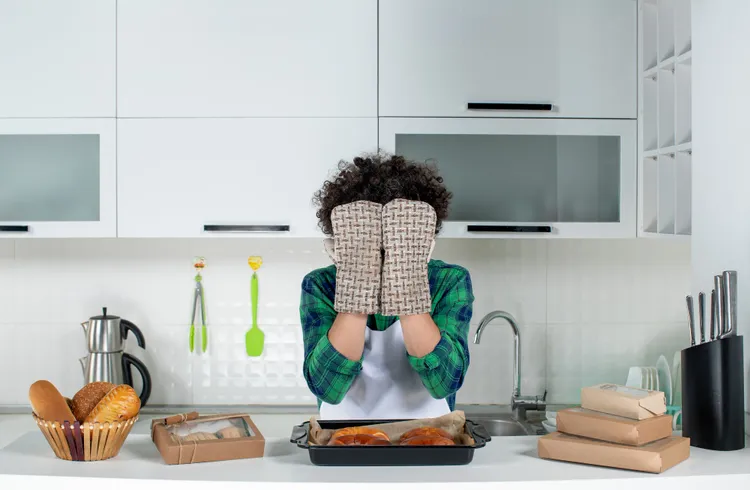
ADHD does not produce a single relationship with cooking. For some people with ADHD, the kitchen is a place of genuine engagement - the multi-sensory environment, the creative freedom, and the immediate feedback loop make cooking more absorbing than most tasks. For others, the same environment is a minefield of forgotten timers, distraction mid-task, and the particular frustration of burning something for the fourth time this month. Often, it is both, depending on the day.
Why Cooking Can Work for ADHD
Sensory engagement and dopamine
ADHD involves dysregulation of dopamine signalling - specifically, a reduced ability to sustain attention on tasks that do not provide immediate stimulation. Cooking is highly stimulating: sound, smell, visual change, physical activity, and a tangible output all combine to provide the kind of moment-to-moment feedback that keeps the ADHD brain engaged.
This is why many people with ADHD find cooking genuinely enjoyable in a way that is disproportionate to how they feel about other household tasks. The stimulation density is high enough to hold attention without external aids.
Hyperfocus and culinary depth
ADHD hyperfocus - the capacity for intense, sustained attention on a topic of genuine interest - can produce remarkable results in the kitchen. People who enter a hyperfocus state around cooking often develop substantial skill quickly, experimenting extensively and absorbing technique at speed.
If cooking has captured your interest in this way, lean into it. The skill development is real and the outcomes - both the food and the wellbeing effects of a genuine absorbing interest - are worth investing in.
Why Cooking Can Hurt for ADHD
Working memory and multi-step recipes
Complex recipes that require tracking multiple elements simultaneously - timing four components so they finish together, holding quantities in mind while performing a technique, keeping track of where you are in a twelve-step process - strain working memory, which is consistently impaired in ADHD.
The result is burned things, missed steps, undercooked proteins, and the particular demoralisation of having started something ambitious and produced something inedible. This is not a character flaw; it is a working memory failure that can be engineered around.
Transition difficulty and clean-up avoidance
ADHD makes transitions hard - including the transition from "cooking" to "eating" to "cleaning up." This is why ADHD kitchens are often clean when nothing has been cooked for a while, and catastrophic immediately after a cooking session. The clean-up avoidance is not laziness; it is the same task-switching difficulty that makes it hard to shift from one work task to another.
Practical Strategies for ADHD Cooks
- Use a physical timer. Phone timers disappear into notification noise. A dedicated kitchen timer you can hear from anywhere in the room is more reliable. Set it immediately when anything goes on the heat - before you do anything else.
- Favour one-pot and sheet-pan cooking. Fewer things to track simultaneously, less working memory required, less clean-up. The slow-cooker red lentil soup is ideal: set it up and it requires zero monitoring for six to eight hours.
- Write the steps before you start. Even for familiar recipes, writing out a numbered list and crossing steps off as you go reduces working memory load and prevents skipped steps.
- Clean as you go - specifically, during waiting time. Framing cleaning as "what I do while this simmers" rather than "what I do after I finish" makes it part of the task rather than a separate, dreaded transition.
- Have a small default repertoire. Three to five recipes you know cold, requiring no recipe consultation. Garlic scrambled eggs, baked zucchini fritters, a simple soup. The cognitive load of a known recipe is dramatically lower than an unfamiliar one.
Batch Cooking and ADHD
Batch cooking is theoretically ideal for ADHD - cook once, avoid the daily decision fatigue, have food ready automatically. In practice, the difficulty is that the batch cooking session itself requires sustained effort and organisation. The solution is to make the session as structured as possible: same day each week, a written list of what you are making, everything prepped before anything goes on the heat.
For the broader mental health case for batch cooking, see batch cooking as anxiety management.
For the complete picture of how cooking relates to mental health and wellbeing, see the guide to cooking as a mental health practice.
Latest