Ghee Roti (Simple Indian Flatbread)
A simple whole wheat roti recipe with ghee worked into the dough and brushed on hot off the griddle for richness and softness.
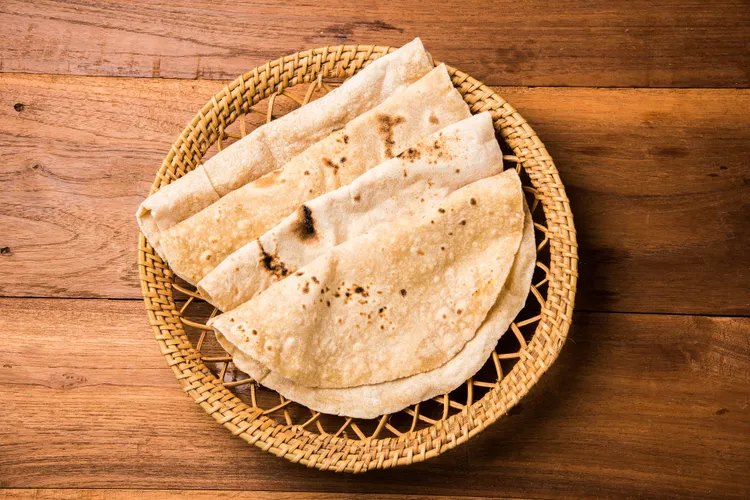
Ghee roti is a simple change to a basic flatbread recipe - a little worked into the dough, and a lot more brushed on hot off the griddle, both of which make a real difference to an otherwise plain bread.
Ghee Roti
Prep time: 15 minutes, plus resting | Cook time: 20 minutes | Makes: about 8 roti
Ingredients
- 2 cups whole wheat flour (atta), plus more for dusting
- 1/2 tsp salt
- 1 tbsp melted ghee, plus more for brushing
- 3/4 cup warm water, plus more as needed
Instructions
- In a large bowl, combine the flour and salt. Add the melted ghee and mix in with your fingers until evenly distributed.
- Gradually add the warm water, mixing and then kneading until a smooth, soft dough forms, about 5 to 7 minutes of kneading. The dough should be soft but not sticky - add a bit more flour or water as needed to adjust.
- Cover the dough and let it rest for at least 20 minutes, which relaxes the gluten and makes rolling easier.
- Divide the dough into 8 equal pieces and roll each into a ball. On a lightly floured surface, roll each ball into a thin, roughly 6-inch round.
- Heat a dry skillet or griddle (cast iron works well) over medium-high heat. Place a rolled roti on the hot surface and cook for about 30 seconds, until small bubbles start to form.
- Flip and cook the other side for another 30 to 45 seconds, until light golden spots appear.
- Flip once more, and using a folded kitchen towel or tongs, gently press down on different spots of the roti - this encourages it to puff up with steam. Alternatively, if you have a gas stove, briefly holding the roti directly over an open flame with tongs achieves a similar puff.
- Remove from the heat and immediately brush with melted ghee.
- Stack the finished roti under a clean towel to keep them warm and soft while you cook the rest.
Notes
Roti is best eaten fresh and warm - it firms up considerably as it cools, though it can be gently reheated on a dry skillet or wrapped in foil in a warm oven.
Why Ghee Goes Both In and On
A small amount of ghee worked into the dough itself adds tenderness and a subtle richness to the roti's texture, while the ghee brushed on immediately after cooking adds shine, flavor, and helps keep the bread soft as it cools. Both steps matter, but the finishing brush makes the more immediately noticeable difference.
Getting the Puff
The puffing that happens during the final flip is caused by steam building up inside the thin dough as it cooks - pressing gently on different spots (rather than one fixed point) helps that steam distribute and puff the whole roti rather than just one section. This takes some practice, but even a roti that doesn't puff fully will still taste good.
Variations
- Stuffed version: Roll a bit of mashed spiced potato or another filling into the dough before rolling it thin, for a version closer to a paratha.
- Herbed roti: Add finely chopped cilantro or a pinch of ajwain (carom seeds) to the dough for extra flavor.
This roti pairs naturally with dal tadka or any other saucy main. For more, see the complete ghee guide.
Latest