Ground Beef Protein Meals: 6 Fast Builds Under 500 Calories
Ground beef (90% lean) gives you ~26g protein per 100g cooked and takes under 10 minutes to brown. Batch-cook 1kg on Sunday and these six meal builds require almost no active cooking during the week.
Ground beef is one of the most versatile protein sources for meal prep. It browns quickly, absorbs any flavour profile, costs less per kilogram than chicken breast, and keeps 4 days in the fridge. The key is keeping the beef itself neutral when batch cooking - seasoned simply with garlic, salt, and pepper - so it works across different cuisine bases across the week.
All six builds below work with pre-cooked batch beef reheated in 2-3 minutes. Active time per meal: under 10 minutes once the beef is done.
Batch Cooking the Beef: Sunday Foundation
Heat a large heavy pan over medium-high heat. Add 1kg of 90% lean ground beef in batches - don't overcrowd the pan, which causes steaming instead of browning. Break the meat up as it cooks. Once fully browned, season with 1 tsp garlic powder, 1 tsp salt, and black pepper. Transfer to a bowl to cool. Do not add salt before browning - this draws moisture and prevents the Maillard reaction browning that adds flavour. Portion into 140–150g containers. Refrigerate up to 4 days, or freeze in portions for up to 3 months.
From 1kg raw beef you'll get roughly 700–750g cooked meat - about -6 portions at 140g each.
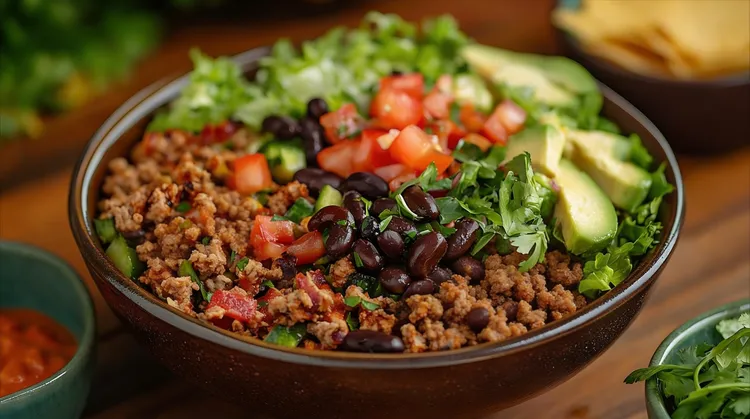
Build 1: Beef Taco Bowl (~44g protein, 460 kcal)
The most universally liked ground beef build. Works for meal prep and for a quick dinner from scratch.
Components: 150g batch beef reheated with cumin, chilli powder, and a splash of water. Served over 60g cooked rice, 80g black beans (rinsed from a can), 2 tbsp salsa, a small handful of grated cheddar, and shredded iceberg cabbage or lettuce.
Season the beef while reheating rather than during the original batch cook - this way the same batch works in multiple different cuisine builds across the week. For extra fat if calories allow, add half a small avocado (~80 kcal, 1g protein).
Macros: ~44g protein, ~14g fat, ~42g carbs, 460 kcal
Build 2: Greek Beef Bowl (~42g protein, 430 kcal)
The same batch beef, completely different flavour profile. This is the most useful aspect of a neutral beef batch - it travels across cuisines without re-cooking.
Components: 150g batch beef warmed with dried oregano, garlic, lemon juice. Served over a base of chopped romaine, cucumber, cherry tomatoes, red onion, and kalamata olives. 2 tablespoons of tzatziki on top (Greek yogurt, cucumber, garlic, lemon - or buy pre-made). A small wholegrain pitta on the side for carbohydrate.
The lemon and oregano transform the flavour of the base beef completely. If you meal prep this alongside the taco bowl from the same batch, they taste like entirely different meals.
Macros: ~42g protein, ~16g fat, ~28g carbs, 430 kcal
Build 3: Beef and Egg Scramble (~48g protein, 490 kcal)
The highest-protein build on this list. Works as a breakfast (unusual but very filling), a fast lunch, or a quick dinner.
Components: 100g batch beef added to a pan over medium heat with a diced onion, a handful of spinach, and 3 whole eggs beaten. Scramble together until eggs are set. Season with salt, pepper, and hot sauce. Serve with sourdough toast.
Ground beef and eggs is a protein combination that many people haven't tried. The texture is similar to a dense scramble - the beef adds richness and the eggs bind it into a cohesive dish. Takes 8 minutes total even if the beef is being cooked fresh. For a standalone high-protein breakfast option built primarily on eggs, see the 40g protein breakfast guide.
Macros: ~48g protein, ~22g fat, ~28g carbs, 490 kcal
Build 4: Beef Lettuce Wraps (~38g protein, 350 kcal)
The lowest-calorie build on this list - no rice, no bread, no starch. Good for days when the calorie budget is tighter or when you want a lighter meal.
Components: 130g batch beef reheated with 1 tsp soy sauce, 1 tsp sesame oil, 1 tsp grated fresh ginger, and a splash of rice vinegar. Serve in large iceberg lettuce leaves with shredded carrot, sliced spring onion, and a small amount of chilli sauce. The lettuce cups add crunch and replace the calorie cost of a wrap or rice base.
This is essentially a deconstructed Asian-style wrap. The session oil and ginger entirely change the flavour profile of the beef from the other builds. Works as lunch, dinner, or a substantial snack.
Macros: ~38g protein, ~14g fat, ~10g carbs, 350 kcal
Build 5: Beef and Zucchini Stir-Fry (~43g protein, 410 kcal)
A low-carb pasta replacement that doesn't taste like compromise. Courgette (zucchini) has a neutral flavour and satisfying texture when stir-fried, and it absorbs sauce well enough that the dish feels complete without pasta or rice.
Components: 130g batch beef in a hot pan with 2 medium courgettes (cut into half-moons or spiralised), a 400g tin of diced tomatoes, 2 garlic cloves, Italian seasoning, salt, and pepper. Cook over high heat until the courgette is tender but still has some bite - about 5-6 minutes. A tablespoon of tomato paste added to the tin deepens the sauce significantly. Top with a small amount of parmesan if calories allow.
The approach is similar in spirit to keto meatballs in creamy sauce - keeping beef-forward while managing total carbohydrates. The courgette base adds volume and fibre without pushing calories significantly.
Macros: ~43g protein, ~14g fat, ~22g carbs, 410 kcal
Build 6: Cottage Cheese Beef Bowl (~50g protein, 480 kcal)
The highest-protein build in this collection and the most unusual. The concept sounds odd; the result is genuinely good.
Components: 130g batch beef reheated with garlic and Italian seasoning. Serve over 150g low-fat cottage cheese (cold, straight from the fridge) with roasted cherry tomatoes, fresh basil, and a drizzle of olive oil. The cold cottage cheese underneath the warm beef creates a contrast that works - the beef heats the top layer of cheese slightly, the cheese provides creaminess without the calories of cream or sour cream, and the combination hits 50g protein at under 500 kcal.
The cottage cheese adds 17g protein to the build at 130 kcal. It's the most calorie-efficient protein boost available for a dish like this. For more uses of cottage cheese as a protein booster, see the cottage cheese high-protein recipes guide.
Macros: ~50g protein, ~16g fat, ~14g carbs, 480 kcal
Keeping Batch Beef Interesting Across a Full Week
The key is treating the batch beef as a neutral protein - essentially the equivalent of plain chicken breast - and adding the flavour at the build stage. The six builds above cover Mexican, Greek, American (eggs), Asian, Italian, and Italian-dairy profiles from the same batch. Rotate through them over two weeks and you have 12 different meals from two Sunday batch cooks.
For the broader protein-first framework including breakfast and dinner structure, see the protein-first cooking method guide.
80/20 vs 90/10: Choosing the Right Fat Level
90% lean ground beef is used throughout these builds for its better protein-to-calorie ratio. 80% lean (80/20) delivers more fat - roughly 20g fat per 100g raw vs 10g for 90% lean - which adds flavour and juiciness but raises calories significantly at equivalent portions. An 80/20 build at 44g protein costs 550-600 kcal vs 460 kcal for the same portion of 90% lean. 80/20 is better for burgers and meatballs where fat contributes texture (see keto meatballs), and the price per kilogram is typically 15-20% lower. In a calorie deficit, 90% lean is the better choice. On maintenance or a surplus, 80/20 is a viable alternative with better eating qualities.
Ground Beef Micronutrients: Beyond Protein
90% lean ground beef per 100g cooked: ~26g protein, ~10g fat, ~175 kcal. Notable micronutrients: iron (~2.7mg, ~15% daily requirements - haem iron absorbed at 2-3x the rate of plant-source iron), zinc (~5mg, ~45% daily requirements), B12 (~2.5μg, ~100% daily requirements). These three nutrients are among the most common deficiencies in people who reduce red meat intake, and supplementing them is less effective than dietary sources. Including ground beef 2-3 times per week supports nutritional coverage beyond what the protein numbers alone suggest. For the protein-first framework, see the protein-first cooking method guide.
Expanding the Rotation: Beyond These Six Builds
Once the six builds above are comfortable, the neutral batch beef opens further directions: stir into a simple tomato pasta sauce (add 130g beef per portion for a 40g+ protein pasta), use as a base for cottage cheese beef bowls (see build 6 in the cottage cheese guide), or press into patties for a quick pan burger alongside a salad. The core insight is that batch-cooked neutral beef is a modular protein ingredient, not a single dish. The more directions you can take it, the more useful a Sunday batch becomes across a full week. For the broader protein-first daily framework, see the protein-first cooking method guide.
One more practical point on batch beef storage: freeze in portions if you're cooking more than a 4-day supply. Portion 140g of cooked beef into zip-lock bags while still warm, press flat, freeze. Defrost overnight in the fridge or for 10 minutes in a bowl of cold water. The texture after freezing and reheating is nearly identical to fresh - ground beef freezes and reheats better than almost any other cooked protein. A double Sunday batch (2kg raw beef) fills 10-12 portions: use 5 this week from the fridge, freeze 5-7 for next week. Two batch cooks covers a fortnight with less total effort than cooking weekly.
Latest