How to Harvest Sage Without Damaging the Plant
The right way to cut a woody perennial like sage so it stays productive for years instead of just one season.
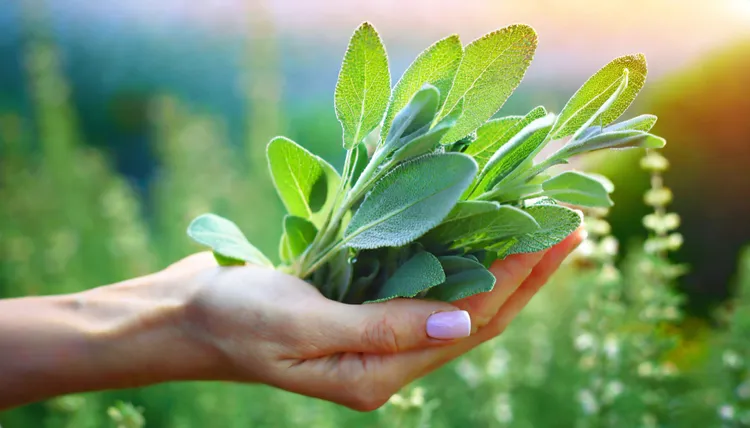
Sage is often the last herb left standing in a garden bed come November, and that hardiness is exactly why it needs a different harvest approach than basil or dill. Cutting it the wrong way doesn't just cost this season's leaves, it can set the whole plant back for years.
Sage's Growth Habit
Unlike soft annual herbs, sage develops woody stems as it matures, similar to rosemary or thyme. New leafy growth emerges mostly from the softer, green upper portions of the plant, while the thick woody base provides structure but doesn't readily regenerate new growth if cut back too hard. This is the key fact that shapes correct harvest technique: cut into soft, green growth freely, but be cautious about cutting into old, woody stems.
The Right Way to Cut
Snip stems from the current season's soft, green growth, leaving at least a couple of sets of leaves on each stem below the cut. Avoid cutting back into bare, woody stems that show no green growth, since these sections often don't resprout the way a soft herb's cut stem would. A light, regular harvest from the green growth encourages the plant to bush out further, similar to how many perennial herbs respond to gentle, repeated pruning.
How Much to Take at Once
A well-established sage plant can handle having up to a third of its current soft growth harvested at once without setting it back meaningfully. Newer or smaller plants, in their first year, should be harvested more lightly, just a few stems at a time, to let the plant build up size and woody structure before facing heavier harvesting.
Seasonal Timing
The best time to harvest sage for immediate use is in the morning after dew has dried, same as most herbs, when essential oil concentration is highest. For a plant's health, avoid heavy harvesting late in fall in cold climates; new growth stimulated by a late, hard cut may not have time to harden off before winter, making the plant more vulnerable to cold damage.
A light harvest in early spring, as new growth emerges, is a good time for a slightly harder cut than usual, since this coincides with the plant's natural vigorous growth phase and gives it the whole season to recover and bush out.
Signs You're Harvesting Correctly
- New leafy growth continues to emerge from cut stems within a couple of weeks
- The plant gets bushier over successive seasons rather than increasingly woody and sparse
- Leaf size and color remain consistent rather than showing signs of stress like yellowing or wilting after a harvest
Common Mistakes
- Cutting into bare woody stems. This is the most common way to damage a mature sage plant; stick to soft, green growth for regular harvesting.
- Harvesting a young plant too heavily. A first-year plant needs to establish size and some woody structure before it can handle regular heavy harvesting.
- Hard pruning late in the growing season in cold climates. This can stimulate tender new growth that doesn't have time to harden off before frost.
Frequently Asked Questions
Does sage regrow the way basil does after a hard cut?
Not from woody stems, no. Sage regrows readily from soft green growth but woody, bare stems generally don't resprout the way a basil stem would after a hard cut.
Can I harvest sage year-round?
In mild climates, yes, sage is often evergreen and can be harvested lightly through most of the year. In cold climates, growth slows significantly in winter, and it's best to harvest more conservatively during the dormant season.
How old does a sage plant need to be before heavy harvesting is safe?
Most sage plants can handle regular, moderate harvesting starting in their second year, once they've developed a solid woody framework and a good amount of soft new growth each season.
Harvesting From an Older, More Established Plant
A sage plant that's been in the ground for several years develops an increasingly woody framework, with soft new growth concentrated toward the outer edges and tips of established branches. On these older plants, harvest primarily from the newer growth at branch tips rather than searching for green growth deeper in the woody structure, which is often sparse or absent. Occasional structural pruning, removing a truly dead or damaged woody branch entirely back to its base, is different from routine harvesting and can help maintain a healthy shape over the years, though this is more a once-a-year maintenance task than part of the regular harvest routine.
Harvesting Different Amounts for Different Uses
How much to harvest at once reasonably depends on what it's for. A few leaves for a pan sauce or garnish barely register against a mature plant's total growth and can be taken almost any time without much thought. A larger harvest intended for drying a season's supply at once is better planned around the timing guidance above, taking a larger cut from robust green growth in a single session rather than nibbling at the plant repeatedly over several weeks.
Common Mistakes
- Cutting into bare woody stems. This is the most common way to damage a mature sage plant; stick to soft, green growth for regular harvesting.
- Harvesting a young plant too heavily. A first-year plant needs to establish size and some woody structure before it can handle regular heavy harvesting.
- Hard pruning late in the growing season in cold climates. This can stimulate tender new growth that doesn't have time to harden off before frost.
- Confusing routine harvest with structural pruning. Removing dead wood for the plant's long-term shape is a separate, less frequent task from the regular light harvesting described above.
Frequently Asked Questions
Does sage regrow the way basil does after a hard cut?
Not from woody stems, no. Sage regrows readily from soft green growth but woody, bare stems generally don't resprout the way a basil stem would after a hard cut.
Can I harvest sage year-round?
In mild climates, yes, sage is often evergreen and can be harvested lightly through most of the year. In cold climates, growth slows significantly in winter, and it's best to harvest more conservatively during the dormant season.
How old does a sage plant need to be before heavy harvesting is safe?
Most sage plants can handle regular, moderate harvesting starting in their second year, once they've developed a solid woody framework and a good amount of soft new growth each season.
Should I harvest sage differently if I'm growing it mainly for drying versus fresh use?
Not fundamentally, though a drying-focused harvest tends to happen in one or two larger sessions rather than the smaller, more frequent cuts typical of fresh use, simply because it's more efficient to process a larger batch at once.
Tips for Success
Use clean, sharp scissors or pruning shears for a clean cut rather than tearing stems by hand, which can damage the surrounding growth. Since a well-managed sage plant produces for years, working an annual harvesting rhythm into a garden and meal plan helps make the most of a perennial investment rather than treating it like a one-season herb.
Latest