How to Sear Meat Properly: The Maillard Reaction Explained
The specific chemistry that produces a crust - and the five conditions required to trigger it every time
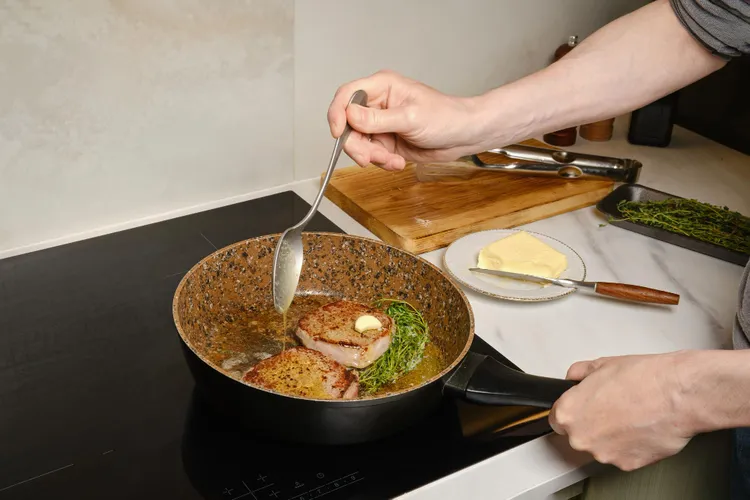
The crust on a properly seared piece of meat is not a cosmetic feature. It is flavour - hundreds of new chemical compounds produced by the reaction between amino acids and reducing sugars at high temperature, compounds that the raw or gently cooked meat simply does not contain. The difference in flavour between a piece of chicken seared to a deep golden-brown crust and the same piece of chicken gently cooked without browning is enormous and immediate. The crust is the point.
Understanding the chemistry of this crust - specifically, why it requires dry surface, high heat, and patience - turns searing from a step you attempt and hope for into a step you execute deliberately and predict correctly.
What the Maillard Reaction Is
The Maillard reaction is named after Louis-Camille Maillard, the French chemist who described it in 1912. It is a series of chemical reactions between amino acids (the building blocks of protein) and reducing sugars (glucose, fructose) that occurs when the surface temperature exceeds approximately 140°C and proceeds most rapidly between 150-180°C.
The reactions produce hundreds of new molecules - pyrazines, furans, aldehydes, ketones - each with specific flavour and aroma properties. Together, they produce what we experience as the complex, satisfying flavour of browned meat, toasted bread, roasted coffee, and caramelised vegetables. This is not a single flavour - it is a family of hundreds of flavours, produced simultaneously by a single heat-driven chemistry.
Why this is not caramelisation: Caramelisation is the breakdown of sugar molecules at high temperatures (approximately 160°C for sucrose) - a purely sugar-driven reaction. The Maillard reaction requires both amino acids and sugars and produces different compounds with different flavour characteristics. Both produce browning; both produce flavour; they are chemically distinct processes that often occur simultaneously in cooking.
The temperature requirement: Below 140°C, the Maillard reaction proceeds too slowly to produce significant browning in a practical cooking timeframe. This is why meat cooked at low temperatures (poached, steamed, slow-braised in liquid) does not develop a brown crust - the surface temperature never reaches the threshold. Browning requires dry heat at the surface - liquid cooking environments cannot exceed 100°C.
The Five Conditions for a Proper Sear
Every searing failure can be traced to one or more of these five conditions not being met.
Condition 1: Completely Dry Surface
Water boils at 100°C. The Maillard reaction begins at 140°C. If the surface of the protein is wet, the heat energy goes first into evaporating the water - and the surface temperature cannot exceed 100°C until all the water is gone. The protein steams rather than sears, producing a grey, flavourless surface.
The practical test: Pat the protein completely dry with paper towels - all surfaces, including the sides. The surface should feel slightly tacky, not moist or slippery. If any moisture is visible, continue patting.
The special case of marinades: Marinated proteins are almost always wet. Before searing marinated meat, remove from the marinade, pat completely dry, and allow to sit uncovered at room temperature for 10 minutes. A very small amount of surface moisture remains and will slow initial browning slightly - but excess marinade not removed produces steaming rather than searing.
Condition 2: Hot Pan Before Protein Goes In
The pan must be at searing temperature before the protein is added. Adding protein to a cold or warm pan means the protein begins cooking before the pan reaches searing temperature - in the time it takes the pan to heat up, the protein is steaming in its own moisture.
The correct method: Add oil to the pan first. Heat over high heat until the oil is shimmering and just beginning to smoke - the smoke indicates the pan is at or near searing temperature (approximately 180-200°C with most oils). Add the protein at this moment.
The smoke signal: Smoke is the visual indicator that the oil has reached or exceeded its smoke point - the temperature at which the oil's compounds begin to break down. For searing, this is the correct temperature signal. High smoke point oils (refined avocado oil at 270°C, refined sunflower oil at 230°C) give the widest window between "hot enough to sear" and "burning the oil."
Condition 3: Correct Fat
Not all fats are suitable for searing because of their smoke points. Extra virgin olive oil (smoke point approximately 190°C) produces acrid flavours and thin smoke at searing temperatures. Butter (smoke point approximately 150°C) burns before the pan reaches searing temperature.
For the initial sear: Use a fat with a smoke point above 200°C - refined avocado oil, refined sunflower oil, refined groundnut oil, ghee (smoke point 250°C), refined coconut oil, or beef tallow (for beef specifically).
Butter for finishing: Butter produces the Maillard reaction in its own milk solids (this is brown butter - see How to Brown Butter) and adds specific flavour complexity. Add butter in the final 60-90 seconds of searing - not at the beginning where it will burn.
Condition 4: No Crowding
When protein is added to a pan, it releases moisture - moisture from the surface and from the muscle fibres as they contract. This moisture evaporates as steam. In a pan with adequate spacing, the steam disperses and the surface dries quickly, allowing browning to proceed.
In a crowded pan, the steam produced by multiple pieces of protein fills the pan environment. The surface of each piece of protein remains moist - it continues to steam rather than sear. The result: all pieces turn grey and cook through without developing any crust.
The rule: No more than two pieces of protein per 28cm pan, with clear space between them. For searing multiple pieces, work in batches - the quality improvement justifies the additional time.
Condition 5: Leave It Alone
Moving or pressing protein during searing prevents crust formation. A crust forms by the Maillard products accumulating in the surface layer - this requires sustained contact between the protein's surface and the hot pan surface. Moving the protein every 30 seconds disrupts the contact and prevents crust formation.
The protein will naturally release from the pan when the crust has formed sufficiently - it "unsticks" as the Maillard products solidify the surface. If the protein is sticking and resisting when you try to flip it: the crust is not ready. Wait another 30-60 seconds.
The Searing Sequence
Step 1: Remove protein from refrigerator 20-30 minutes before cooking. Pat completely dry.
Step 2: Season (salt at least, pepper just before cooking - pepper can burn). For maximum crust, a very light dusting of flour (1 tsp patted over the surface) slightly increases Maillard browning by adding starch molecules to the surface.
Step 3: Heat the pan (cast iron or heavy stainless steel - not non-stick, which cannot withstand the required temperatures safely) over high heat for 3-5 minutes until genuinely hot.
Step 4: Add a thin layer of high smoke point oil. It should shimmer immediately and begin to smoke within 30-60 seconds.
Step 5: Add the protein gently (away from you to avoid oil splatter). It should sizzle loudly on contact.
Step 6: Do not move. Cook undisturbed for 2-5 minutes depending on thickness and protein type.
Step 7: When the first side has a deep brown crust (lift one corner to check), flip. Cook the second side.
Step 8: Add butter, garlic, and herbs for the final 60-90 seconds of basting if desired.
Searing by Protein Type
Beef (steak, burgers): The ideal sear. Beef's high myoglobin content produces deep browning quickly. Pan must be at maximum heat. 2-4 minutes per side for a 3cm steak. See How to Cook the Perfect Steak for the complete guide.
Chicken thighs: Place skin-side down in a hot pan with a little oil. Cook skin-side down for 8-10 minutes - patience here is the key. The skin must render its fat and develop a deep golden crust before the chicken is flipped. Pressing down briefly with a spatula increases contact. Finish in the oven for the interior. See One-Pan Lemon Garlic Chicken Thighs.
Chicken breast: Very easy to overcook - the lean muscle dries out quickly above 74°C internal. Sear for 3 minutes per side then finish at 180°C in the oven until internal temperature reaches 74°C.
Pork: Similar to beef in technique. Pork chops and tenderloin sear excellently. Current food safety standards allow pork to be served at 63°C internal (slightly pink) - see Internal Cooking Temperatures.
Fish: Requires special care - fish proteins coagulate at lower temperatures (60°C) and have more fragile structure. Pat extremely dry. Use a moderate amount of oil. Press gently for the first 10 seconds to ensure full surface contact. Skin-side down for 4-5 minutes; flesh-side for 1-2 minutes. Do not move between flips.
Tofu: Must be pressed (water removed) before searing - unpressed tofu steams in its own moisture. Pressed tofu sears beautifully, developing a golden, slightly crispy surface. High heat, very dry surface, patient cook.
Scallops: The fastest searing protein. Completely dry. Maximum heat. 90 seconds per side. Do not move. The scallop should release cleanly when the crust is ready.
Why the Fond Is as Important as the Crust
The brown residue left on the pan base after searing - called fond (French for "base" or "foundation") - is caramelised protein and sugar. It is highly flavoured and forms the basis of a pan sauce.
Deglazing (adding liquid to the hot pan and scraping the fond from the base) dissolves these flavour compounds into the sauce. A pan sauce made from the fond of a seared steak or chicken contains significantly more flavour than a sauce made from liquid alone.
Never discard fond. See How to Make a Pan Sauce for the complete technique.
Diagnosing Searing Problems
Grey meat, no crust: Surface was wet; pan wasn't hot enough; pan was crowded. Address all three.
Burnt exterior, raw interior: Pan was too hot; protein was too thick for the hot-pan method. Use the reverse sear method for thick cuts.
Sticking: Crust hasn't formed yet. Wait - properly seared protein releases naturally.
Uneven browning: Protein surface wasn't flat against the pan. Press gently with a spatula on any raised sections.
Smoking excessively and smelling acrid: Oil's smoke point exceeded; fat is burning. Reduce heat slightly; use higher smoke point oil.
Pro Tips
- The cast iron skillet is the best pan for searing. Its heat retention means the surface temperature doesn't drop dramatically when cold protein is added. A thin stainless pan drops temperature significantly and the protein cooks in the recovery period. See The Best Pans for One-Pan Cooking.
- Preheating the pan for 5 minutes is not optional. 2 minutes of preheating produces a pan that drops significantly when protein is added. 5 minutes produces a pan at thermal equilibrium - it maintains its temperature through the initial protein addition.
- The sizzle volume tells you what's happening. Loud, vigorous sizzle = searing correctly. Moderate sizzle = barely at temperature. Quiet, watery sound = steaming. Adjust heat accordingly.
The Crowded Pan: The Most Common Searing Failure A pan with four chicken thighs where two would comfortably fit produces steam-cooked, grey, flavourless chicken regardless of how hot the pan was. Each piece of protein releases moisture during cooking; in a crowded pan, that moisture has nowhere to go. The pan environment becomes humid; the protein surfaces stay wet; no browning occurs. Cook in batches. The second batch is done in 4 minutes; the quality difference is dramatic.
FAQ
Q: Can I sear in a non-stick pan?
Non-stick coatings degrade above 230°C and may release harmful compounds at searing temperatures. They also produce less effective searing because the coating prevents the direct metal-to-protein contact that most efficiently transfers heat. For searing, use a cast iron or heavy stainless steel pan. Reserve non-stick pans for eggs, fish with delicate skin, and low-heat applications.
Q: Does searing "seal in the juices"?
No - this is a persistent myth disproven by experiments. Seared and unseared pieces of meat lose similar amounts of moisture during cooking. Searing produces flavour through the Maillard reaction; it does not create a moisture barrier. The juiciness of properly cooked meat comes from correct internal temperature and resting, not from searing.
Q: Can vegetables be seared?
Yes - the Maillard reaction applies to any food with amino acids and sugars at its surface. Mushrooms, aubergine, cauliflower, asparagus, and corn all develop Maillard browning at high heat. The key conditions are the same: dry surface, hot pan, no crowding, patience. See How to Caramelise Onions for the most common vegetable browning application.
🔗 Apply the Technique
- How to Cook the Perfect Steak: Every Method, Every Doneness
- How to Make a Pan Sauce: Four Steps to Restaurant Flavour
- How to Brown Butter: The 5-Minute Flavour Upgrade
- How to Caramelise Onions Properly (It Takes 40 Minutes)
- Internal Cooking Temperatures: The Complete Guide
- Knife Skills & Kitchen Techniques: The Complete Guide
Latest