Nuts and Seeds: High Fat but Worth the Calories?
Nuts and seeds are calorie-dense and easy to overeat - but the fat quality, protein, fibre, and micronutrient content make them one of the more justified sources of calories in a diet.
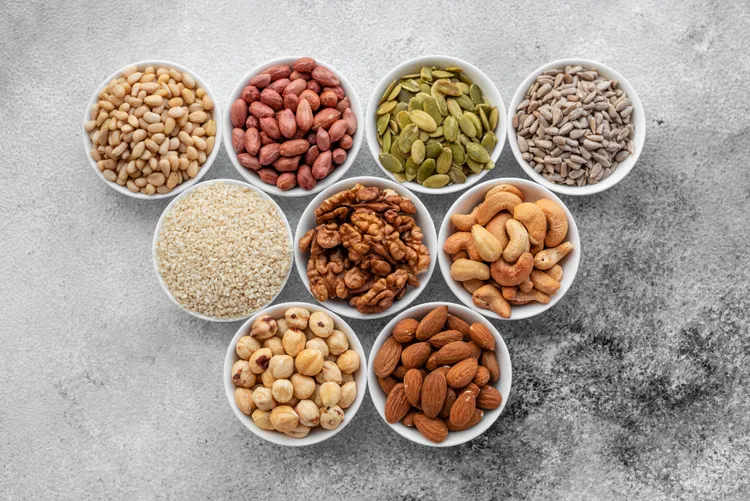
A 28g handful of mixed nuts has roughly 170 calories and 15g fat. A bag of mixed nuts sold as a healthy snack often contains 50-60g - 300-360 calories - with almost no volume cue that you've eaten that much. Nuts are worth eating; they're also easy to overconsume without realising it.
Calorie and Macro Breakdown by Nut (per 28g / ~1 small handful)
- Macadamia nuts: 204 kcal, 21g fat (mostly monounsaturated), 2g protein, 1g fibre
- Pecans: 196 kcal, 20g fat, 3g protein, 3g fibre
- Walnuts: 185 kcal, 18g fat (highest omega-3 of all nuts at 2.5g ALA), 4g protein, 2g fibre
- Brazil nuts: 185 kcal, 19g fat, 4g protein, 2g fibre. Exceptionally high selenium - 2-3 nuts cover a full daily target
- Almonds: 164 kcal, 14g fat, 6g protein, 4g fibre. Best protein-per-calorie of common nuts
- Cashews: 157 kcal, 12g fat, 5g protein, 1g fibre. Lower fat, higher carbs than other nuts (~9g)
- Pistachios: 159 kcal, 13g fat, 6g protein, 3g fibre. High lutein and zeaxanthin content (eye health)
- Peanuts: 161 kcal, 14g fat, 7g protein, 2g fibre. Technically a legume, but used as a nut. Best protein content per serving.
Seeds (per 28g)
- Hemp seeds: 166 kcal, 15g fat, 9g protein. Best omega-3:omega-6 ratio of common seeds.
- Flaxseeds (ground): 152 kcal, 12g fat, 5g protein, 8g fibre. Must be ground for ALA absorption.
- Chia seeds: 138 kcal, 9g fat, 5g protein, 10g fibre. Very high fibre.
- Pumpkin seeds: 151 kcal, 13g fat, 9g protein. High magnesium and zinc.
- Sunflower seeds: 163 kcal, 14g fat, 5g protein. High vitamin E, but high omega-6 linoleic acid.
- Sesame seeds: 160 kcal, 14g fat, 5g protein. High calcium (~98mg per 28g).
The Fat Quality Argument
Most nuts and seeds are dominated by unsaturated fats - monounsaturated in almonds, macadamias, and pistachios; polyunsaturated in walnuts, flaxseeds, and hemp seeds. This profile is consistently associated with reduced LDL cholesterol and cardiovascular risk in research. The PREDIMED trial, one of the largest nutrition studies conducted, found that regular nut consumption was associated with reduced rates of heart attack and stroke as part of a Mediterranean-style diet.
Walnuts stand out for omega-3 content. Almonds stand out for protein and fibre per calorie. Brazil nuts are useful in small quantities for selenium. None of them needs to be eaten in large quantities to provide benefit.
The Overeating Risk
Nuts trigger satiety less reliably than protein sources of comparable calorie density. A 200-calorie portion of chicken is hard to exceed unintentionally. A 200-calorie portion of cashews disappears quickly and often prompts eating more. Pre-portioning nuts before sitting down with them is one of the most effective strategies for keeping intake controlled.
Practical Portion Strategy
- A single 28g portion daily is enough to get the health benefits shown in research
- Use nuts as a meal component rather than a standalone snack - adding 15g of walnuts to oatmeal or a salad is easier to account for than eating from a bag
- Seed additions (tablespoon of ground flaxseed, teaspoon of chia) add nutrition at low calorie cost
Meal Prep Tips
Store nuts in an airtight container away from heat. High-PUFA nuts like walnuts and ground flaxseed go rancid faster - refrigerate if you're not using them within 2-3 weeks. For the broader context on how nut and seed fat compares to other fat sources, the Fat Debate: A Balanced, Practical Guide covers polyunsaturated and monounsaturated fats in full.
Latest