Reading Nutrition Labels for Fat: What the Numbers Mean
Nutrition labels list total fat, saturated fat, trans fat, and sometimes more. Knowing what each number means - and what it doesn't tell you - is the foundation of making the label useful.
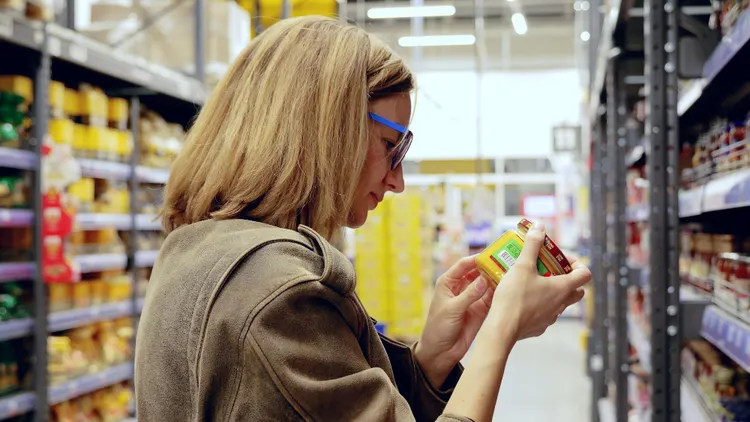
Most people look at the total fat number and move on. That single number tells you almost nothing useful without context: 20g of fat from olive oil, avocado, and salmon is not the same as 20g from a processed snack made with partially hydrogenated oil and cheap seed fats. The breakdown matters.
Understanding the Label Layout
A standard nutrition facts panel lists (in order):
- Total Fat: The sum of all fat types in the serving. Reported in grams.
- Saturated Fat: A subset of total fat. Always listed. Guidelines recommend keeping this under 10% of daily calories (~22g on a 2000 kcal diet).
- Trans Fat: A subset of total fat. Listed separately because of its specific harms. Aim for as close to 0g as possible from artificial sources.
- Polyunsaturated Fat: Sometimes listed. Includes omega-3 and omega-6. Generally a positive sign when present in reasonable amounts.
- Monounsaturated Fat: Sometimes listed. The fat in olive oil, avocado, and most nuts. Generally positive.
The unsaturated fat breakdown is voluntary in most markets, which means products can show total fat, saturated, and trans, and leave you to calculate the unsaturated portion yourself (Total fat minus saturated minus trans = roughly the unsaturated total).
What the % Daily Value Means
The % DV on a label is calculated against a 2000-calorie reference diet. If you eat 1600 or 2400 calories, your actual targets differ:
- Total fat DV on a 2000 kcal diet: ~65g (or ~78g if 35% of calories)
- Saturated fat DV: 20g (10% of 2000 kcal)
- Trans fat: no DV set; the guidance is to minimise
A product showing 25% DV for saturated fat contains 5g saturated fat per serving - that's a significant chunk of a 20g daily target, so the serving size deserves attention.
The Serving Size Trap
Serving sizes are set by the manufacturer (within regulatory guidelines) and often don't match how people actually eat. Common examples:
- A bag of crisps listed as "2 servings" is eaten as one by most people, doubling all the numbers on the label
- A jar of nut butter with "2 tablespoon" servings - most people use 3-4 tablespoons on a piece of toast
- A bar of chocolate with "4 servings" per bar
Always look at the serving size listed and compare it to what you actually consume. Scale the numbers accordingly.
The Trans Fat Loophole in Practice
In the US, a product with less than 0.5g trans fat per serving can legally print "0g" on the label. If the ingredients list includes "partially hydrogenated" anything, the product contains artificial trans fats regardless of what the panel says. Always check the ingredients list when buying crackers, biscuits, pastries, or shelf-stable snacks.
Reading Labels for Fat Quality: A Quick Checklist
- Check serving size first - is it realistic?
- Look at saturated fat as a percentage of total fat - above 50% means this is a saturated-fat-dominant food
- Check for trans fat - then verify the ingredients list for "partially hydrogenated"
- If unsaturated fat is listed and dominates total fat, that's a positive sign
- For omega-3 specifically, you'll need to look at the ingredients list (fish, flaxseed, walnuts) - the label rarely quantifies it except on specific health-claim products
Real Label Examples
Extra virgin olive oil (1 tbsp / 14g): Total fat 14g, Saturated 2g (14%), Monounsaturated 10g (71%), Polyunsaturated 1.5g (11%). An excellent fat profile - predominantly monounsaturated, low saturated.
Butter (1 tbsp / 14g): Total fat 11g, Saturated 7g (64%), Monounsaturated 3g (27%), Trans 0.4g (natural). Saturated-dominant. Flavourful and fine in moderation; not a daily-by-the-spoonful fat.
Commercial cookie (1 cookie / 30g): Total fat 8g, Saturated 4g (50%), Trans 0g (but check ingredients). If the ingredients list partially hydrogenated oil, the 0g trans is a labelling artefact.
Meal Prep Tips
The clearest way to avoid confusing labels is to cook from whole ingredients where fat content is transparent - olive oil by the tablespoon, eggs by the unit, fish by weight. Pre-packaged whole foods like lemon-infused cabbage salad with olive oil or baked zucchini fritters with goat cheese use identifiable fat sources you can account for accurately. For a complete guide to how different fat types behave in the body, the Fat Debate: A Balanced, Practical Guide covers saturated, unsaturated, and trans fats in full context.
Latest