Fat and Protein Together: Why the Combo Works for Satiety
Eating fat and protein in the same meal doesn't just add up in calories - the combination triggers a satiety response that neither macronutrient reliably produces alone.
Fat slows gastric emptying. Protein triggers the release of peptide YY and GLP-1, two hormones that signal fullness to the brain. Together, these effects compound - meals high in both fat and protein consistently outperform high-carb meals of the same calorie count on hunger ratings for 3-6 hours post-meal.
The Satiety Hormone Picture
When fat enters the small intestine, it stimulates cholecystokinin (CCK) release, which slows the rate food moves through your gut and sends a fullness signal to the hypothalamus. Protein independently stimulates CCK and also suppresses ghrelin - the hunger hormone that rises when your stomach empties.
Carbohydrates, by contrast, digest quickly and produce a relatively brief satiety window. This is not an argument against carbohydrates - they serve other functions - but it explains why a 400-calorie meal of eggs cooked in butter tends to keep hunger at bay longer than 400 calories of oatmeal, even though the oatmeal has more fibre.
The Practical Calorie Maths
Fat-plus-protein meals do carry more calories per gram than protein-plus-carb meals. The satiety benefit only works if portion sizes are controlled. This is where many higher-fat diets fail in practice: the signals are good, but the calorie density means even a modest overshoot adds up quickly.
A workable target for a fat-plus-protein meal with strong satiety is roughly:
- 30-40g protein (meat, fish, eggs, or dairy)
- 15-25g fat (from the protein source itself, cooking fat, or added fat like cheese or avocado)
- Total: 300-450 calories per meal, depending on portion
Meal Examples with Macros
Salmon with asparagus - Lemon-butter baked salmon with roasted asparagus delivers roughly 35g protein and 20g fat per serving at around 350 kcal. One of the most efficient satiety meals in terms of micronutrient density per calorie.
Eggs with bacon - Cheddar, bacon, and egg breakfast scramble combines fat from egg yolks, bacon, and cheese with 25-30g protein per serving. Around 400 kcal. Typically holds hunger for 4-5 hours.
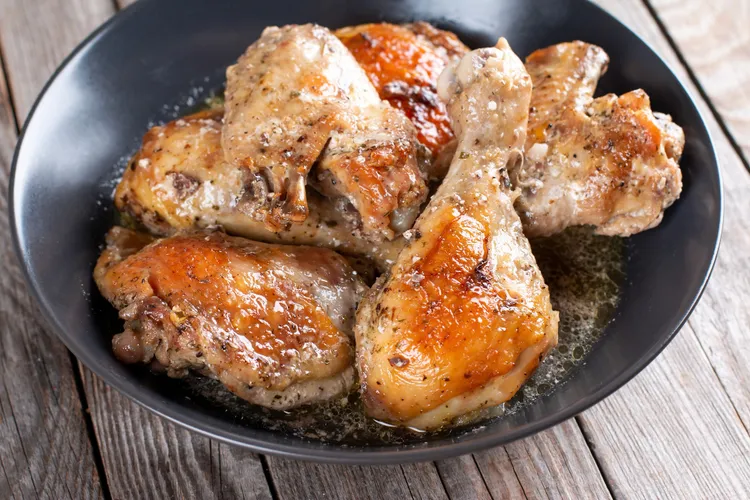
Chicken thighs - Pan-roasted chicken thighs provide more fat than breast (and more flavour), with roughly 28g protein and 18g fat per 200g serving. The higher fat content slows digestion compared to a comparable portion of breast.
Keto meatballs - Keto meatballs in creamy mustard-sour cream sauce are a higher-fat version of a classic, with fat from both the beef and the sauce. About 30g protein and 25g fat per serving at roughly 380 kcal.
When This Approach Is Most Useful
Fat-plus-protein satiety is most valuable for people who:
- Eat fewer than 3 meals per day and need each meal to carry more staying power
- Struggle with mid-afternoon hunger on lower-calorie diets
- Are eating under 1600 calories and need satiety per calorie to be high
- Are following a ketogenic or low-carbohydrate approach where fat is the primary energy source
Meal Prep Tips
The most practical way to build fat-plus-protein meals at scale is to batch-cook a protein source and pair it with fat at serving time. Cook 6-8 chicken thighs or a side of salmon on Sunday. Pair with half an avocado, a drizzle of olive oil, or a portion of cheese when eating. This keeps the fat portions easy to adjust rather than locked into the batch-cooked quantity. For more context on how fat fits into different eating styles, the Fat Debate: A Balanced, Practical Guide covers the full picture.
Latest