Omega-3 vs Omega-6: Why the Ratio Matters More Than the Number
You need both omega-3 and omega-6 fatty acids - your body can't make either. The problem isn't the total amount; it's how lopsided the modern diet has become in favour of omega-6.
Pre-industrial humans likely ate omega-6 and omega-3 in roughly a 4:1 ratio. Most people eating a typical Western diet today are closer to 15:1 or 20:1. That shift has happened almost entirely in the last 80 years, driven by the widespread adoption of seed oils and grain-fed rather than grass-fed animal products.
What These Fats Do
Omega-6 fatty acids, particularly arachidonic acid, are precursors to pro-inflammatory signalling molecules called eicosanoids. That's not inherently bad - inflammation is a necessary immune response. The problem is chronic, low-grade inflammation that never fully resolves, which is associated with cardiovascular disease, metabolic disorders, and autoimmune conditions.
Omega-3 fatty acids - particularly EPA and DHA from marine sources, and ALA from plant sources - produce anti-inflammatory eicosanoids and compete with omega-6 for the same enzymatic pathways. More omega-3 in the diet means less net inflammatory signalling, even if omega-6 intake stays the same.
ALA (found in flaxseed, chia, and walnuts) converts to EPA and DHA in the body, but the conversion rate is poor - typically 5-15% for EPA and less than 5% for DHA. Eating walnuts is better than not eating them, but it's not a substitute for eating fish.
The Main Omega-6 Sources in the Modern Diet
- Sunflower, soybean, and corn oil: The dominant cooking and frying oils in processed food. Very high in linoleic acid (omega-6).
- Packaged snacks and fast food: Fried in high-omega-6 oils, often in large quantities.
- Grain-fed chicken and pork: Higher in omega-6 than grass-fed or pasture-raised equivalents.
- Most margarines and spreads: Even when not hydrogenated, often high in linoleic acid.
The Main Omega-3 Sources
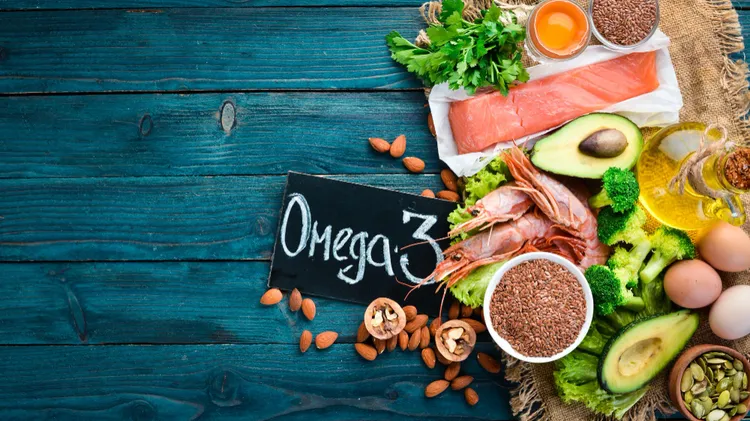
- Fatty fish (EPA and DHA): Salmon, mackerel, sardines, herring, anchovies. Target 2-3 servings per week. A 150g serving of salmon delivers around 2-3g combined EPA and DHA.
- Walnuts (ALA): About 2.5g ALA per 28g serving - the highest plant source.
- Flaxseed and chia seeds (ALA): 1 tablespoon ground flaxseed has roughly 1.6g ALA.
- Grass-fed beef and dairy: Higher omega-3 content than grain-fed equivalents, though the absolute amounts are still modest.
Do You Need to Supplement?
If you eat fatty fish twice or more per week, you're likely getting adequate EPA and DHA. If you don't eat fish at all, a fish oil or algae-based omega-3 supplement (algae is where fish get their DHA in the first place) is reasonable. Standard supplementation doses are 1-2g EPA+DHA per day.
Omega-6 supplementation is almost never necessary - the challenge is reducing it, not adding more.
Practical Steps to Shift the Ratio
You don't need to count milligrams daily. A few habit changes move the needle significantly:
- Cook with olive oil, avocado oil, or butter rather than sunflower or vegetable oil
- Eat fatty fish at least twice a week - lemon-butter baked salmon with asparagus takes 25 minutes and delivers roughly 2.5g EPA+DHA per serving
- Add a tablespoon of ground flaxseed or a small handful of walnuts to daily meals
- Cut back on fried and packaged foods, which deliver most of the excess omega-6 in a typical diet
Meal Prep Tips
Batch-cooking salmon is one of the fastest ways to hit omega-3 targets for the week. Bake two fillets on Sunday, refrigerate, and eat cold on salads or with vegetables over 2-3 days. For a broader view of how omega-3 fits into the fat debate, the Fat Debate: A Balanced, Practical Guide covers where polyunsaturated fats sit relative to saturated and monounsaturated options.
Latest