Pickled Carrots and Daikon (Vietnamese Đồ Chua Style)
A traditional Vietnamese-style pickled carrot and daikon recipe (đồ chua) with a distinct sweet-tangy balance, perfect for bánh mì and rice bowls.
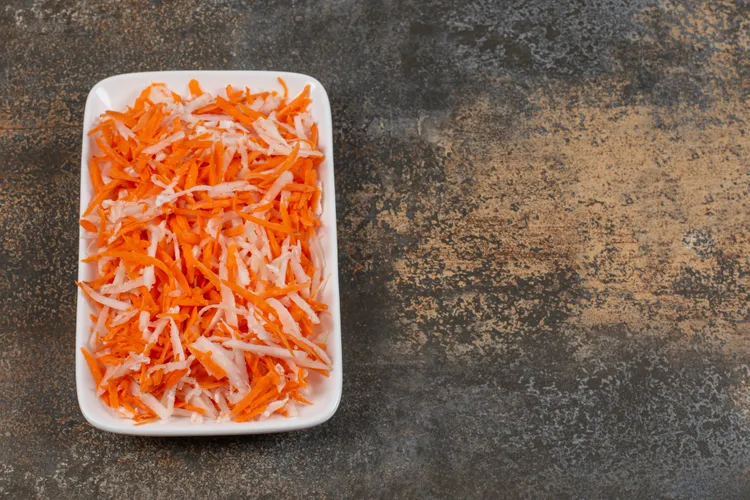
Đồ chua, the pickled carrot and daikon combination common in Vietnamese cooking, is worth learning as its own traditional preparation rather than treating it as a variation of a Western pickle - the balance of sweet, tangy, and slightly savory is distinct and genuinely versatile.
Pickled Carrots and Daikon (Đồ Chua)
Prep time: 15 minutes, plus resting | Makes: about 1 quart
Ingredients
- 2 medium carrots, julienned or cut into thin matchsticks
- 1 small daikon radish, julienned or cut into thin matchsticks
- 1 tbsp sugar, plus 1/2 cup more, divided
- 1.5 tsp salt, plus 1 tbsp more, divided
- 3/4 cup rice vinegar
- 3/4 cup water
Instructions
- Place the julienned carrot and daikon in a colander or bowl. Toss with 1 tablespoon of sugar and 1.5 teaspoons of salt, and let sit for 15 to 20 minutes - this draws out excess water and helps the vegetables stay crisp in the finished pickle.
- Rinse the vegetables briefly and pat dry, then pack into a clean quart jar.
- In a small saucepan, combine the rice vinegar, water, remaining 1/2 cup sugar, and remaining 1 tablespoon salt. Warm over medium heat, stirring, until fully dissolved.
- Pour the warm brine over the vegetables, making sure they're fully submerged.
- Let the jar cool to room temperature, then seal and refrigerate.
- Ready to eat after about 2 to 3 hours, though the flavor continues to develop over the next day.
Notes
The initial salting and draining step is genuinely important here - skipping it results in a wetter, less crisp final pickle, since the vegetables retain more of their natural moisture, which dilutes the brine.
Why This Pickle Is Sweeter Than the Others in This Guide
Đồ chua traditionally uses considerably more sugar relative to salt and vinegar than a typical Western pickle, giving it a distinct sweet-tangy balance rather than a purely sharp one. This is intentional and traditional, not a sign to reduce the sugar to match other recipes in this guide.
What to Use It On
- Bánh mì sandwiches, its most classic and traditional use
- Spring rolls and rice paper rolls
- Rice or noodle bowls (bún) as a bright, crunchy topping
- Alongside grilled meat
Variations
- Add chili: A few thin slices of fresh chili in the jar add heat alongside the sweetness.
- Julienne by hand or mandoline: A mandoline speeds up the prep considerably if you're making a larger batch.
For more traditional and everyday pickles, see the complete pickling guide.
Latest