How to Add Swangy Flavour to Grilled Meats and Fish
Swangy marinades and glazes work better on grilled food than most standard marinades because the fruit acids tenderise, the sugars caramelise, and the fermented funk penetrates the meat during the cook. Four complete recipes for chicken, pork, fish, and tofu with macros and timing.
The chemistry of swangy ingredients makes them particularly well-suited to grilling. Fruit acids (tamarind, citrus, amchur) denature surface proteins, improving texture and increasing marinade penetration. Sugars from fermented pastes (gochujang, tamarind) and added sweeteners caramelise under high heat, creating a sticky, slightly charred crust with more flavour than a plain seasoned piece of meat can produce. And the fermented funk elements - fish sauce, miso, gochujang - distribute through the meat during marination in a way that heat-stable salt alone cannot replicate.
Key Principles for Swangy Grilling
- Marination time: 30 minutes minimum for thin cuts (chicken breast, fish fillets, tofu). 2-8 hours for thick cuts (chicken thighs, pork belly, skirt steak). Overnight for bone-in cuts. Longer than 24 hours with high-acid marinades can over-tenderise the surface.
- Sugar management: Swangy marinades contain more sugar than standard marinades. This means they burn faster. Use medium rather than high heat for longer cooks, or add the glaze only in the final 5 minutes if grilling over high heat.
- Pat dry before glazing: Remove excess marinade before cooking. A wet surface steams rather than sears. Apply a thin glaze layer after the first side is cooked.
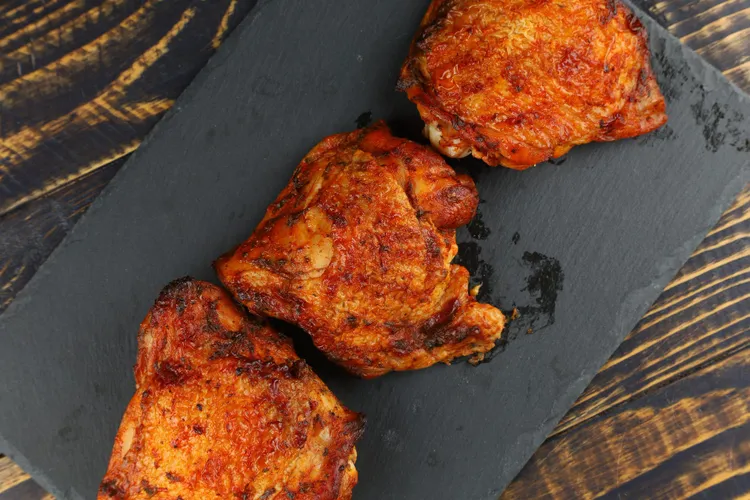
Recipe 1: Tamarind-Gochujang Chicken Thighs
Serves 4 | Marinade macros per serving (approx.): 45 kcal, 10g carbs, 900mg sodium
Marinade: 3 tbsp gochujang + 2 tbsp tamarind paste + 1 tbsp fish sauce + 1 tbsp honey + 2 garlic cloves grated + 1 tsp sesame oil.
Mix thoroughly. Score chicken thigh skin with 3-4 cuts. Coat thighs and leave covered for minimum 2 hours (overnight better).
Cook: Pan-roast skin-side down over medium heat for 8-10 minutes until skin is deep golden and caramelised. Flip, reduce heat, cook 6-8 minutes more until cooked through. The gochujang creates an extraordinary crust. See the base technique in the pan-roasted chicken thighs recipe - apply this marinade instead of standard seasoning.
Recipe 2: Tamarind-Honey Glazed Salmon
Serves 2 | Glaze macros per serving: 55 kcal, 13g carbs, 420mg sodium
Glaze: 2 tbsp tamarind paste + 1 tbsp honey + 1 tbsp soy sauce + 1 tsp grated ginger + 1 tsp sesame oil.
No marination needed for fish - the acid acts quickly. Pat salmon fillets dry. Brush half the glaze on the flesh side.
Cook: Place in a foil-lined oven dish, glazed side up, at 200°C for 12 minutes. Remove, brush remaining glaze over the top, return to oven for 3-4 minutes until glaze is sticky and slightly charred at the edges. The tamarind-honey combination creates a caramelised surface that elevates a basic salmon fillet significantly. Adapted from the base foil-baked salmon recipe - use the same asparagus side.
Recipe 3: Swangy Pork Skewers (or Belly Slices)
Serves 4 | Marinade macros per serving: 60 kcal, 8g carbs, 680mg sodium
Marinade: 2 tbsp tamarind paste + 1 tbsp Worcestershire sauce + 1 tbsp soy sauce + 1 tsp brown sugar + 1 tsp chilli flakes + 2 garlic cloves grated.
This is the Western-facing swangy marinade - the Worcestershire and tamarind combination (see the full guide to Worcestershire and tamarind together) produces a British-Asian hybrid that is particularly good on pork.
Cut pork shoulder or belly into 3cm cubes. Marinate 4-8 hours. Thread onto skewers. Grill over medium-high heat, turning every 3-4 minutes, for 15-18 minutes until cooked through and caramelised.
Recipe 4: Swangy Tofu (Firm or Extra-Firm)
Serves 2 | Marinade macros per serving: 40 kcal, 9g carbs, 750mg sodium (tofu macros additional)
Marinade: 2 tbsp gochujang + 1 tbsp rice vinegar + 1 tbsp soy sauce + 1 tsp sesame oil + 1 tsp sugar.
Press tofu for 30 minutes to remove excess water (this is the most important step - wet tofu will not caramelise). Cut into 2cm cubes or slabs. Toss in marinade and leave 30 minutes minimum.
Cook: Bake at 200°C for 25-30 minutes, turning halfway, until caramelised and slightly chewy. The gochujang creates a deeply savoury, slightly sticky coating. For a crispier result, toss marinated tofu in a light coating of cornstarch before baking.
Batch Marinade Strategy
Make a double or triple batch of the tamarind-gochujang or tamarind-Worcestershire marinades on Sunday. Keep in a jar refrigerated for up to 1 week. Each evening, pull out a different protein and marinate it for whatever time is available before cooking. The flavour investment is 5 minutes on Sunday for a week of interesting grilled food.
For the full swangy ingredient context, see the Complete Guide to the Swangy Flavour Movement.
Latest