Tamarind: The Original Swangy Ingredient
Tamarind is the foundational swangy ingredient - a fruit with simultaneous sweet, sour, and faintly funky qualities that underpins Indian chutneys, Thai sauces, Mexican agua fresca, and Worcestershire sauce. This guide covers every format it comes in and how to use each one.
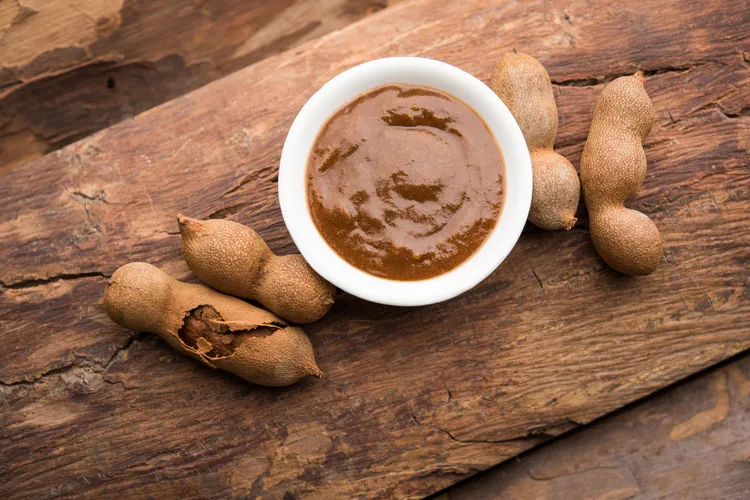
Tamarind is one of those ingredients that turns up in completely unrelated cuisines because its flavour profile solves a universal cooking problem: how do you add acid without losing sweetness, and sweetness without losing brightness? Tamarind does both at once. It is sourer than most fruit, sweeter than any vinegar, and carries a faint fermented earthiness that intensifies as it ages. That combination - the original swangy - is why it ends up in everything from pad thai to tamarind candy to Worcestershire sauce.
The Three Formats of Tamarind
Tamarind Block (Compressed Pulp)
The least processed format: dried tamarind pulp with seeds and fibres pressed into a block. Requires soaking in warm water and straining before use.
- How to use: Break off 50g, soak in 150ml warm water for 15 minutes, squish with fingers, strain through a sieve. The liquid is your tamarind water.
- Flavour: Most complex, slightly uneven batch to batch
- Cost: ~£1.50-2 for 200-400g block. Best value format.
- Best for: Indian chutneys, Tamil-style rasam, large-batch cooking
Tamarind Paste
Ready-to-use, slightly thicker than concentrate. Usually seeds and fibres already removed.
- How to use: Spoon directly into dishes. 1 tbsp paste = roughly the flavour of 50g block soaked and strained.
- Flavour: Reliable, consistent, slightly less complex than fresh-soaked block
- Cost: ~£2-3 for 200-300g jar
- Best for: Everyday cooking, dressings, marinades, dipping sauces
Tamarind Concentrate
The most intensified format - very thick, very sour. Use in small quantities.
- How to use: Start with 1 tsp and adjust. Dissolves easily in warm liquid.
- Flavour: Sharp, intense, slightly less sweet than paste or block
- Cost: ~£2-3 for 100-200g jar
- Best for: When you want tamarind flavour without adding volume to a sauce
Macros per Tablespoon (Tamarind Paste, ~18g)
- Calories: 36 kcal
- Carbs: 9g (mostly natural fruit sugars)
- Protein: 0.3g
- Fat: 0g
- Fibre: 0.6g
Tamarind is one of the few souring agents with meaningful calorie content - worth noting if you are tracking macros carefully. Its sugar content is what provides the sweetness that makes it distinctly swangy rather than just sour.
Where Tamarind Shows Up: A Global Map
- India: Imli chutney (tamarind-date chutney served with chaats), rasam (thin sour-spicy soup), sambar, tamarind rice. The sweet-sour balance of imli chutney is textbook swangy.
- Thailand: Pad thai sauce base (tamarind + fish sauce + palm sugar), som tam dressing, tamarind-based dipping sauces
- Mexico: Tamarindo candy, agua fresca de tamarindo, as a base for chamoy-adjacent condiments. See the swangy drinks guide for the agua fresca recipe.
- UK/Western: Worcestershire sauce contains significant tamarind extract - the sweet-sour depth of Worcestershire is largely tamarind's contribution.
- Caribbean: Tamarind balls (sweetened, rolled in sugar), stewed fish with tamarind
Four Practical Tamarind Recipes
Quick Tamarind Chutney (~5 minutes)
3 tbsp tamarind paste + 2 tbsp water + 1 tbsp jaggery or brown sugar + 1/2 tsp cumin powder + pinch of chilli powder + pinch of salt. Stir over low heat until sugar dissolves. Cool. Per tbsp: ~25 kcal, 6g carbs. Works on samosas, grilled chicken, roasted vegetables.
Pad Thai Sauce Base
3 tbsp tamarind paste + 2 tbsp fish sauce + 1 tbsp palm sugar + 1 tsp rice vinegar. Per 2-tbsp serving: ~45 kcal, 11g carbs, 750mg sodium.
Tamarind Salad Dressing
2 tbsp tamarind paste + 1 tbsp lime juice + 1 tbsp fish sauce + 1 tsp palm sugar + 1 tbsp warm water. Whisked. Works on any green salad, noodle salad, or grain bowl. Try it over the base of a simple cabbage salad in place of the lemon dressing. Per 2-tbsp serving: ~30 kcal.
Tamarind Glaze for Grilled Protein
2 tbsp tamarind paste + 1 tbsp honey + 1 tbsp soy sauce + 1/2 tsp garlic powder. Brush on chicken or fish in the last 5 minutes of grilling. Caramelises into a sticky, swangy crust. Works well on pan-roasted chicken thighs applied in the final few minutes of cooking. Per serving (glaze only): ~35 kcal.
Store-Bought Recommendations
- Block: Any brand from an Indian or Asian supermarket. Laxmi and Deep are reliable.
- Paste: Tamicon, Maggi Tamarind paste, or own-brand from Indian grocers
- Concentrate: Tamicon concentrate is widely available and consistent
For the full context on tamarind's role in swangy cooking alongside chamoy, gochujang, and pickled fruit, see the Complete Guide to the Swangy Flavour Movement.
Latest