Cucumber Nutrition: Hydration, Vitamin K, and What's in the Skin
What's actually in a mostly-water vegetable, why the skin carries more nutrition than the flesh, and cucumber's genuine hydration contribution.
A vegetable that's roughly 95% water by weight is easy to write off nutritionally, but the remaining 5% carries genuine, if modest, nutritional value, and the water content itself is a real practical asset, not just a filler.
Basic Nutritional Profile
One cup of sliced cucumber with skin (about 119g) contains roughly:
- Calories: ~16 kcal
- Carbohydrates: ~3.8g, including about 0.5g fiber and 1.8g natural sugar
- Protein: ~0.7g
- Fat: negligible
Cucumber is among the lowest-calorie common vegetables covered in this content series, largely a function of its high water content diluting everything else per serving. For precise tracking against specific recipes or portions, our nutrition calculators can adjust these general figures accordingly.
Hydration: A Real, Practical Benefit
While water content alone isn't usually framed as a headline nutritional feature, cucumber's near-95% water content genuinely contributes to overall fluid intake in a way worth taking seriously, particularly in hot weather or alongside a generally water-rich diet. This isn't a substitute for drinking water directly, but it's a real, measurable contribution rather than a marketing talking point.
Vitamin K
Cucumber, particularly the skin, carries a meaningful amount of vitamin K relative to its low calorie count, important for blood clotting function. Peeling a cucumber removes a real portion of this vitamin K content along with some fiber, since both are concentrated more heavily in and near the skin than in the watery interior flesh.
Potassium
Cucumber contributes a modest but genuine amount of potassium, an electrolyte relevant to fluid balance and, combined with cucumber's high water content, part of why cucumber shows up so often in hot-weather and hydration-focused food and beverage combinations.
Fiber
Cucumber's fiber content is modest in absolute terms given how much of its weight is water, but like the vitamin K content, it's concentrated more in the skin than the interior flesh, meaning an unpeeled cucumber delivers meaningfully more fiber than a peeled one of the same size.
Skin vs. Peeled: A Real Nutritional Tradeoff
Peeling a cucumber, common for texture, appearance, or to remove a waxed commercial coating, measurably reduces vitamin K, fiber, and some other micronutrients concentrated in and near the skin. For home-grown or unwaxed cucumbers specifically, leaving the skin on captures meaningfully more of the vegetable's modest but real nutritional value than peeling does, worth considering when peeling is a matter of preference rather than necessity.
Cucumber and Antioxidants
Cucumber contains modest amounts of several antioxidant compounds, including some flavonoids and lignans, at lower concentrations than more intensely pigmented produce like the tomatoes or strawberries covered elsewhere in this content series, but still a genuine contribution to an overall varied diet's antioxidant intake.
A Practical Takeaway
Cucumber isn't a nutritional powerhouse in the way a leafy green or a deeply colored fruit might be, and treating it as one overstates its actual profile. Its real value is a favorable combination of very low calorie density, genuine hydration contribution, and modest but real vitamin K, potassium, and fiber content, particularly when eaten unpeeled, making it a reasonable, easy addition to a varied diet rather than a specific nutritional intervention.
Frequently Asked Questions
Does cucumber juice offer meaningfully different nutrition than whole cucumber? Juicing removes the fiber content concentrated in the skin and flesh structure while retaining most of the water and some micronutrients, meaning whole or blended (rather than strained) cucumber is the more nutritionally complete choice for anyone specifically valuing fiber alongside cucumber's other benefits.
Are English or seedless cucumbers nutritionally different from standard slicing cucumbers? Not meaningfully; the core nutritional profile is broadly similar across common cucumber types, with variation driven more by growing conditions and freshness than by variety-specific differences in this particular vegetable.
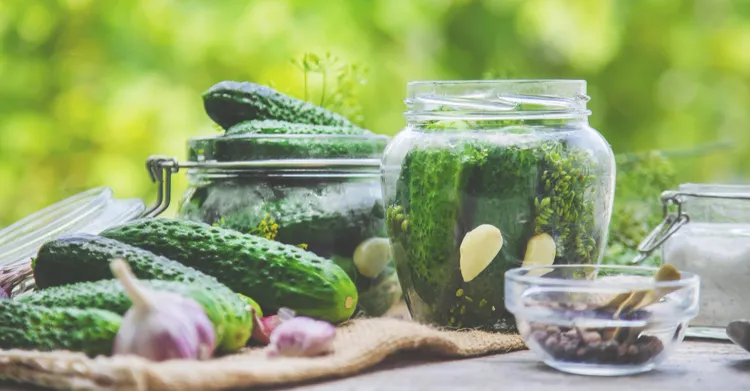
Does pickling change cucumber's nutritional profile significantly? Yes, considerably; pickled cucumbers typically carry much higher sodium content from the brining process, and some vitamin C and other heat-sensitive nutrients decline during the processing involved in canning, covered in more depth in our preservation guide.
Is cucumber a good choice for someone watching calorie intake? Yes, cucumber's very low calorie density makes it a reasonable choice for adding volume and some nutritional value to a meal without contributing many calories, a genuine practical advantage for anyone specifically prioritizing that goal.
A Quick Nutrition Summary
- Calories: Roughly 16 kcal per cup, among the lowest of common vegetables.
- Standout trait: Very high water content, genuine hydration contribution.
- Concentrated in skin: Vitamin K and fiber.
- Best for full nutrition: Unpeeled, fresh, unwaxed.
How Cucumber Compares to Other Common Vegetables
Relative to denser vegetables covered elsewhere in this content series, cucumber is unusually low in calories and most nutrients per serving simply due to its water content, though its genuine hydration value and low-calorie bulk make it a reasonable, easy addition to a varied diet rather than a nutritional standout in the way a leafy green might be.
Frequently Asked Questions
Do cucumbers help with actual hydration the way water does? They contribute meaningfully to fluid intake given their water content, though they shouldn't be treated as a full substitute for drinking water directly.
Are there downsides to eating a lot of cucumber? For most people, no meaningful downside beyond the low nutritional density meaning it shouldn't crowd out more nutrient-dense vegetables in an overall diet.
Does cucumber nutrition change much with ripeness? Less dramatically than for fruit covered elsewhere in this framework, since cucumber is harvested and eaten before full botanical ripeness in nearly all cases.
Considering Cucumber Alongside a Broader Diet
As with the other produce covered across this content series, cucumber's real value comes through regular, easy inclusion as part of a varied diet rather than through any single large serving treated as a significant nutritional intervention on its own.
Cucumber and Common Digestive Sensitivity
Some individuals report mild digestive discomfort from cucumber, sometimes attributed to a compound called cucurbitacin at even normal, non-bitter levels, or simply to the vegetable's high water and fiber-skin content; peeling and removing seeds, similar to the seeding technique covered in the cooking methods guide, is a reasonable adjustment for anyone who notices this personally.
Cucumber's real nutritional strength is what it doesn't have, calories, fat, significant sugar, as much as what it does, making it a genuinely easy, low-stakes addition to almost any meal or diet pattern.
That simplicity is a genuine feature, not a limitation, for anyone looking to add easy, low-calorie volume to a varied diet.
Cucumber as Part of a Hot-Weather Diet
Beyond its individual nutrient content, cucumber's high water content and low calorie density make it a particularly well-suited addition to hot-weather meals specifically, when appetite for heavier food often naturally decreases and a genuinely refreshing, hydrating option holds real practical appeal beyond any single nutrient consideration.
Different cucumber varieties show only modest nutritional variation from one to another; the more meaningful differences in this guide come from ripeness, freshness, and whether the skin is eaten or removed rather than from choosing one named variety over another for nutritional reasons specifically.
Cucumber's Underappreciated Practical Value
It's easy to overlook a vegetable this unassuming when discussing nutrition, but cucumber's combination of genuine hydration support, very low calorie density, and real if modest micronutrient content adds up to a food worth taking seriously as a regular part of a varied diet, not despite its simplicity but partly because of it.
Simplicity, in this case, is a genuine strength rather than something to apologize for.
It's easy to overlook a vegetable this unassuming when discussing nutrition seriously, but cucumber's combination of genuine hydration support, very low calorie density, and real if modest micronutrient content adds up to a food genuinely worth including regularly in a varied diet, not despite its simplicity but partly because of it. A vegetable this easy to eat in volume without meaningful calorie consequence is a genuine practical asset, not just a filler ingredient.
Where tomato's lycopene and strawberry's anthocyanins both carry genuinely active areas of health research behind them, cucumber's nutritional story is simpler and less headline-grabbing, built more on what it lacks, calories, fat, significant sugar, than on any single standout compound, a different but no less legitimate kind of nutritional value.
Cucumber's Role in Weight-Conscious Eating
Cucumber's very low calorie density has made it a longstanding staple in diets focused on weight management, a genuine practical fit given how much volume and crunch it can add to a meal for very little caloric cost, though as with any single food, it works best as part of an overall balanced approach rather than a standalone strategy.
Introducing Cucumber to Children
Cucumber's mild flavor and satisfying crunch often make it one of the easier vegetables to introduce to children still developing their palate, a genuinely practical nutritional entry point given how low-stakes and unintimidating the flavor is compared to more assertive vegetables.
Cucumber works best as a complement to, rather than a replacement for, more nutrient-dense vegetables in an overall diet, adding volume, crunch, and hydration alongside genuinely nutrient-rich choices rather than crowding them out of a meal entirely.
Cucumber earns its place in a varied diet through consistent, easy inclusion rather than any single standout nutritional claim, a genuinely humble but real contribution worth recognizing on its own modest terms.
A modest but genuine contribution, worth including regularly rather than dismissing.
For households already tracking nutrition information for other produce covered across this content series, folding cucumber's genuine, if modest, hydration and low-calorie profile into that same broader awareness builds a more complete picture of how everyday vegetable choices support an overall diet.
Small, consistent inclusion in a varied diet is where cucumber's real value lies.
Keeping Expectations Realistic
Cucumber will never be the centerpiece of a nutrient-dense diet, and expecting it to deliver more than its genuinely modest profile ofers sets up disappointment; appreciating it for what it actually contributes, hydration, low-calorie volume, a little vitamin K and potassium, keeps expectations sensibly calibrated.
Realistic appreciation, rather than either dismissal or overstatement, is the healthiest way to think about this vegetable.
Cucumber's humble, unassuming profile is still worth a place at the table, valued for exactly what it is rather than measured against fruits and vegetables built for a different nutritional purpose entirely.
Understood on its own terms, it earns its keep.
Small contributions add up over a season of regular meals.
Small contributions, made consistently across many meals, genuinely add up over the course of a season.
A genuinely worthwhile, low-effort addition to almost any meal.
Modest, real, and worth including.
Whatever else changes in a kitchen or a diet over time, cucumber's simple, dependable presence, cheap, low-calorie, hydrating, endlessly pairable, tends to remain a quiet constant worth appreciating precisely because it never demands much attention to deliver its modest, reliable value.
Latest