Vegan Lasagne with Cashew Béchamel and Lentil Bolognese
A proper lentil ragu. A cashew béchamel. Layered pasta. The plant-based dinner that earns its place at any table.
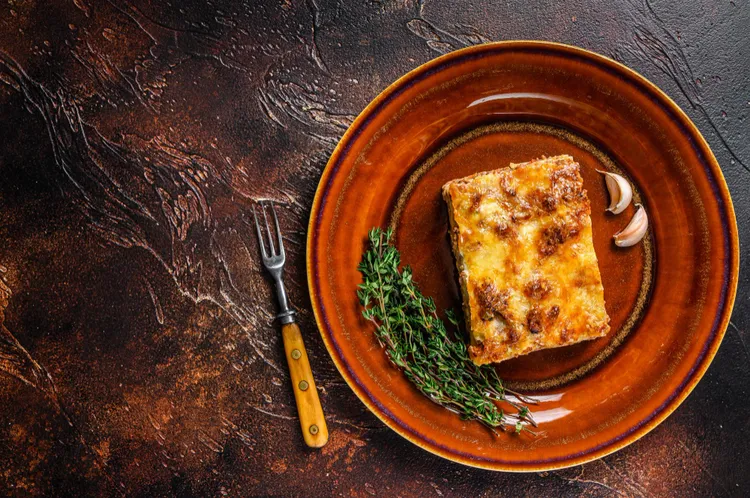
Lasagne is a test. Not a technically difficult test - the steps are clear, the assembly is straightforward. But a test of whether a dish can carry its own weight: whether the components are good enough individually to add up to something genuinely great when combined. Meat lasagne passes this test when the bolognese has real depth, when the béchamel is silky and savoury, when the pasta layers absorb just enough of both sauces to become something more than their separate parts.
This plant-based lasagne is built to pass the same test. Not a simplified, shortcut version of lasagne that happens to be vegan. A lasagne with a lentil bolognese that simmers for an hour with red wine, porcini mushrooms, and a proper soffritto - that has the depth of a meat ragu because it was made with the same care. With a cashew béchamel that is richer and more flavourful than many dairy versions - roasted garlic, white wine, nutmeg, a generous hand with seasoning.
It takes time. The bolognese alone needs an hour. The full assembled dish needs another 45 minutes in the oven. But the active work - the actual stirring, tasting, layering - is perhaps 35 minutes. And the result is a lasagne that stands up to any version you have eaten, plant-based or otherwise.
The Two Sauces: Why Each One Works
The Lentil Bolognese
A good bolognese is about depth - the concentrated flavour that comes from caramelised meat, from wine reduced into the sauce, from the long simmer that integrates and develops everything. Replicating this depth without meat requires understanding what produces it and building each element separately.
Puy lentils hold their shape during the long simmer - they produce individual pieces with a slight bite rather than dissolving into mush. This textural integrity is what distinguishes a bolognese from a soup.
Porcini mushrooms are the single most important ingredient in this sauce. Rehydrated in hot water, they produce a dark, intensely savoury liquid that is one of the best plant-based cooking stocks available. Add this liquid to the bolognese and you add the glutamate depth that meat provides. The rehydrated mushrooms themselves add meaty, earthy pieces that improve the texture.
Red wine contributes tannins, acidity, and fruity depth - and as it reduces, it concentrates these qualities into the sauce. Use a wine you would drink. It needs to be good enough to taste.
Tomato paste, cooked - not just added - provides caramelised tomato depth. Frying tomato paste in the hot oil before adding liquid produces flavour compounds that uncooked tomato paste cannot. This 90-second step is disproportionately impactful.
A long simmer concentrates all of the above into a sauce with coherence - where the individual ingredients have merged into something unified and complex. An hour is the minimum. Ninety minutes is better.
The Cashew Béchamel
The traditional béchamel - butter, flour, milk - produces a sauce with a specific richness and coating quality that is difficult to replicate exactly. But the cashew version, properly made, is not trying to be identical. It is trying to produce the same experience: a rich, savoury, slightly nutty white sauce that coats the pasta layers and provides the creamy contrast to the acidic bolognese.
The additions that make this béchamel excellent rather than merely functional: roasted garlic (sweetness and complexity), white wine (acidity and depth), nutmeg (the traditional béchamel spice that adds a warming roundness), and nutritional yeast (savoury depth that the cashew cream base alone lacks).
Ingredients
Serves 6 | Active time: 35 minutes | Total time: 2.5 hours
The Lentil Bolognese
- 250g Puy (French green) lentils, rinsed - these hold their shape during the long simmer
- 30g dried porcini mushrooms, rehydrated in 300ml of hot water for 20 minutes (reserve all soaking liquid)
- 200g chestnut mushrooms, finely diced
- 1 large onion, finely diced
- 2 medium carrots, finely diced
- 3 stalks celery, finely diced
- 4 cloves garlic, minced
- 3 tbsp olive oil
- 2 tbsp tomato paste
- 200ml red wine (full-bodied - Merlot, Cabernet, Montepulciano)
- 2 × 400g tins whole tomatoes, crushed by hand
- The porcini soaking liquid (strained through a fine-mesh sieve to remove grit)
- 300ml vegetable stock or water
- 2 bay leaves
- 2 sprigs fresh thyme
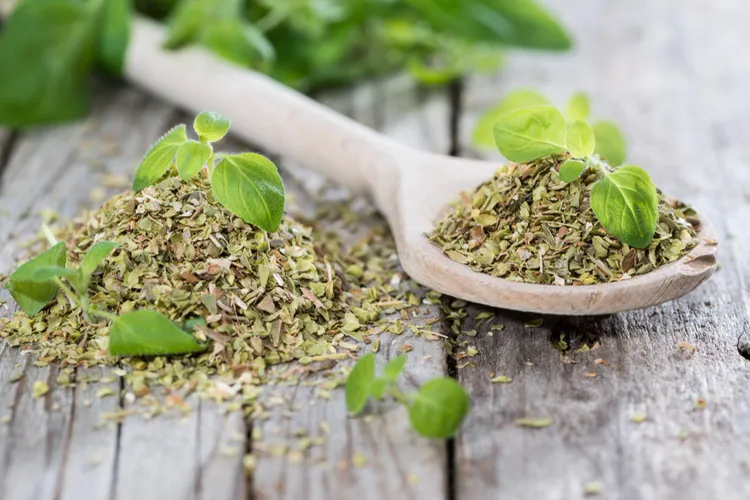
- 1 tsp dried oregano
- 2 tbsp soy sauce - adds background umami depth
- 1 tsp smoked paprika
- Salt and black pepper
The Cashew Béchamel
- 200g raw cashews, soaked overnight and drained
- 1 head of garlic, roasted (see Vegan Mac and Cheese method)
- 150ml dry white wine
- 400ml unsweetened oat milk or soy milk
- 3 tbsp nutritional yeast
- ¼ tsp freshly grated nutmeg
- 1 tsp dijon mustard
- Salt and white pepper
The Assembly
- 250-300g dried lasagne sheets (no-boil/oven-ready sheets preferred - they absorb moisture from the sauces during baking, which seasons them perfectly)
- 3 tbsp nutritional yeast for the topping
- 2 tbsp olive oil
- Fresh basil to finish
Method
Step 1: Rehydrate the porcini (20 minutes)
Place the dried porcini in a bowl and cover with 300ml of very hot (just-boiled) water. Leave to soak for 20 minutes until completely softened. Remove the porcini with a slotted spoon and chop finely. Strain the soaking liquid through a fine-mesh sieve lined with kitchen paper - the liquid is dark and intensely flavourful but may contain grit that needs removing.
Step 2: Build the bolognese soffritto (10 minutes)
Heat 3 tbsp of olive oil in a large, wide pot or Dutch oven over medium-high heat. Add the onion, carrot, and celery. Cook, stirring occasionally, for 8-10 minutes until very soft and beginning to colour at the edges. Do not rush this - the soffritto is the flavour foundation.
Add the garlic, chestnut mushrooms, and chopped porcini. Cook for 5 minutes, stirring, until the mushrooms have reduced in volume and are beginning to caramelise.
Step 3: Build the depth layers (8 minutes)
Add the tomato paste directly to the pot. Stir and cook for 90 seconds - the paste will darken slightly and smell concentrated and slightly caramelised. This step is critical: raw tomato paste has a sharp, slightly metallic edge; cooked tomato paste has sweetness and depth.
Add the smoked paprika and dried oregano. Stir for 30 seconds.
Pour in the red wine. It will sizzle immediately. Scrape any fond from the base of the pot. Let the wine reduce for 3 minutes until the sharp alcohol smell has cooked off and the liquid has reduced by half.
Step 4: Add lentils and simmer (1 hour)
Add the crushed tinned tomatoes, strained porcini soaking liquid, vegetable stock or water, bay leaves, thyme, and soy sauce. Stir to combine.
Add the rinsed Puy lentils. Bring to a simmer, then reduce to a gentle, consistent simmer.
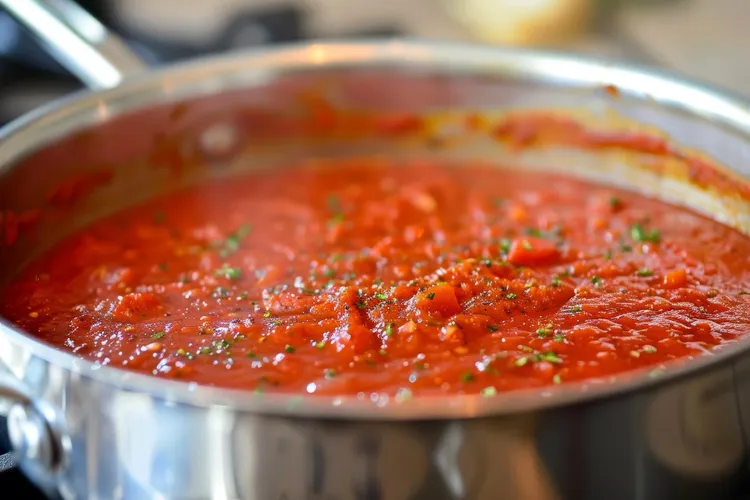
Cook, stirring occasionally, for 50-60 minutes until the lentils are completely tender and the sauce has thickened to a proper ragu consistency - it should not be watery or soupy; it should hold its shape when spooned. The surface should look glossy and concentrated.
Season generously with salt and pepper. Taste and adjust: if it needs more depth, add another teaspoon of soy sauce. If too acidic, a pinch of sugar. Remove the bay leaves and thyme sprigs.
Step 5: Make the cashew béchamel (10 minutes)
Blend the soaked cashews, roasted garlic cloves, white wine, oat milk, nutritional yeast, nutmeg, dijon mustard, salt, and white pepper on high speed for 2–3 minutes until completely smooth.
Transfer to a saucepan and warm over medium-low heat, whisking constantly, until the sauce thickens to a béchamel consistency - thick enough to coat the back of a spoon heavily, with a slow drip rather than a fast pour. This usually takes 5-8 minutes of gentle heat and constant stirring.
Taste: it should be creamy, savoury, slightly nutty, with the specific roundness that nutmeg provides. Adjust salt and pepper.
Step 6: Assemble
Preheat the oven to 190°C (fan). Lightly oil a large baking dish (approximately 30×22cm).
The layering sequence:
- Spread a thin layer of béchamel over the base of the dish - this prevents the bottom lasagne sheets from drying out
- Layer lasagne sheets over the béchamel, slightly overlapping
- Spread one third of the bolognese evenly over the pasta
- Spread one quarter of the remaining béchamel over the bolognese
- Repeat: pasta → bolognese → béchamel for 3 layers total
- Final layer: pasta sheets → remaining béchamel spread generously over the top
The top layer: The béchamel on top should be thick and generous - it forms the creamy, golden top of the finished lasagne. Dust with 3 tbsp of nutritional yeast and a drizzle of olive oil - this produces a golden, slightly crusted topping.
Step 7: Bake (45 minutes)
Cover the dish tightly with foil. Bake for 30 minutes covered - the steam trapped by the foil hydrates the pasta sheets and prevents the top from drying out before the pasta is cooked.
Remove the foil and bake for a further 15 minutes until the top is golden-brown and bubbling at the edges. The lasagne should be clearly set - gently pressing the centre should feel firm, not liquid.
Rest for 15 minutes before cutting. This resting period is not optional - it allows the lasagne to set, which means clean, neat portions rather than a collapse when the first piece is cut.
Make-Ahead Notes
The bolognese: Makes the entire dish more practical. The bolognese improves over 24-48 hours as the flavours integrate - make it 1-2 days ahead and refrigerate. Reheat gently before assembling.
The béchamel: Can be made up to 24 hours ahead. It thickens considerably in the fridge - thin with a little oat milk before using.
The assembled, unbaked lasagne: Assemble the entire dish, cover tightly with foil, and refrigerate for up to 24 hours. Bake directly from the fridge, adding 10-15 minutes to the covered baking time.
Freezing: The baked lasagne freezes well. Cut into portions, wrap individually, freeze for up to 3 months. Reheat from frozen: covered at 160°C for 45 minutes, uncovered for 10 minutes.
Variations
Spinach and Ricotta Style
Add 400g of wilted, squeezed spinach and 300g of crumbled firm tofu (seasoned with lemon, salt, nutritional yeast, and garlic) as an additional layer between the bolognese layers. The tofu "ricotta" adds a protein-rich, creamy layer that changes the texture profile of the dish entirely.
Aubergine and Lentil
Replace the layered pasta in one of the three pasta layers with thinly sliced, roasted aubergine (brushed with olive oil, roasted at 200°C for 20 minutes until soft and golden). The aubergine absorbs the bolognese and béchamel flavours and adds a silky, meaty layer.
Pro Tips
- The porcini soaking liquid is gold. Do not discard it. Every drop of that intensely savoury, dark liquid goes into the bolognese and contributes more depth than any other single ingredient. Strain it carefully - grit at the bottom of the soaking bowl should stay in the bowl.
- Season the bolognese aggressively. Lentils absorb significant salt during their long simmer. Taste at 30 minutes and again at 60 minutes - both times, the sauce will likely need more seasoning than you expect.
- No-boil lasagne sheets are the correct choice here. They absorb moisture from the bolognese and béchamel during baking, which seasons them from within and produces a more cohesive dish than par-boiled sheets, which retain their own moisture and can make the dish watery.
- Rest without compromise. Fifteen minutes of resting produces clean portions. Five minutes of resting produces a pool on the plate. The oven can be turned off and the lasagne left inside (door closed) for the resting period - it stays warm and continues setting.
Common Mistake: Making the Bolognese Too Watery Lasagne with a watery bolognese produces soggy, structureless layers that collapse when cut. The bolognese must be thick - a proper ragu that holds its shape on a spoon. If after 60 minutes the sauce is still loose and watery, remove the lid (if using) and simmer uncovered for 15-20 more minutes until it reduces to the correct consistency. The béchamel layers provide moisture during baking; the bolognese layers should be almost dry before assembly.
FAQ
Q: Can I use red or brown lentils instead of Puy?
Red lentils dissolve completely during the long simmer - producing a smooth, thick ragu rather than one with distinct lentil pieces. This produces a different (less textured) result but is still delicious. Brown lentils hold their shape similarly to Puy lentils and are a good substitute. The texture of Puy lentils - firm-tender with a slight earthiness - is specifically well-suited to bolognese; use them if possible.
Q: The top is getting too dark before the pasta is cooked through. What should I do?
Re-cover with foil for the remainder of the baking time. The pasta needs time and steam to cook fully - the foil trap is the mechanism. The top will continue to colour under the foil but more slowly. If the top is already very dark: cover immediately and reduce the oven temperature to 170°C for the remaining time.
Q: Can I make this gluten-free?
Yes - use certified gluten-free lasagne sheets (rice-based sheets are widely available). Check that the soy sauce is tamari (gluten-free soy sauce). All other ingredients in this recipe are naturally gluten-free.
🔗 Continue Cooking
Latest