How to Build a Balanced Plate at Every Meal
No calorie counting required. This visual guide to portioning protein, carbs, vegetables, and fats works at breakfast, lunch, and dinner for most adults.
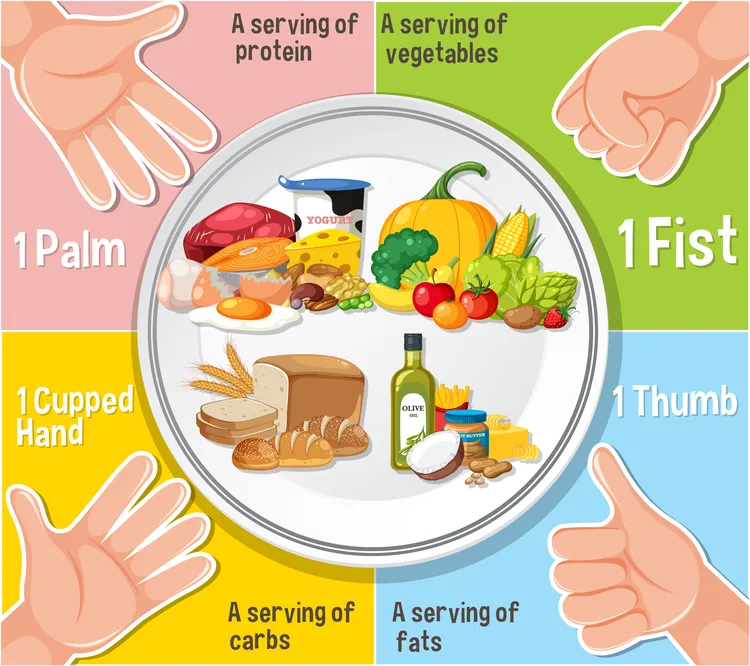
Calorie tracking is useful for a few weeks to build portion intuition. For the long term, most people need something simpler - a framework they can apply at any meal, in any kitchen, without pulling out their phone. The plate method has been validated across multiple clinical settings and works precisely because it requires no calculation.
This method operationalises the principles covered in detail in the Healthy Eating & Nutrition guide. For the macro targets behind these proportions, see What Are Macros and Why Do They Matter?
The Basic Template
Use a standard dinner plate (roughly 25-28cm diameter). Fill it in this order:
- Half the plate: non-starchy vegetables. Salad, broccoli, spinach, zucchini, peppers, cabbage, mushrooms, tomatoes. These provide fibre, micronutrients, and volume with minimal caloric impact. The goal is 200-300g of vegetables per main meal.
- One quarter: lean protein. A palm-sized serving - roughly 100-150g cooked - of chicken, fish, eggs, legumes, or lean beef. This provides approximately 25-40g protein per meal.
- One quarter: complex carbohydrates. A fist-sized serving of brown rice, sweet potato, quinoa, lentils, oats, or whole grain pasta. Approximately 150-200g cooked.
- A thumb-sized serving of fat. Olive oil used in cooking, half an avocado, a small handful of nuts, or the natural fat in your protein source.
What This Looks Like in Practice
Breakfast
The plate method adapts to breakfast even without a literal plate format:
- Protein: Two eggs, 150g Greek yogurt, or cottage cheese as a base
- Complex carb: 40g oats, one slice wholegrain toast, or half a banana
- Vegetables (optional but valuable): Spinach in a scramble, tomatoes alongside eggs
- Fat: Built into eggs, nut butter on toast, olive oil in the pan
The Egg and Cottage Cheese Omelet with a slice of wholegrain toast applies this template almost exactly - roughly 380 kcal, 30g protein, 25g carbs, 18g fat.
Lunch
- Shredded chicken thigh (protein) over brown rice (carb) with Lemon-Infused Cabbage Salad (vegetables + fat from olive oil) - approx. 480 kcal, 40g protein
- Smoked Salmon and Dill Cottage Cheese Bowl (protein) with rye crispbreads (carb) and a handful of cherry tomatoes (vegetables) - approx. 380 kcal, 36g protein
Dinner
- Lemon-Butter Baked Salmon with Asparagus (protein + fat) with roasted sweet potato (carb) - approx. 450 kcal, 40g protein
- Balsamic Chicken and Mushrooms (protein) with brown rice (carb) and a side of Vegetable Stir Fry (vegetables) - approx. 520 kcal, 46g protein
- Maple Soy Glazed Salmon (protein + fat) with noodles (carb) and broccoli (vegetables) - approx. 540 kcal, 38g protein
For turning this template into a structured week of meals, the Weekly Meal Prep planner takes your macro targets and builds a prep-ready schedule of real recipes that follow the same balanced-plate logic.
When the Template Needs Adjusting
The basic template targets approximately 400-550 kcal per main meal, suitable for most adults eating three meals per day at maintenance or a modest deficit. Adjustments by goal:
- Weight loss: Increase the vegetable portion and reduce the carb quarter slightly. Swap higher-calorie carbs (rice) for lentils or beans, which add fibre and protein at fewer calories.
- Muscle building: Add a second fist-sized carb portion and increase protein slightly. An extra egg or 100g legumes alongside the main protein covers it.
- Lower appetite (smaller meals preferred): Use a smaller plate (21-22cm) and maintain the proportions. The ratios matter more than the absolute quantities.
Common Plate-Building Mistakes
- Protein on the side: Many people treat protein as a garnish rather than a quarter of the plate. A tablespoon of cheese or a thin slice of meat does not cover the protein quarter.
- Starch as half the plate: Large portions of pasta, rice, or bread fill the plate but leave protein and vegetables crowded out.
- No fat at all: Very low-fat meals are digested quickly and return hunger sooner. Cooking vegetables in a teaspoon of olive oil is not a dietary sin - it is part of the template.
- Counting sauce as vegetables: Tomato sauce, ketchup, and most condiments do not qualify. Stick to whole or simply prepared vegetables for the vegetables half.
The Most Practical Eating Framework Available
The plate method does not require weighing food, counting calories, or planning around arbitrary rules. It encodes the most important dietary principles - adequate protein, adequate fibre, adequate fat, controlled starch - into a visual that applies at every meal. Follow it consistently for three to four weeks and it becomes automatic.
For building this into a full week of eating, the beginner plan in Healthy Meal Prep for Beginners structures five days of meals around this template with shopping list and macro estimates.
Latest