Ethiopian Cooking at Home: Injera, Lentil Stews and Communal Eating
Ethiopian cooking is plant-forward by tradition, not trend - with outstanding lentil and bean dishes built for communal eating. Injera, misir wot, shiro and key sir alicha made practical for home cooking.
Ethiopian cuisine is one of the most nutritionally compelling global cooking traditions most home cooks have never tried. Its plant-forward character is not a contemporary lifestyle choice - it comes from the Ethiopian Orthodox Christian fasting calendar, which mandates plant-based eating on approximately 180 days per year. The result is centuries of refined plant-protein cooking: lentil stews, chickpea dishes, spiced split peas, braised greens. The macros are exceptional by default.
The Ethiopian Pantry
- Berbere - the signature Ethiopian spice blend. Chilli-heavy, with fenugreek, coriander, cumin, cardamom, allspice, ginger and black pepper. Available from specialist shops, Waitrose, and online. The complexity of berbere is what makes Ethiopian stews taste unlike any other cuisine.
- Niter kibbeh - Ethiopian spiced clarified butter (similar to ghee), infused with onion, garlic, ginger, turmeric and cardamom while clarifying. Used as a cooking fat for both fasting and non-fasting dishes. Makes a significant flavour difference in wots (stews). Buy or make: melt butter slowly with aromatics for 20 minutes, strain.
- Mitmita - a finer, hotter spice blend for finishing dishes. Bird's eye chilli with cardamom. Optional for beginners.
- Red lentils (misir) - the most used pulse in Ethiopian cooking.
- Split peas (yellow or green) - for kik alicha (mild split pea stew).
- Injera teff flour - for making injera. White teff is milder; dark teff is more complex. Alternatively buy ready-made injera from Ethiopian restaurants and shops.
Injera: The Edible Plate
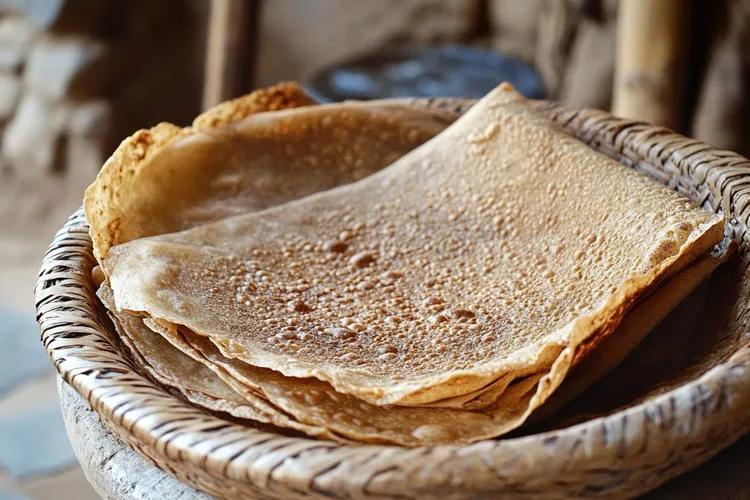
Injera is a large, spongy, slightly sour sourdough flatbread made from teff flour - the grain indigenous to the Ethiopian highlands, high in fibre, iron and protein. Ethiopian food is served on and eaten from injera - the stews are spooned onto it, and pieces of injera are torn off to scoop up the wots. There is no cutlery; the bread is the utensil.
Making injera at home requires teff flour, water and time: the batter ferments for 2-3 days to develop the characteristic sourness, then is cooked in a large flat pan (a standard non-stick frying pan works). The fermentation is the work; the cooking is fast. Macro estimate per injera (30cm): ~120 kcal, 4g protein, 24g carbs, 1g fat. Higher fibre than most flatbreads due to the teff flour (around 3-4g fibre per piece).
Five Core Dishes
1. Misir Wot (Spiced Red Lentil Stew)
Misir wot is the most ubiquitous Ethiopian dish: red lentils slowly cooked in berbere, onion and niter kibbeh until deep red and intensely flavoured. The colour of a good misir wot comes from both the berbere and from cooking the onion slowly in niter kibbeh until golden - rushing this step produces a flat, watery stew.
Macro estimate per serving (200g): ~280 kcal, 16g protein, 38g carbs, 7g fat. Excellent fibre (10g per serving). This is one of the best plant-protein dishes in any global cuisine by cost and nutritional density.
2. Key Sir Alicha (Beet and Potato Stew)
Key sir alicha is a mild, turmeric-and-ginger spiced stew of beetroot and potato cooked in niter kibbeh. It sounds simple; it is extraordinary. The beetroot becomes earthy and deep, the potato absorbs the spiced butter, and the whole dish has a sweetness that contrasts with the heat of the misir wot served alongside it on the injera. Macro estimate: ~220 kcal, 4g protein, 36g carbs, 8g fat.
3. Shiro (Chickpea Flour Stew)
Shiro is a smooth, thick stew made from roasted and spiced chickpea flour (shiro powder) whisked into water or stock with sauteed onion, garlic and niter kibbeh. It takes 20 minutes. The texture is closer to a thick porridge than a chunky stew, and the protein density is exceptional: chickpea flour is around 22g protein per 100g. Macro estimate per serving: ~290 kcal, 14g protein, 38g carbs, 9g fat.
4. Gomen (Braised Collard Greens)
Gomen is collard greens (or kale as a substitute) braised slowly with onion, garlic, ginger and niter kibbeh. It is typically served as one component of a mixed injera spread, contrasting with the heat of the red stews. The key is long, slow braising - 35-40 minutes - until the greens are completely tender and have absorbed the flavour of the niter kibbeh. Macro estimate: ~140 kcal, 5g protein, 12g carbs, 9g fat.
5. Tibs (Sauteed Meat)
Tibs is the non-fasting version of Ethiopian cooking: cubed beef or lamb, pan-fried or stir-fried with onion, rosemary, jalapeño and sometimes niter kibbeh. It is one of the faster Ethiopian dishes - the stir-fry version (kay tibs) takes 10 minutes. Macro estimate (beef tibs): ~380 kcal, 38g protein, 8g carbs, 22g fat. High protein, moderate fat, negligible carbs - appropriate alongside the higher-carb injera and vegetable wots.
Communal Eating: Why the Spread Matters
Ethiopian food is designed for communal eating: multiple wots (stews) arranged on a large shared injera, eaten together. Individually, each dish might seem incomplete - the lentil stew is hot, the greens are mild, the shiro is creamy, the tibs are rich. Together they balance. For home cooking, this means making two or three wots at the same time and serving them together on injera rather than treating each as a standalone dish.
This makes Ethiopian food one of the most batch-cook-efficient cuisines in this guide: all the wots can be made ahead, refrigerated and reheated, with fresh injera on the side. A full injera spread for four people requires about two hours of cooking on a Sunday, with minimal effort on subsequent days.
Sourcing Ingredients
Berbere and mitmita are available from Sous Chef, Waitrose and most online spice retailers. Teff flour is available from health food shops (it has gained attention as a high-protein, gluten-free grain). Ready-made injera is available from Ethiopian and Eritrean restaurants - many sell it by the sheet. Niter kibbeh can be made at home in 25 minutes from butter and spices you likely already have.
For a broader view of how Ethiopian cooking compares to other plant-forward global cuisines, see the complete guide to global cuisines at home.
Latest