Cooking for One (Without Sad Food): The Complete Guide
Everything you need to cook real, satisfying meals when it's just you - how to scale recipes, stock a solo kitchen, avoid food waste, and actually enjoy eating alone.
Most cooking advice assumes you're feeding at least four people. Recipes start with a kilo of mince, a full head of garlic, and enough pasta to fill a colander the size of a hubcap. Living alone doesn't mean you have to halve everything badly, eat the same thing five nights running, or default to toast because the math got too annoying. It means cooking differently - not worse.
Why Solo Cooking Gets a Bad Reputation
The problem isn't cooking for one. It's that almost every system around cooking assumes more than one person. Supermarkets sell family packs. Recipes yield four servings. Cookbooks are organized around dinner parties. When you live alone, you're working against all of it by default.
The result is a predictable slide: you buy too much, some of it goes off, you feel guilty, you order delivery instead. Repeat until you've convinced yourself you're "not a cook." You are. You just need a different approach.
Getting Your Kitchen Set Up for One
The biggest mistake solo cooks make is keeping a kitchen scaled for a family. A 28cm frying pan holds too much. A 5-litre pot is ridiculous for a single portion of soup. The wrong equipment makes single-serving cooking awkward. For what you actually need - and what you can confidently skip - our solo kitchen toolkit guide has a full breakdown with specific recommendations.
The short version: a 20cm non-stick frying pan, a 1.5-litre saucepan, a small sheet pan, and a sharp 18cm chef's knife will handle 90% of what you cook. Single-portion storage containers matter more than most people realise - if you can't store leftovers in sensible sizes, you won't use them.
Shopping for One Without Wasting Everything
Food waste is the silent tax on solo cooking. You buy a bunch of coriander, use three sprigs, and throw away the rest a week later. Multiply that across every fresh ingredient in your basket and you're essentially paying for two people while eating for one.
The fix is part shopping strategy, part ingredient selection. Our grocery guide for solo cooks covers exactly which ingredients are worth buying in bulk (dried goods, frozen veg, canned protein), which to buy small and often (fresh herbs, leafy greens), and which to avoid entirely unless you have a plan for the whole packet. The general rule: if you can't name two dishes you'll make with it this week, don't buy it.
A few high-value staples that earn their place in a solo kitchen: a bag of red lentils, a block of parmesan (it keeps for weeks), eggs, frozen spinach, and good olive oil. These form the backbone of a dozen fast meals with minimal waste.
Scaling Recipes Down Without Ruining Them
Most recipes scale down fine - protein, veg, and liquid scale linearly. But there are traps. Baking is unforgiving: a quarter of a cake recipe often doesn't work because the chemistry changes. Spice levels don't always halve cleanly - a quarter teaspoon of chilli can taste completely different in a small pan. Cooking times change when you're working with less food in a smaller pan.
The practical guide to scaling any recipe down to one serving covers the maths and the exceptions in detail - including what to do with eggs (you can't use half an egg) and how to adjust timings when your pan is half the size.
A Weekly Dinner Rotation That Works
Having a loose rotation of five or six dinners you know well is worth more than a cookbook full of recipes you'll never make. These should be meals you enjoy eating, can make without much thought on a Tuesday night, and that use overlapping ingredients so shopping stays manageable.
A solid solo rotation might look like: a fast single-serve stir-fry one night (15 minutes, one pan, whatever veg needs using), a proper single-serving pasta another night, eggs in some form (a good egg and cottage cheese omelet is 310 kcal and 27g of protein), a batch of something that freezes well, and one meal worth making properly - the kind covered in solo date night dinners.
For a full weekly plan with macros, prep times, and shopping list logic, see our 7 dinners for one guide.
Batch Cooking Without the Leftover Fatigue
Batch cooking for one doesn't mean making a vat of soup and eating it until you hate soup. It means cooking smart multiples - double a portion and freeze one, make a sauce that works across two different meals, roast a tray of veg that goes into three different dishes.
The key is variety by design. If you cook a big batch of rice on Sunday, that's the base for a grain bowl Monday, fried rice Wednesday, and something stuffed Thursday. You're not eating the same thing - you're amortising the effort across different meals. Our solo batch cooking guide covers how to plan this properly, which dishes freeze well in single portions, and how long things actually keep.
For a specific list of what's worth freezing, see our freezer meals for one guide - it includes six recipes that hold up well and reheat without becoming sad.
Breaking the Toast Default
Every solo cook has a fallback. For most people it's toast, cereal, or something from the freezer aisle. These aren't the problem - the problem is when they become the default five nights a week because you couldn't be bothered to cook for just yourself.
The real issue is activation energy. Cooking a full meal feels like too much effort when it's just you. The solution isn't more recipes - it's a handful of quick upgrades that make real food feel as easy as toast. Eating well alone covers the specific techniques: 10-minute meals that feel substantial, ingredient combos that always work, and how to make cooking for one feel worth it on low-energy nights.
Getting Through a Full Cabbage (and Other Awkward Quantities)
Some ingredients are structurally hostile to solo cooking. A whole cabbage. A full bunch of celery. A 400g can of chickpeas. These are designed for families, and finishing them alone before they go off takes planning.
Cabbage is the classic example - it's cheap, keeps well if stored properly, and works in a dozen different preparations, but you need a strategy. Our guide on how to use up a full head of cabbage when you live alone covers the week's worth of meals you can get from one, from a simple lemon-infused cabbage salad to quick slaws, stir-fries, and a basic sauerkraut you can make in a jar.
Single-Serving Baking
Baking is the hardest category to scale for one. A standard cookie recipe makes 48 cookies. A cake feeds 10. If you live alone and want something sweet, you either make too much or buy something from a shop.
Single-serving baking solves this without asking you to do complex maths. Mug cakes work (some of them are genuinely good). Small-batch cookies are better than most people expect. One-bowl brownies scaled to a single portion are entirely achievable. Our single-serving baking guide covers the techniques, the recipes that actually work at small scale, and the ones to skip.
Cooking for Yourself Like It Matters
The underlying issue with sad solo food isn't a skills problem or a recipe problem. It's a mindset problem. When you cook for other people, you make an effort. When it's just you, the bar drops. Reheated leftovers on the sofa at 9pm with your phone counts as dinner.
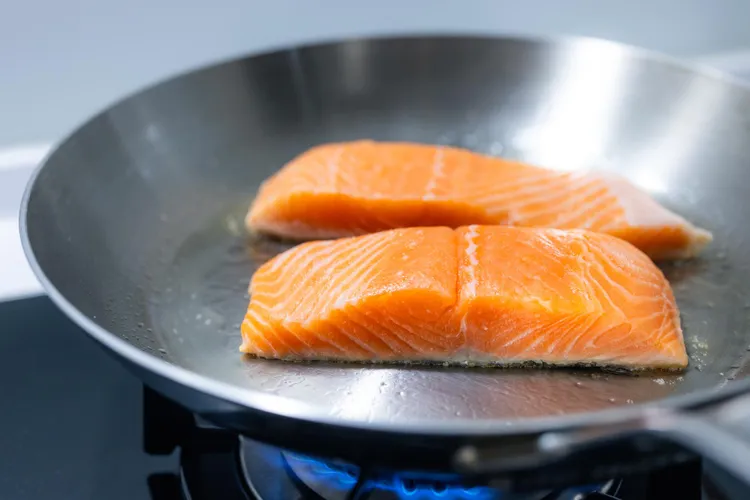
It doesn't have to. Cooking something impressive for yourself on a Friday night - a properly seared piece of fish, a good pasta, something that uses a real technique - is one of the better things you can do for your quality of life when you live alone. The cost is one person's worth of ingredients and 30 minutes. The payoff is eating something you'd be happy to serve someone else.
The rest of this guide goes into each area in detail. Pick the articles that match where you're stuck, and start there.
Latest