Malaysian Laksa: Choosing Between Asam and Curry Versions
Laksa covers two very different noodle soups: asam laksa, a sour and fishy broth spiked with tamarind and mackerel, and curry laksa, a rich coconut-milk curry soup with tofu and prawns. Both are worth making; they share almost no ingredients.
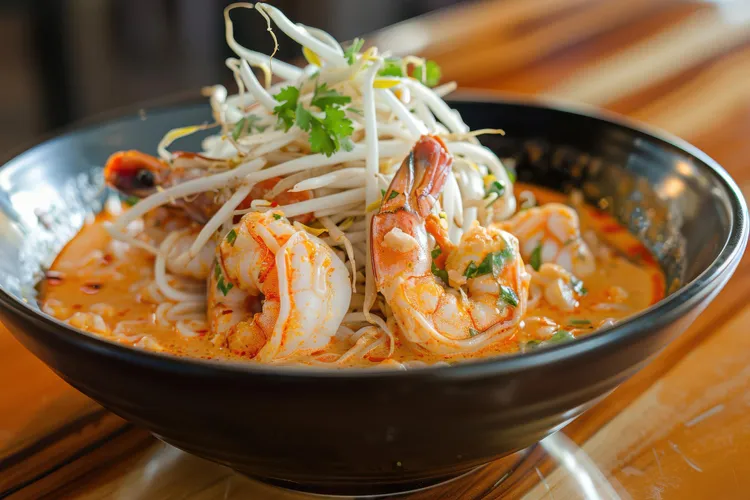
The word laksa is used for both, which causes endless confusion for people encountering Malaysian food for the first time. They share a noodle format and a chilli-forward approach, but the flavour profiles are opposite - one is sour and briny, the other rich and creamy. This article covers both so you can decide which to tackle first and what's actually involved in each.
Asam Laksa
Asam laksa originates from Penang and is one of the most distinctive soups in Southeast Asian cooking. The broth is built on mackerel, tamarind, lemongrass, and a prawn paste condiment called hae ko. It's assertively sour, deeply savoury, and polarising for first-timers - people tend to either love it immediately or need a few encounters before it clicks.
Asam Laksa Ingredients (serves 4)
- 400g mackerel fillets (or canned mackerel as a shortcut)
- 1.5 litres water
- 3 tbsp tamarind paste
- 3 lemongrass stalks, bruised
- 4 kaffir lime leaves, 1 turmeric leaf (if available)
- 2 tsp sugar, salt to taste
- 300g thick rice noodles, cooked per packet
- Rempah: blend 6 dried chilies (soaked), 5 shallots, 2 lemongrass stalks (white part), 1 tsp belacan until smooth
- Garnishes: sliced cucumber, pineapple chunks, thinly sliced red onion, fresh mint, torch ginger flower (bunga kantan) if available, hae ko prawn paste on the side
Asam Laksa Method
- Simmer mackerel in water with lemongrass and kaffir lime for 20 minutes. Remove fish, flake the flesh, discard bones and skin. Return flaked flesh to broth.
- In a separate pan, fry rempah in 2 tbsp oil for 8-10 minutes until oil separates. Add to broth.
- Add tamarind, sugar, and turmeric leaf. Simmer 15 minutes.
- Season with salt. It should be sour-forward with deep fish flavour.
- Serve over rice noodles with garnishes on top and hae ko on the side.
Curry Laksa
Curry laksa is more widely known internationally. Coconut-milk-based, mildly spiced, with a richer and more approachable flavour profile. Common toppings include tofu puffs (tau pok), prawns, fish cake, and hard-boiled egg. The broth is built on a rempah similar to kari ayam's but with more fresh chilli and coconut milk.
Curry Laksa Ingredients (serves 4)
- 400ml coconut milk, 600ml chicken or prawn stock
- 200g prawns, peeled
- 150g tofu puffs, halved
- 100g fish cake, sliced
- 2 hard-boiled eggs, halved
- 100g bean sprouts
- 300g egg noodles or rice vermicelli, cooked per packet
- Rempah: blend 8 dried chilies (soaked), 5 shallots, 4 garlic cloves, 3cm galangal, 2 lemongrass stalks, 1 tsp belacan, 1 tbsp curry powder until smooth
Curry Laksa Method
- Fry rempah in 3 tbsp oil for 10-12 minutes until oil separates and paste darkens.
- Add stock. Bring to a boil, simmer 10 minutes.
- Add coconut milk. Simmer gently (don't boil hard - it can split) for 10 minutes.
- Add prawns, tofu puffs, and fish cake. Cook 5 minutes.
- Season with salt, fish sauce, and a pinch of sugar.
- Serve over noodles with bean sprouts, egg, and a dollop of sambal on top.
Nutrition Comparison (per serving)
- Asam laksa: ~420 kcal | 28g protein | 58g carbs | 8g fat
- Curry laksa: ~560 kcal | 26g protein | 52g carbs | 26g fat
Which to Try First?
If you're new to Malaysian food: curry laksa. The flavour profile is more familiar and the technique overlaps with kari ayam. If you've cooked Malaysian food before and want a challenge: asam laksa. It's harder to source the ingredients and the flavour requires adjustment, but it's one of the more genuinely distinctive soups in Southeast Asian cooking.
Meal Prep Notes
Both laksa broths freeze well without the noodles and toppings. Make the broth in bulk, freeze in portions, and assemble with fresh noodles and garnishes when needed. Don't freeze broth with coconut milk already added - add it fresh when reheating. For more on Malaysian noodle dishes and how these fit into the broader cuisine, see the Malaysian home cooking guide.
Latest