Mexican Home Cooking: From Birria Tacos to Everyday Frijoles
Mexican home cooking is naturally high-protein and fibre-rich - built on beans, corn, chilli and slow-cooked meat. A practical guide to making birria, salsas, rice and the everyday foundations of Mexican cooking.
Mexican cooking is simultaneously the most widespread global cuisine in the English-speaking world and the most misrepresented. What most people eat under the name "Mexican food" is Tex-Mex - a Texan adaptation that bears a relationship to Mexican cooking roughly equivalent to chicken tikka masala's relationship to Indian cooking. Real Mexican home cooking - frijoles (slow-cooked beans), arroz rojo (Mexican rice), salsa verde, mole, birria - is different in character and, in most cases, better for you.
The Mexican Pantry
- Dried chillies - the backbone of Mexican flavour. Ancho (mild, sweet, almost chocolatey), guajillo (sharper, more tannic), chipotle (smoked jalapeño, deep heat), mulato and pasilla. Different combinations produce different dishes. Buy ancho and guajillo first - they cover most recipes.
- Corn (masa harina) - the base of tortillas, tamales and sopes. Maseca brand is reliable; available in Latin supermarkets and online.
- Dried black beans and pinto beans - frijoles are central to Mexican cooking. Tinned work but dried, soaked and slow-cooked have superior flavour and texture.
- Epazote - a pungent herb used in black beans and mole. Available dried from online retailers. Adds a distinctive quality that nothing else replicates.
- Tomatillos - sour green husked tomatoes. Tinned are acceptable; fresh are available in some supermarkets and Latin shops.
- Cumin, oregano (Mexican), coriander, cinnamon, cloves - standard spice pantry items used throughout.
Five Core Dishes
1. Birria de Res (Beef Birria Tacos)
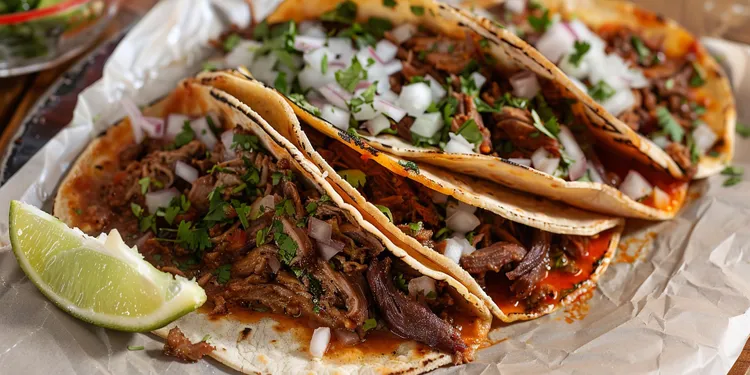
Birria started as a goat stew from Jalisco, became a beef variation popular across Mexico, and then went globally viral as birria tacos - the corn tortilla dipped in consomme (the birria broth), filled with beef and cheese, pan-fried until crispy. The consomme is served alongside for dipping. It takes time (4-5 hours in the oven, or 90 minutes in a pressure cooker) but is almost entirely hands-off after the initial preparation.
The broth is made by simmering rehydrated ancho and guajillo chillies with tomato, garlic, cumin, Mexican oregano, cinnamon and cloves, then blending and straining over beef chuck or short ribs. The resulting broth is deep red, slightly smoky, and extraordinary.
Macro estimate (3 tacos with consomme): ~560 kcal, 42g protein, 38g carbs, 26g fat. Batch-cook-friendly: the beef and broth keep refrigerated for five days and freeze well.
2. Frijoles de Olla (Pot Beans)
Frijoles de olla - beans cooked in a clay pot (or any heavy pot) with onion, garlic and epazote until creamy - is the single most important technique in Mexican cooking. Everything else is built around these beans. They take three hours (or 45 minutes in a pressure cooker) and cost almost nothing per serving. Macro estimate per 200g serving: ~240 kcal, 14g protein, 44g carbs, 1g fat. Excellent fibre (14g per serving). Serve as a side with anything.
3. Salsa Verde (Tomatillo Salsa)
Salsa verde is tomatillos, jalapeño, white onion, garlic and coriander - blended raw for fresh brightness or charred and blended for depth. The charred version (roast everything under a high grill until blackened in spots) has more complexity. Either version takes 10 minutes and keeps refrigerated for a week. It is the dipping sauce, the taco sauce and the base for chilaquiles, enchiladas verdes and poached egg dishes.
4. Arroz Rojo (Mexican Red Rice)
Mexican rice is not pilaf - it is rice toasted in oil until lightly golden, then simmered in blended tomato with garlic, onion and chicken stock. The technique (toasting the rice before the liquid goes in) produces a dry, separate grain with a reddish colour and tomato flavour throughout. Macro estimate per serving: ~240 kcal, 5g protein, 48g carbs, 4g fat. Better alongside protein-rich dishes than as a main.
5. Tacos al Pastor (Marinated Pork Tacos)
Al pastor is pork marinated in a blend of dried chillies, achiote paste, pineapple, garlic and oregano, traditionally cooked on a vertical spit. The home version: marinate thinly sliced pork shoulder overnight, cook in a hot pan or under a grill until caramelised and slightly charred at the edges. Serve on small corn tortillas with pineapple, white onion, coriander and lime. Macro estimate (3 tacos): ~480 kcal, 36g protein, 42g carbs, 18g fat.
The Macro Profile of Mexican Cooking
Mexican home cooking is one of the most naturally fibre-rich global cuisines. Beans appear in most meals, providing 12-14g fibre per 200g serving. Corn tortillas are higher in fibre than wheat flour tortillas and provide resistant starch. The chilli-heavy dishes have documented anti-inflammatory properties. The weakness of the profile is fat in cheese-heavy dishes and in restaurant-style preparations - Mexican home cooking is significantly leaner than the Tex-Mex versions most people encounter.
- Birria tacos (3): ~560 kcal, 42g protein, 38g carbs
- Frijoles + arroz rojo: ~480 kcal, 19g protein, 92g carbs (high-carb day fuel)
- Al pastor tacos (3): ~480 kcal, 36g protein, 42g carbs
Homemade Corn Tortillas
Making corn tortillas at home from masa harina requires only three ingredients (masa harina, water, salt), a tortilla press (or a heavy plate and cling film), and a dry hot pan. The whole process takes 20 minutes for 12 tortillas. Fresh tortillas are categorically different from shop-bought - softer, more corn-flavoured, with a flexibility that makes wrapping and eating them completely different from the hard-edged factory versions. Macro estimate per small tortilla (25g): ~55 kcal, 1g protein, 11g carbs, 1g fat.
For a comparison of Mexican cooking against other high-protein global cuisines, see the complete guide to global cuisines at home.
Latest