Middle Eastern Cooking at Home: Hummus, Shakshuka and the High-Protein Pantry
Middle Eastern home cooking is built on legumes, eggs and lean protein - one of the most naturally high-protein and macro-friendly global cuisines. Hummus, shakshuka, shawarma and more, made practical for weeknight cooking.
Middle Eastern food is having a sustained moment in home cooking, and the reasons are practical as much as cultural. The cuisine is built on chickpeas, lentils, eggs, yoghurt, tahini and lean grilled meat - ingredients that happen to produce some of the best macro profiles of any global cuisine. The Mediterranean diet, which nutritionists consistently rank as the most evidence-backed eating pattern for long-term health, is essentially the Western framing of what Middle Eastern and Greek home cooking has been doing for centuries.
The Middle Eastern Pantry
The pantry for Middle Eastern cooking overlaps significantly with Mediterranean cooking. Core ingredients:
- Chickpeas (dried and tinned) - the protein backbone of the cuisine. Dried are cheaper and better for hummus; tinned work for everything else.
- Tahini - sesame paste. Use it in hummus, dressings, sauces and as a drizzle over roasted vegetables. Keep in the fridge once open.
- Za'atar - a spice blend of thyme, sumac, sesame and oregano. Used as a seasoning, mixed with olive oil for dipping, and sprinkled over flatbread, eggs and roasted vegetables.
- Sumac - ground dried sour berries. Adds a lemony acidity. Use on salads, over grilled meat and in fattoush.
- Cumin and coriander - shared with Indian and Moroccan cooking.
- Preserved lemon - adds depth to tagines and marinades. Can substitute with lemon zest and a little salt.
- Pomegranate molasses - sweet-sour. Excellent in dressings, marinades and as a drizzle over hummus and yoghurt dishes.
Five Dishes to Start With
1. Hummus (Real Version)
Shop-bought hummus is fine. Homemade hummus made properly - from dried chickpeas cooked until very soft, blended with a generous amount of tahini, lemon and garlic, emulsified with cold water until smooth - is categorically different. The key is the ratio: more tahini than you think (at least 1:3 tahini to chickpeas by weight), and cold water blended in gradually to produce a light, airy texture. Hot chickpeas blend more smoothly than cold.
Macro estimate per 100g: ~170 kcal, 8g protein, 14g carbs, 10g fat. Good protein density for a vegetable-based dip. A proper serving (3-4 tablespoons, 80g) is around 135 kcal.
2. Shakshuka (Eggs in Spiced Tomato Sauce)
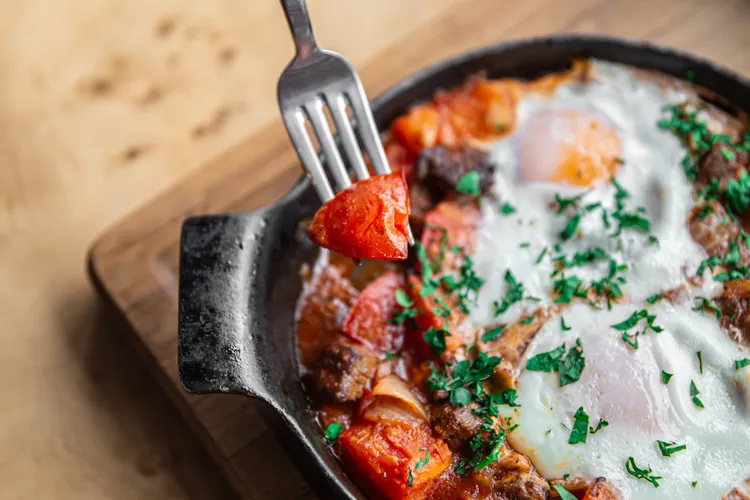
Shakshuka is two eggs poached in a sauce of onion, pepper, crushed tomatoes, cumin, smoked paprika and chilli. It takes 25 minutes, costs almost nothing, and provides around 280 kcal for two eggs with sauce - one of the best calorie-to-satisfaction ratios in this guide. It works for breakfast, lunch or dinner. Make the tomato sauce in advance and reheat it before cracking in the eggs - the sauce keeps refrigerated for four days.
Macro estimate (2 eggs): ~280 kcal, 16g protein, 18g carbs, 14g fat. Add feta on top for 40 extra kcal and 3g more protein. Serve with flatbread (adds ~150 kcal).
3. Sheet-Pan Chicken Shawarma
Restaurant shawarma is cooked on a vertical spit. The home version - chicken thighs marinated in shawarma spice (cumin, turmeric, coriander, cinnamon, allspice, paprika, black pepper, garlic) and roasted on a sheet pan until caramelised at the edges - captures most of the flavour without any specialist equipment. The marinade does the work; the chicken just needs high heat and enough time to colour properly.
Macro estimate (chicken thigh, skinless): ~380 kcal, 40g protein, 8g carbs, 20g fat. Serve in flatbread with garlic sauce, tomato and pickled turnip. Total bowl: ~550 kcal, 44g protein.
4. Fattoush (Toasted Bread Salad)
Fattoush is a Levantine salad built on toasted or fried pieces of flatbread (pita), tomatoes, cucumber, radish, spring onions, parsley and mint, dressed with sumac, lemon and olive oil. It is the Lebanese solution to stale bread and the best use of sumac in the pantry. The sumac dressing is distinctive - nothing else tastes quite like it. Macro estimate: ~250 kcal per serving, 6g protein, 28g carbs, 12g fat. Serve alongside shawarma or grilled meat.
5. Mujaddara (Lentils and Rice with Crispy Onions)
Mujaddara is one of the oldest recorded recipes in the world: lentils and rice cooked together, topped with deeply caramelised (almost burnt) fried onions. The onions are the key - they need 40-45 minutes in a generous amount of oil over medium heat to reach the dark, sweet, crisp state that makes mujaddara what it is. Worth every minute. Macro estimate: ~410 kcal, 16g protein, 62g carbs, 12g fat. Plant-based, high-fibre, genuinely filling.
Macro Profile: Why Middle Eastern Food Works for High-Protein Eating
The legume-forward nature of Middle Eastern cooking produces meals with protein-to-calorie ratios that rival animal protein sources. Hummus is 8g protein per 100g. Chickpeas are 9g protein per 100g cooked. Falafel (made from ground chickpeas) is around 12g protein per 100g. Combined with the yoghurt-based sauces and dairy components that appear throughout the cuisine, the cumulative protein delivery of a Middle Eastern meal is strong without being centred on meat.
- Shakshuka (2 eggs + sauce): ~280 kcal, 16g protein
- Chicken shawarma bowl: ~550 kcal, 44g protein
- Mujaddara: ~410 kcal, 16g protein
- Hummus (generous serving, 100g): ~170 kcal, 8g protein
Batch Cooking
Middle Eastern food is among the best cuisines for batch cooking. Hummus keeps refrigerated for five days. Shawarma marinated chicken keeps in the marinade in the fridge for 48 hours before cooking. Mujaddara improves overnight. Shakshuka tomato base keeps for four days and the eggs are cracked in fresh at serving time - which means one batch of sauce produces four separate, freshly-made shakshuka meals.
For a broader overview of global cuisines and how Middle Eastern food compares to Korean, Japanese, Vietnamese and others on macros and weeknight practicality, see the complete guide to global cuisines at home.
Latest