Spanish Cooking at Home: Paella, Tortilla and the Mediterranean Pantry
Spanish home cooking is one of the most budget-friendly global cuisines - built on rice, eggs, legumes and seasonal vegetables. Tortilla española, paella, gazpacho and sofrito explained for weeknight cooking.
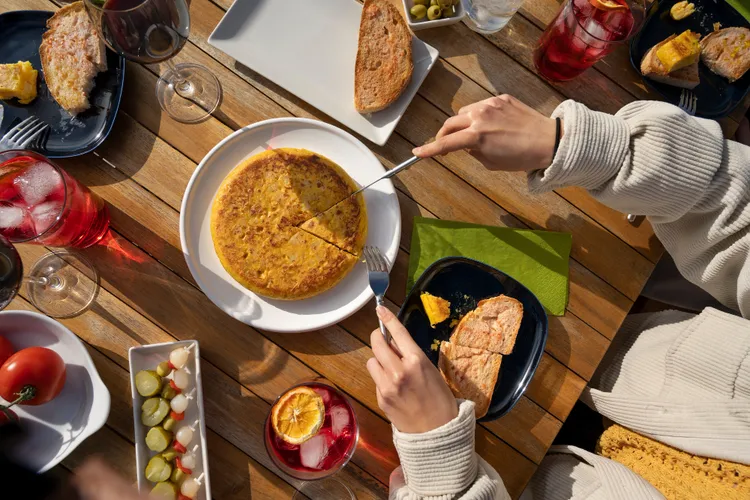
Spanish cooking in its home form is not the elaborate restaurant food that defines Spanish cuisine internationally. It is tortilla española - a potato and egg omelette that takes 25 minutes and feeds four. It is lentejas con chorizo (lentils with chorizo) - one pot, 35 minutes, excellent macros. It is sofrito - a slow-cooked base of tomato, onion and pepper that takes 40 minutes once and unlocks dozens of other dishes. Spanish home cooking is practical, cheap and far better for weeknight use than its restaurant reputation suggests.
The Spanish Pantry
- Good olive oil - not optional. Spanish cooking uses olive oil generously and the quality matters. A Spanish extra virgin (Hojiblanca, Arbequina varieties) is the foundation.
- Smoked paprika (pimenton de la vera) - sweet or hot. Smoked, not plain. The smoked version is one of the most useful single spices in Spanish cooking.
- Saffron - for paella and some seafood dishes. Buy a small amount; a pinch is enough per dish.
- Bomba rice or arborio - Spanish bomba rice is the correct rice for paella: it absorbs three times its volume in liquid while staying firm. Arborio works as a substitute.
- Spanish chorizo (cured) - cured (not fresh) Spanish chorizo is a flavouring ingredient as much as a protein: sliced and rendered in olive oil, it flavours the whole dish. Keep a stick in the fridge - it lasts weeks.
- Tinned tomatoes and good quality tinned fish - anchovies, sardines and tuna feature across Spanish cooking and make excellent budget meals.
- Sherry (dry fino or manzanilla) - used in sauces and braises. A small bottle keeps for months.
Sofrito: The Foundational Technique
Sofrito is the Spanish equivalent of the Indian masala base or the French mirepoix - a slow-cooked concentration of tomato, onion and pepper that forms the base of paella, arroz con pollo, fideos, fabada and dozens of other Spanish dishes. The technique requires patience: the vegetables are cooked over low heat for 35-40 minutes until they collapse into a sweet, concentrated paste. Rushing it produces a sauce that tastes raw and sharp. Done properly, it tastes caramelised and deep.
Make sofrito in bulk (a large batch from six onions, six tomatoes and four peppers takes the same time as a small batch) and freeze in 200g portions. A portion of sofrito is the first step of most Spanish rice and legume dishes.
Five Core Dishes
1. Tortilla Española (Spanish Potato Omelette)
Tortilla española is the most practical dish in Spanish cooking: eggs, potatoes, olive oil, salt. The technique is the challenge: the potatoes are cooked slowly (not fried) in generous olive oil until tender and starting to break down, then combined with beaten egg and cooked in a pan, flipped once. The result should be slightly runny in the centre when warm - it firms as it cools.
A tortilla at room temperature is one of the best lunch or dinner options in terms of protein-per-cost: six eggs and two large potatoes feeds four for around 60p/75 cents per serving. Macro estimate per serving: ~360 kcal, 18g protein, 28g carbs, 20g fat. Add a simple green salad: ~420 kcal total, good protein, genuinely filling.
2. Paella Valenciana
Paella is not difficult to make at home; it requires understanding two things. First, the socarrat - the crispy, toasted rice crust at the bottom of the pan - is the goal, not a mistake. Second, paella should never be stirred after the rice goes in. The technique is: build the sofrito, add stock, bring to a boil, add rice, reduce to a simmer, add protein on top, do not touch it for 18 minutes.
Traditional Valencian paella uses chicken and rabbit, not seafood. Seafood paella (paella de marisco) is a coastal variation. Mixed paella (paella mixta) is popular in restaurants but is considered inauthentic in Valencia. Macro estimate (chicken paella, one serving): ~480 kcal, 36g protein, 56g carbs, 12g fat. The rice-to-protein ratio makes paella filling and macro-efficient.
3. Gazpacho
Gazpacho is raw: tomatoes, cucumber, pepper, garlic, olive oil, sherry vinegar, salt, blended cold. Nothing is cooked. The quality of the tomatoes is everything - this is a summer dish made when tomatoes are at peak flavour. In winter, tinned tomatoes work but lack the fresh quality. Serve ice-cold with a drizzle of olive oil and croutons.
Macro estimate: ~140 kcal per 300ml serving, 3g protein, 12g carbs, 9g fat. Almost pure vegetable calories. Good as a starter; light as a main.
4. Fabada Asturiana (Bean and Sausage Stew)
Fabada is Spain's answer to cassoulet: a rich, smoky stew of large white beans (fabes de la granja), chorizo, blood sausage (morcilla), and smoked bacon. It is a winter dish and one of the most satisfying meals in Spanish cooking. Dried fabes need overnight soaking; tinned butter beans make a good weeknight substitute. The sausages do the flavouring work - the beans just need time.
Macro estimate: ~580 kcal, 32g protein, 52g carbs, 24g fat. High protein, high fibre from the beans, rich from the sausage fat. Serve in small portions with crusty bread.
5. Patatas Bravas
Patatas bravas - crispy fried or oven-roasted potato cubes with a spiced tomato sauce and sometimes aioli - are the definitive Spanish tapa and one of the most replicated dishes at home. The sauce varies regionally: Catalan bravas are purer tomato with just smoked paprika and chilli; Madrilen bravas add more heat. Oven-roasted patatas bravas (at 220°C, tossed in olive oil and smoked paprika) provide a decent approximation without deep-frying. Macro estimate: ~290 kcal per serving, 4g protein, 38g carbs, 14g fat.
Budget Angle: Spanish Food as Weekly Cooking
Spanish cooking is among the cheapest global cuisines to maintain at home. Lentils with chorizo - a standard weeknight meal - costs around 60-80p/$1 per serving and provides around 420 kcal, 26g protein. Tortilla española at ~60p per serving. Gazpacho in tomato season at around 40p per bowl. Rice dishes use chicken thighs, not expensive cuts. The Spanish pantry - olive oil, tinned fish, dried legumes, eggs - is cheap to stock and long-lasting.
For a complete comparison of Spanish cooking against other European and global cuisines including Moroccan, Middle Eastern and Peruvian, see the complete guide to global cuisines at home.
Latest