Thai Cooking at Home: Balancing Sweet, Sour, Salty and Spicy
Thai cooking at home comes down to one skill: balancing four flavours. Master that, and pad thai, green curry and larb are all within reach - with macro profiles that make Thai food one of the better global cuisines for weeknight eating.
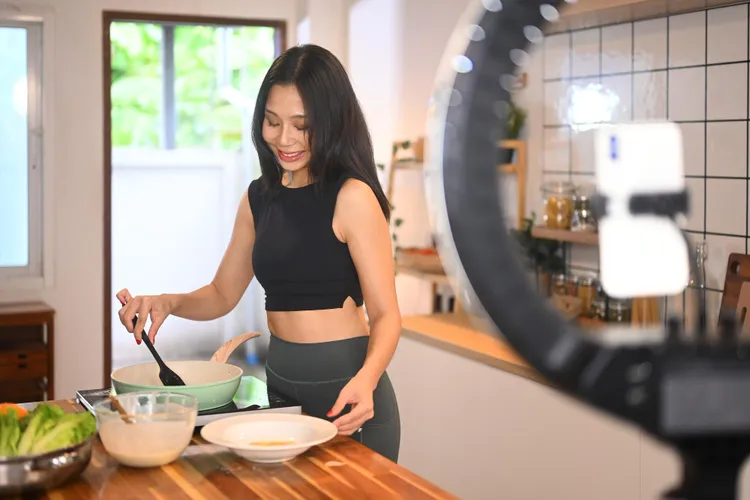
Thai food has a reputation for being tricky to replicate at home. The reality is more specific: it is not technically difficult, but it is unforgiving if you skip the tasting step. The four-flavour balance - sweet (palm sugar), sour (lime/tamarind), salty (fish sauce) and spicy (chilli) - has to be calibrated for every dish, and the ratios shift depending on the dish and the individual. Learn to taste and adjust and most Thai recipes fall into place.
The Thai Pantry
Thai cooking shares significant pantry overlap with Vietnamese and some overlap with Korean (fish sauce appears in all three). The core Thai pantry:
- Fish sauce (nam pla) - the salt of Thai cooking. Pungent in the bottle, transformative in a dish. Start with half the quantity a recipe calls for and add more.
- Lime - fresh only. Bottled lime juice is not a substitute in Thai cooking. The volatile aromatics in fresh zest and juice are part of the flavour.
- Palm sugar (or light brown sugar) - palm sugar has a slight caramel depth; regular brown sugar is an acceptable substitute.
- Thai green or red curry paste - good shop-bought paste (Mae Ploy or Maesri brands) is excellent and faster than making from scratch. Making paste from scratch requires galangal, lemongrass and kaffir lime leaves - worth it if those ingredients are available.
- Coconut milk - full-fat for curries, light for lower-calorie versions. The macro difference is significant: full-fat coconut milk adds roughly 150 kcal per 100ml; light adds about 80 kcal.
- Oyster sauce and soy sauce - used in stir-fries.
- Lemongrass and galangal (fresh or frozen) - for soups and pastes. Fresh is best; frozen from Asian supermarkets is good; dried is too weak for most applications.
Five Core Thai Dishes
1. Pad Thai
Pad thai is the most recognisable Thai dish and one of the most commonly mis-made at home. The issues are usually: too much sauce (pad thai should be lightly coated, not soupy), wrong noodles (use flat rice noodles, soaked not boiled), or skipping the tamarind (which gives pad thai its characteristic slight sourness - fish sauce alone is not enough).
Proper pad thai sauce: tamarind paste, fish sauce and palm sugar in a rough 3:2:2 ratio by volume, adjusted to taste. Cook the protein first, push to the side of the wok, scramble eggs in the remaining oil, add noodles, toss with sauce, add bean sprouts at the end. Bean sprouts go in last - they should retain crunch.
Macro estimate (prawn pad thai): ~480 kcal, 28g protein, 68g carbs, 10g fat. Chicken version: ~470 kcal, 32g protein, 66g carbs, 9g fat.
2. Thai Green Curry
Green curry with chicken and light coconut milk is one of the best weeknight meals in Thai cooking: 30 minutes, one pan, strong flavour. The key technique is frying the curry paste in the thick cream from the top of the coconut milk tin before adding the rest - this develops the flavour of the paste and prevents a raw-spice quality in the finished curry.
Macro estimate (light coconut milk, chicken breast): ~390 kcal, 32g protein, 16g carbs, 22g fat. Full-fat coconut milk version: ~510 kcal, same protein, 16g carbs, 34g fat. The protein profile is identical; the decision is purely caloric.
3. Larb (Meat Salad)
Larb is minced meat (pork, chicken, beef or duck) dressed in fish sauce, lime, chilli flakes and toasted rice powder, eaten with fresh herbs, shallots and sticky rice. It is one of the highest-protein dishes in Thai cooking for its calorie count. Toasted rice powder - made by dry-toasting raw rice and grinding it - adds texture and a distinctive nutty quality. It cannot be skipped without losing the characteristic larb texture.
Macro estimate (pork larb, without sticky rice): ~280 kcal, 28g protein, 8g carbs, 14g fat. With sticky rice: ~480 kcal, 32g protein. Excellent macro profile for the calorie count.
4. Tom Kha Gai (Coconut Chicken Soup)
Tom kha gai is green curry's lighter, less spicy sibling: chicken in coconut milk broth with galangal, lemongrass, kaffir lime leaves, mushrooms and lime juice. It is one of the gentlest Thai soups and a good entry point for people who find Thai food too spicy. Galangal - different from ginger, harder and more floral - is what makes tom kha taste like itself. Ginger is a substitute but not an equivalent.
Macro estimate: ~320 kcal, 26g protein, 10g carbs, 20g fat (light coconut milk). Rich but not calorically heavy.
5. Som Tam (Green Papaya Salad)
Som tam is shredded unripe green papaya, pounded with palm sugar, fish sauce, lime juice, dried shrimp, tomatoes and long beans in a mortar. It is the leanest Thai dish in this guide: around 150-180 kcal per serving with minimal fat, good fibre from the papaya and some protein from the dried shrimp. Green papaya is available from Asian supermarkets; if unavailable, shredded green mango or kohlrabi works in an approximation.
Managing Calories in Thai Food
The caloric variation in Thai food is wider than most global cuisines because the same dish changes dramatically with oil quantity and coconut milk type. Restaurant Thai food often uses significantly more oil than home cooking recipes specify - woks in commercial kitchens are coated in oil in a way that home wok-cooking is not. This is the main reason home-cooked Thai food runs 100-200 kcal lower per serving than the equivalent restaurant dish.
Practical adjustments: use light coconut milk in curries (saves 70 kcal per 100ml). Use less oil in stir-fries than recipes specify (3/4 of the suggested amount is usually enough). Do not reduce fish sauce quantities - it is low-calorie and essential for flavour.
Batch Cooking
Thai curry pastes keep in the fridge for two weeks and freeze well in ice cube trays. Green curry sauce (without protein) freezes for three months. Larb is best made fresh - the herbs wilt and the texture of the toasted rice powder softens if it sits overnight. Pad thai does not reheat well; noodles become gummy. Cook to order.
For a full comparison of Thai macros against other global cuisines, see the complete guide to global cuisines at home.
Latest