Vietnamese Cooking at Home: Fresh, Light and Surprisingly High Protein
Vietnamese home cooking is the leanest global cuisine in this guide - built on fresh herbs, light broths and fish sauce rather than oil and cream. Pho, bun bo, fresh spring rolls and more, made practical without specialist shops.
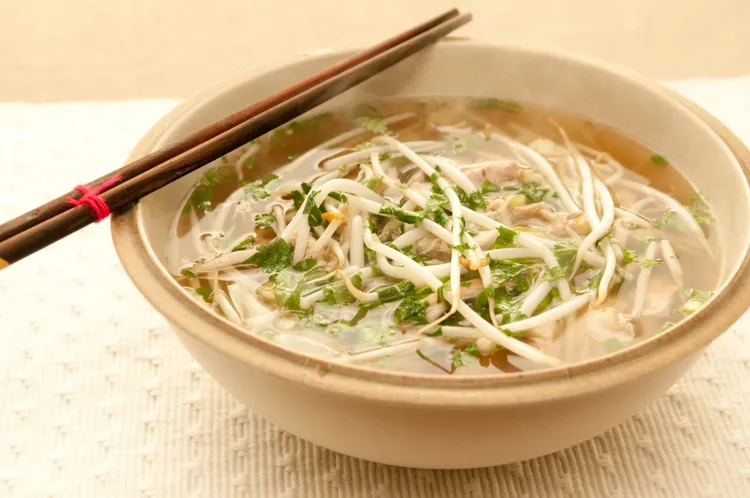
Vietnamese food is the global cuisine most likely to surprise people with its macro profile. A bowl of pho comes in at 380-420 kcal. A plate of fresh spring rolls (goi cuon) is around 180 kcal each. Bun bo hue (spicy beef noodle soup) runs about 450 kcal per bowl. For a cuisine this satisfying and complex in flavour, the calorie counts are extraordinary - and they are that low not because of portion control but because the cooking method itself does not rely on fat for flavour.
Why Vietnamese Food Is Lean
Vietnamese cooking builds flavour through aromatics, fermentation and acidity rather than fat. The broth in pho is made by roasting bones and aromatics (charred ginger, charred onion, star anise, cloves, cinnamon) until deeply flavoured - the fat is skimmed off before serving. Fish sauce, lime, lemongrass, fresh herbs: these are the flavour carriers, and they are essentially calorie-free in the quantities used. Oil appears in Vietnamese cooking but sparingly and primarily in stir-fry dishes rather than as a base for every sauce.
The Vietnamese Pantry
- Fish sauce (nuoc mam) - the salt and the umami base of Vietnamese cooking. Three Crabs and Tiparos are reliable brands. Start with less than a recipe specifies and adjust.
- Rice noodles (bun, pho, banh pho) - different noodle widths for different dishes. Thin vermicelli (bun) for spring rolls and bun dishes. Flat wide noodles (banh pho) for pho. Both are cheap and widely available.
- Rice paper (banh trang) - for fresh spring rolls. Soak in warm water for 20-30 seconds until pliable. Do not over-soak.
- Lemongrass - fresh or frozen. Essential in bun bo hue and many marinades.
- Shrimp paste (mam tom) - strong, fermented, used as a base in soups and dipping sauces. Pungent in isolation; transformative in a dish. Not essential for beginners.
- Fresh herbs - coriander, Thai basil, mint, perilla (shiso). These are served fresh at the table alongside Vietnamese noodle soups, not cooked into the dish.
- Nuoc cham ingredients - fish sauce, lime juice, sugar, garlic, chilli. This all-purpose dipping sauce goes with almost everything Vietnamese.
Five Dishes to Learn
1. Pho (Vietnamese Beef Noodle Soup)
Pho broth is the most time-intensive thing in Vietnamese cooking: beef bones roasted and simmered for four to six hours with charred ginger and onion, star anise, cloves and cinnamon. The result - a clear, deeply aromatic broth - is the reason pho tastes like nothing else. A pressure cooker reduces the time to 90 minutes. The broth can be made in advance and frozen.
Serving: cook flat pho noodles, slice raw beef paper-thin (it cooks in the hot broth poured over it at the table), arrange fresh herbs, bean sprouts, lime and hoisin and sriracha on the side. The customisation at the table is part of the dish.
Macro estimate: ~390 kcal, 30g protein, 44g carbs, 8g fat. The fat in pho almost entirely comes from the beef - the broth itself is essentially fat-free after skimming.
2. Goi Cuon (Fresh Spring Rolls)
Fresh spring rolls - not fried, not crispy - are rice paper filled with cooked shrimp or pork, vermicelli noodles, lettuce, fresh herbs and julienned vegetables. They are assembled cold, served immediately (rice paper hardens if left), and eaten with a peanut dipping sauce (peanut butter, hoisin, a little vinegar, chilli, diluted with water).
Macro estimate per roll (shrimp): ~120 kcal, 8g protein, 16g carbs, 2g fat. Two rolls: ~240 kcal, 16g protein. Add peanut sauce (1 tablespoon): +60 kcal, 2g protein. Fast, no-cook assembly, excellent as a lunch or starter.
3. Bun Bo Hue (Spicy Beef and Pork Noodle Soup)
Bun bo hue is the spicy northern cousin of pho - a richer, more complex broth with lemongrass, shrimp paste, annatto oil and dried chilli, served with round rice noodles rather than flat pho noodles. It is more intensely flavoured than pho and significantly spicier. The shrimp paste is the controversial ingredient: it adds depth that nothing else replicates. Start with half the amount recipes suggest.
Macro estimate: ~450 kcal, 34g protein, 48g carbs, 12g fat.
4. Banh Mi (Vietnamese Baguette)
Banh mi is French colonial influence fully absorbed into Vietnamese cooking: a light, crisp baguette (Vietnamese banh mi bread is lighter and crispier than French baguette) filled with various proteins - pork belly, pate, grilled chicken, tofu - with pickled daikon and carrot, fresh coriander, cucumber, chilli and mayo. The ratio of bread to filling is different from a Western sandwich: thinner bread, more filling, more acidic components.
Macro estimate (pork belly version): ~480 kcal, 28g protein, 42g carbs, 22g fat. Chicken version: ~420 kcal, 32g protein. The pickled vegetables are made by soaking julienned daikon and carrot in rice vinegar, sugar and salt for 30 minutes - essentially zero calorie, essential flavour.
5. Bo Luc Lac (Shaking Beef)
Bo luc lac is cubed beef sirloin or tenderloin, quickly wok-fried in a soy-oyster-butter sauce until caramelised on the outside and pink inside, served over watercress or lettuce with a lime-salt-pepper dipping sauce. The name comes from the shaking motion of the wok during cooking. Takes 15 minutes. High protein, moderate fat.
Macro estimate: ~430 kcal, 40g protein, 8g carbs, 26g fat. Best with a small portion of rice: total meal ~600 kcal, 44g protein.
Nuoc Cham: The Universal Vietnamese Sauce
Nuoc cham - fish sauce, lime juice, sugar, water, garlic, chilli - is the dipping sauce, the dressing and the condiment that appears on every Vietnamese table. The ratio: 2 parts fish sauce, 2 parts lime juice, 2 parts water, 1 part sugar, adjust to taste. It keeps refrigerated for a week. Drizzle it over everything: noodle bowls, fresh spring rolls, grilled meat, rice dishes. Understanding nuoc cham is the single biggest step toward understanding Vietnamese flavour balance.
Batch Cooking Notes
Pho broth is the ideal batch-cook base: make a large batch, portion into freezer bags or containers (500ml per portion is a good serving), freeze for up to three months. Reheat, add fresh noodles and garnishes, and you have restaurant-quality pho in four minutes. Do not freeze the noodles or garnishes - add those fresh each time.
For a broader comparison of Vietnamese macros against Korean, Thai, Japanese and other global cuisines, see the complete guide to global cuisines at home.
Latest