Whole Chicken, Five Meals: A Zero-Waste Protein System
One whole chicken, cooked once, can generate five distinct meals across the week - at roughly half the cost of buying equivalent meat as separate portions. Here's the complete system, with a meal map and cost breakdown.
A whole chicken weighing 1.5kg typically costs less per 100g than boneless breast or thigh fillets - often by 30-50%. That price gap pays for what the supermarket does when it breaks the bird down: removes bones, portions, and packages. Do that work yourself and you get more food, more flavour, and significantly more mileage from the same spend. At around $8-12 for a whole bird, the cost-per-meal across five uses comes to well under $3.
The Five-Meal Framework
The system works like this: one cooking session on Sunday generates protein and stock that feeds two people across five meals through the week. Here's how each meal comes from the last.
Meal 1: Roast Chicken (Sunday)
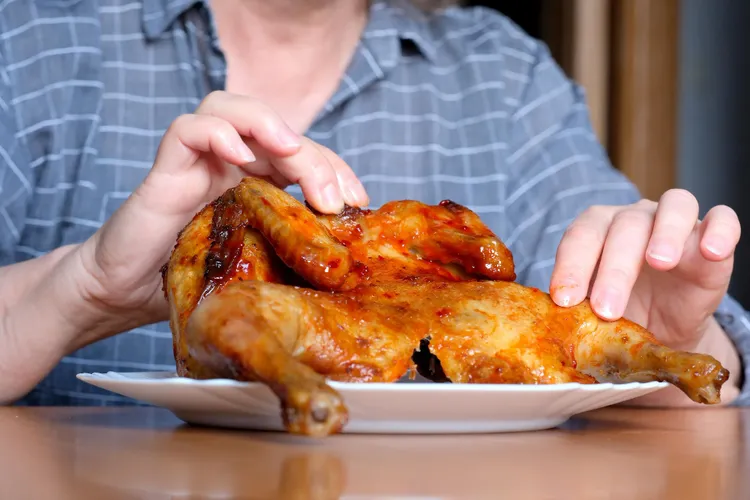
Start with a simple roast. A spice-rubbed roast chicken or a salt-crust roast chicken - both work equally well for this system. Roast at 200°C (fan 180°C) for about 1 hour 20 minutes for a 1.5kg bird, or until the juices run clear at the thigh. Let it rest 15 minutes before carving. Serve the breast meat and one set of thighs/legs.
Estimated macros per serving (without sides): ~320 kcal, 42g protein, 0g carbs, 16g fat.
Meal 2: Chicken and Vegetables (Monday or Tuesday)
Strip the remaining meat from the carcass. You'll get roughly 200-300g of mixed meat from an average bird after the main carve. This is enough for two portions of a stir-fry, a warm salad with roasted vegetables, or a quick pan dish like balsamic chicken with mushrooms (substitute the shredded leftover chicken for fresh). Reheat gently in a pan with a splash of stock rather than blasting in the microwave - it keeps the texture better.
Meal 3: Chicken Stock (make after Meal 2)
Once you've stripped the carcass, put it in a large pot with any vegetable trimmings you've been collecting (onion halves, carrot ends, celery leaves), a few peppercorns, a bay leaf, and cold water to cover. Bring to a simmer - not a boil - and cook for 2-3 hours. Strain, cool, and refrigerate. You'll get 1-1.5 litres of stock. This is free food: you'd pay $3-5 for the equivalent in a carton, and the homemade version has significantly more body and flavour. See the complete stock guide for technique details.
Meal 4: Chicken Soup (Wednesday or Thursday)
Use 500ml of the stock as the base for a soup. A Greek-style chicken soup with lemon and dill works brilliantly here - add any remaining shredded chicken, some rice or small pasta, and whatever vegetables need using up. Or make a simple chicken and cauliflower soup with the remaining stock and whatever brassica needs clearing from the fridge.
Estimated macros per serving: ~280-360 kcal depending on additions, 25-30g protein.
Meal 5: Grain Bowl or Frittata (Friday)
Use the last 500ml of stock to cook a grain - rice, farro, or pearl barley - which soaks up far more flavour than grains cooked in water. Serve as a grain bowl with roasted vegetables and a tahini dressing. Alternatively, any final scraps of chicken (even the very small pieces pulled from the wings or back) go into a frittata with whatever vegetables remain from the week.
What to Do with the Fat
After refrigerating your stock overnight, a layer of solidified chicken fat will form on top. Don't discard it. Schmaltz - rendered chicken fat - is one of the best cooking fats for roasting vegetables, frying eggs, or making a quick pan sauce. Scrape it off and store it in a small jar in the fridge for up to two weeks. It's free, flavourful, and has a high smoke point.
Cost Breakdown
Whole chicken (1.5kg): ~$9-12. Five meals for two people: 10 servings total. Cost per serving: $0.90-1.20 before sides. Compare that to buying two chicken breasts ($5-6) for one meal, or a rotisserie chicken ($9-10) with no carcass and no stock. The whole bird system is straightforwardly the best value in chicken cookery.
Storage Timeline
Day 0 (Sunday): Roast. Strip remaining meat, refrigerate. Refrigerate carcass to make stock Monday.
Day 1-2: Make stock. Use stripped meat for Meal 2. Refrigerate stock.
Day 2-3: Meal 2 (shredded chicken dish).
Day 3-4: Meal 4 (soup).
Day 4-5: Meal 5 (grain bowl or frittata). Freeze any remaining stock if not used by Day 5.
If this protein system appeals, the broader framework for building a kitchen that generates minimal waste is in the Zero-Waste Cooking Systems guide.
Latest