What 150g of Protein Looks Like in a Day
Three full-day examples of 150g of protein - omnivore, vegetarian and budget - with portions, calories and prep tips that make the number realistic.
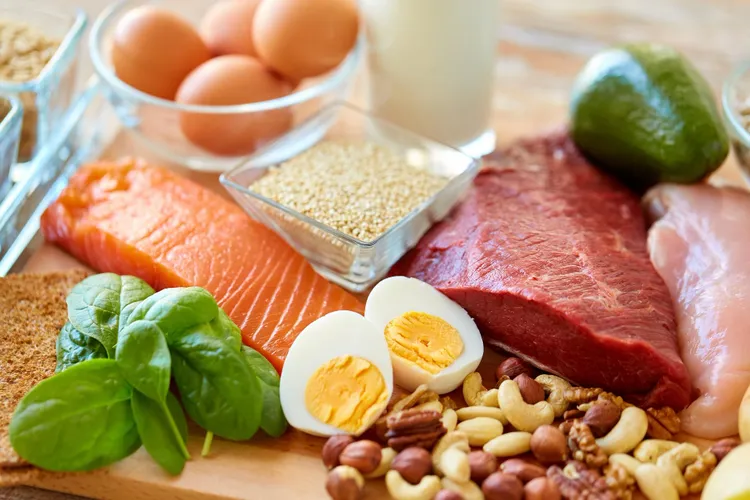
150g of protein sounds like a lot until you lay it out meal by meal. It is about 600 kcal of protein, roughly a third of a 1,850 kcal day, and nearly all of it comes from ordinary foods. What trips people up is timing. One huge dinner will not get you there. Four moderate meals will, with very little effort.
The Math Behind 150g
Protein carries 4 kcal per gram, so 150g equals 600 kcal. On a 1,850 kcal day that is about 32% of your calories. On a 2,500 kcal day it drops to about 24%. This is why the same 150g feels easy for one person and cramped for another: the fewer calories you eat in total, the more of your plate protein has to claim.
Body weight changes the picture too. 150g works out to 2.5g per kg at 60 kg, 2.0g per kg at 75 kg and 1.7g per kg at 90 kg. Whether 150g is the right number for you depends on your own stats and goal, and the Consillar macro calculator can work that out in a minute. The examples below are worked arithmetic, so you can see what any protein target looks like in actual food.
How to Spread 150g Across a Day
A typical day without much planning lands around 15 to 20g of protein at breakfast, 30g at lunch and 40g at dinner. That is about 90g. Closing the gap to 150g means lifting every meal a little, not just adding a shake at the end. A split that works for a four-meal day:
- Breakfast: 35 to 40g
- Lunch: 40 to 45g
- Snack: 25g
- Dinner: 40g
Each of those is one portion of a main protein plus the smaller amounts that come along with grains, dairy and vegetables. Nothing here needs a supplement, though a scoop of whey is a fast way to fill a gap on a busy day. All weights below are cooked weights unless stated otherwise, and all values are estimates.
Example 1: The Omnivore Day (~150g Protein, ~1,850 kcal)
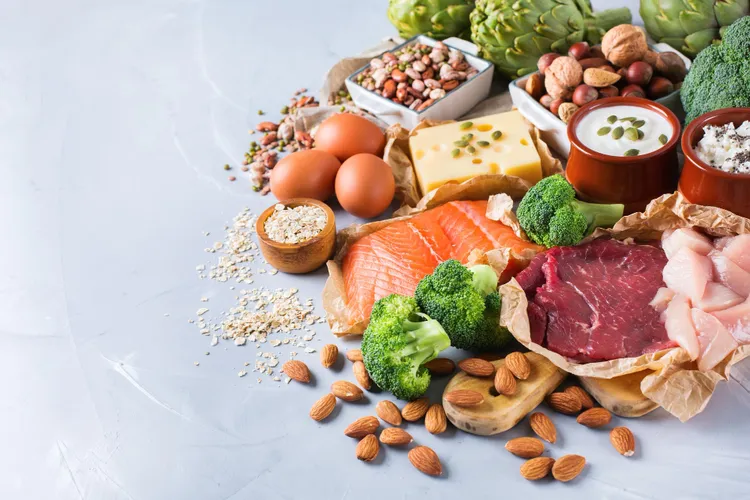
This is the most direct version. It leans on chicken, salmon, eggs and dairy.
Breakfast: ~38g protein, ~520 kcal
- 3 large eggs scrambled in 1 tsp oil (18g)
- 2 slices whole wheat toast (8g)
- 100g low-fat cottage cheese on the side (12g)
If you prefer it in one pan, this egg and cottage cheese omelet puts the same two protein sources into a single dish.
Lunch: ~46g protein, ~550 kcal
- 120g cooked chicken breast (37g)
- 200g cooked rice (5g)
- 150g steamed broccoli (4g)
- 1 tsp olive oil
For a different flavor with a similar chicken portion, balsamic chicken and mushrooms works over the same rice.
Snack: ~25g protein, ~265 kcal
- 200g plain 0% Greek yogurt (20g)
- 25g almonds (5g)
Dinner: ~41g protein, ~525 kcal
- 150g baked salmon (34g)
- 200g baked potato (4g)
- 150g green beans (3g)
The lemon-butter baked salmon with roasted asparagus is a ready-made version of this plate. It uses butter, so expect a few extra kcal compared with the plain fillet above.
Day total: about 150g protein and 1,860 kcal.
Look at how little of the plate is protein by volume. A palm-sized piece of chicken and one salmon fillet cover 71g between them. The rest comes from eggs, dairy and roughly 25g of background protein that bread, rice, potato, vegetables and almonds add without any effort. If your calorie target is higher than this, add carbs and fats to the same structure. The protein side of the day does not need to grow.
Example 2: The Vegetarian Day (~150g Protein, ~2,100 kcal)
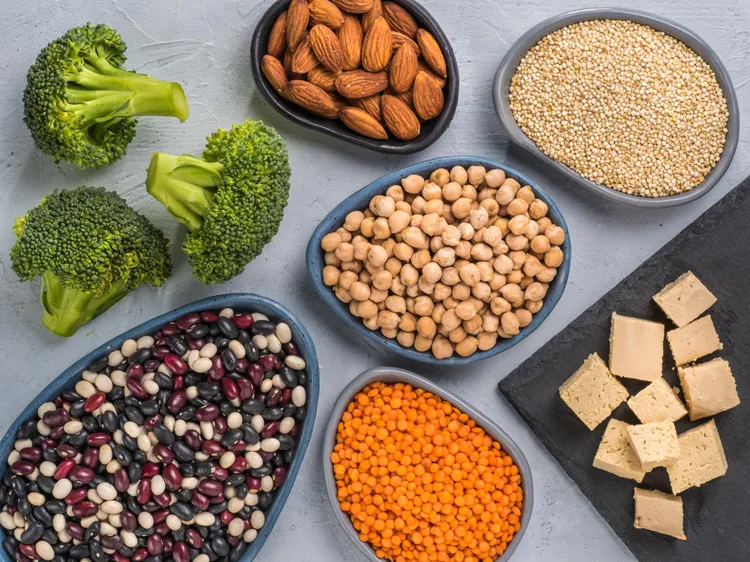
Plant proteins are less dense than meat, so the portions look bigger and calories run higher, and our vegetarian meal plan for 120g of protein works through three full days of them. Eggs, dairy, lentils and tempeh carry this day.
Breakfast: ~32g protein, ~545 kcal
- 60g oats cooked in 250ml milk (16g)
- 150g plain 0% Greek yogurt stirred in (15g)
- 1 banana (1g)
Lunch: ~37g protein, ~575 kcal
- 250g cooked lentils (22g)
- 2 eggs, boiled or fried (12g)
- 100g spinach (3g)
- 1 tbsp olive oil
Snack: ~24g protein, ~275 kcal
- 200g low-fat cottage cheese (24g)
- 1 apple
Dinner: ~39g protein, ~560 kcal
- 150g tempeh (29g)
- 150g cooked quinoa (6g)
- 150g roasted vegetables (4g)
- 1 tsp oil
Evening: ~20g protein, ~140 kcal
- 200g plain 0% Greek yogurt with 1 tsp honey (20g)
Day total: about 152g protein and 2,090 kcal.
The extra calories compared with the omnivore day come from lentils, quinoa and tempeh, which bring carbs and fat along with their protein. That is not a flaw, but it matters if you are working to a tight calorie ceiling. This day also depends on eggs and dairy. For a fully vegan version, swap in firm tofu, tempeh, seitan and soy milk, and expect to add a pea or soy protein powder, since most plant-based yogurts and milks other than soy contain very little protein.
Example 3: The Budget Day (~150g Protein, ~2,100 kcal)
Protein gets expensive quickly when the day is built on chicken breast, salmon and Greek yogurt. This version uses the cheapest sources in most markets: eggs, dried lentils, canned tuna, chicken thighs and oats. Prices differ by country and store, so treat the ranking below as a general pattern and check what is cheap near you.
Breakfast: ~34g protein, ~560 kcal
- 60g oats cooked in 250ml milk (16g)
- 3 eggs, boiled or fried (18g)
Lunch: ~39g protein, ~585 kcal
- 350g cooked lentils as a stew or soup (31g)
- 2 slices bread (8g)
Snack: ~39g protein, ~360 kcal
- 1 can tuna in water, drained, on 2 slices bread (33g)
- 1 boiled egg (6g)
Dinner: ~41g protein, ~585 kcal
- 2 skinless bone-in chicken thighs, about 130g cooked meat (34g)
- 200g cooked rice (5g)
- 150g cabbage and carrot slaw (2g)
- 1 tsp oil
The juicy pan-roasted chicken thighs recipe covers the main dish, and the lemon-infused cabbage salad can stand in for the slaw.
Day total: about 153g protein and 2,090 kcal.
In most markets, the cost per 30g of protein runs roughly in this order from cheapest to most expensive: dried lentils, eggs, canned tuna, chicken thighs, cottage cheese, Greek yogurt, chicken breast, tempeh, salmon. A 500g bag of dried lentils turns into about 1.2 kg cooked and holds around 125g of protein, which covers three or four lunches like the one above. That single bag is the biggest lever on a grocery bill.
What 25 to 30g of Protein Looks Like
Once you know a few anchor portions, you can build a day without a scale. Each of these gives roughly 25 to 30g of protein, using cooked weights:
- Chicken breast: about 90g
- Lean beef: about 100g
- Salmon: about 110g
- Canned tuna: 1 can, drained
- Eggs: 5 large
- Greek yogurt (0%): about 250g
- Cottage cheese (low-fat): 200 to 250g
- Firm tofu: about 300g
- Tempeh: about 150g
- Cooked lentils: about 300g
- Whey protein: 1 scoop
Four to five anchors from this list, spread across a day, is 150g. The calorie cost varies widely: 110g of salmon and 300g of lentils both hit the target, but the salmon brings about 230 kcal and the lentils about 350. Pick by protein per calorie when you are watching calories and by protein per dollar when you are watching the budget.
Protein per 100 kcal: Which Anchors Are Efficient
If calories are tight, the ranking changes, and our full guide to protein per 100 kcal across common foods goes deeper. Approximate protein per 100 kcal, using cooked weights:
- Cod and other white fish: about 22g
- Canned tuna in water: about 22g
- Chicken breast: about 19g
- Greek yogurt (0%): about 17g
- Lean beef: about 14g
- Low-fat cottage cheese: about 13g
- Salmon: about 12g
- Firm tofu and tempeh: about 10g
- Whole eggs: about 9g
- Cooked lentils: about 8g
Nothing on that list is bad. Lentils are low on the ladder and still one of the best value foods in the store. The point is to know which tool fits the job. A 1,600 kcal day leans on the top of the list. A 2,800 kcal day can lean on the bottom and enjoy the extra fiber and carbs that come with it.
Low-Effort Protein for Days You Will Not Cook
Some days the prep does not happen. A day built from grocery-store shortcuts still reaches 150g: a rotisserie chicken (about 25g per 100g of meat), canned tuna or sardines, pre-cooked lentil pouches, single-serve cottage cheese or yogurt tubs, boiled eggs from the deli counter, and a scoop of whey in milk. Four or five of those across the day gets you there with zero stove time. The cost is usually higher per gram of protein and sodium runs high in processed options, so use this as the fallback and the batch-cooked days as the default.
Why 150g Feels Harder Than It Should
Raw weights versus cooked weights
This one causes the most confusion. 100g of raw chicken breast holds about 23g of protein. After cooking it weighs about 75g, and 100g of the cooked meat holds about 31g. The protein did not change, the water did. Check whether a nutrition label or database entry is for raw or cooked food, and stay consistent. Weighing raw and logging cooked values will make you think you ate 30% more protein than you did.
Loading it all into dinner
A 60g dinner is a big plate of meat, and most people stop long before the number is reached. Splitting the same total into 35 to 45g per main meal is physically easier to eat and keeps hunger steadier.
Ignoring background protein
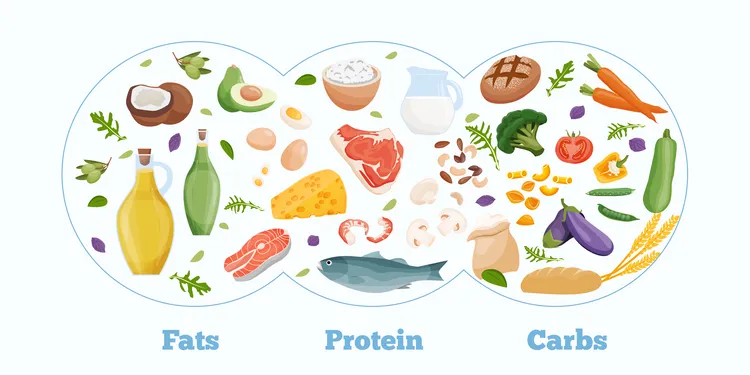
Bread, rice, pasta, potatoes, vegetables and nuts add up to 20 to 30g across a day even when you are not trying. That is why the examples above need less "protein food" than you might expect. It also means that if you log only meat, dairy and eggs, you will undercount and end up eating more than you planned.
Counting nuts and seeds as protein foods
Nuts, seeds and nut butter help, but they cost calories. 30g of almonds is about 6g protein and 175 kcal. The same 175 kcal of chicken breast gives about 33g. Use them for flavor and fat, not as a main protein source.
Prep: Making 150g Repeatable
A day like this is easiest when most of the protein is cooked in advance. One Sunday session covers a surprising amount:
- Chicken: 1 kg of raw breast holds about 230g of protein, enough for five or six 40g portions.
- Lentils: One 500g bag cooked in a big pot gives three or four lunches.
- Eggs: A dozen boiled eggs is about 72g of protein, grab-and-go for snacks or breakfast. For a portable cooked version, bake a batch of egg, spinach and bacon muffins.
- Yogurt or cottage cheese: Buy the large tub and portion it into containers so a 25g snack takes no thought.
Cooked chicken, rice and lentils keep for 3 to 4 days in the fridge. Cool them within 2 hours of cooking and freeze anything you will not eat in that window, in single portions so you can thaw one meal at a time. Cooked rice is the one to refrigerate quickly. Hard-boiled eggs keep up to a week in the shell.
Scaling the Day to Your Own Number
Your target probably is not exactly 150g. The structure still works, and our guide on turning macro targets into a plate covers the full method for any macro split. Divide your protein number by four meals, pick one anchor portion from the cheat sheet for each, and fill the gaps with grains, vegetables and dairy. For 120g, drop the snack or halve each main portion. For 180g, add a scoop of whey and one more 25g anchor.
Calorie level matters as much as protein level, and our guide on how to split 2,000 calories across 3 meals and 2 snacks shows how to divide the total across a day. At 1,600 kcal, protein has to come from leaner choices. Swapping the 150g of salmon in the omnivore day for 150g of cooked cod keeps protein at about 35g but saves roughly 150 kcal. At 2,500 kcal, you can keep the same protein and add rice, potatoes, olive oil and fruit.
To find your own target, start with the Consillar macro calculator, which turns your stats and goal into daily calories and macros. Then take that protein figure to the meal planner to build the day, or the meal prep tool to batch the week. Plug in your number and the same structure from the examples above applies, just scaled to you.
A Note on These Numbers
All figures here are estimates based on typical cooked weights and common nutrition databases. Brands, cuts and cooking methods shift them by 10% or more, so use them as a planning guide rather than exact values. This is general food information, not medical or dietary advice. If you have a medical condition or follow a medically supervised diet, talk to a qualified professional before changing your protein intake.
Latest