How to Eat Out and Still Hit Your Macros
Restaurant menus aren't built for tracking, but you don't have to skip dinner out or blow your day. Here's how to order strategically across cuisines and land close to your numbers.
Most restaurant meals are built to maximize flavor per bite, not to hit a protein target or stay under a calorie ceiling. Portions run 1.5-2x a standard serving, sauces and dressings carry hidden fat and sugar, and almost nothing on the menu lists macros. That doesn't mean eating out has to wreck your week. It means you need a different strategy than the one you use at home, where you control every ingredient.
Set a Target Before You Sit Down
Decide your macro budget for the meal before you look at the menu, not after. If your daily target is 160g protein and 2200 calories, and you've already eaten 90g protein and 1400 calories by dinner, you know you're working with roughly 70g protein and 800 calories for the meal. Having that number in your head before the bread basket arrives changes what you order - you're not guessing at the table, you're filling a gap you already know.
If you know you're eating out later in the day, eat lighter earlier - a higher-protein breakfast and lunch leaves more room for the restaurant meal without forcing you to order the driest, most restrictive thing on the menu.
Universal Moves That Work at Any Restaurant
- Order protein first, sides second. Pick the protein source, then build the rest of the meal around it instead of choosing a dish as a whole and hoping the macros work out.
- Sauces and dressings on the side. A ladled sauce or a full pour of dressing can add 200-400 calories with almost no protein. Dipping instead of drowning cuts that dramatically while keeping the flavor.
- Swap one starchy side for vegetables. Most kitchens will swap fries or rice for a side salad or steamed vegetables on request - this alone can save 300+ calories without touching protein.
- Skip the bread basket, not the meal. A couple of dinner rolls with butter can run 300-400 calories before the entree even arrives. Ask the server to skip it or box it right away if it's already on the table.
- Order grilled, roasted, or baked over fried or breaded. Breading and frying add 150-250 calories per serving with no protein benefit.
Ordering by Cuisine Type
Steakhouse or American grill
This is the easiest cuisine to hit macros in. A 6-8 oz sirloin or filet delivers 40-55g protein with a manageable fat profile. Steer clear of the loaded baked potato and creamed spinach - ask for a plain baked potato or steamed vegetables instead. A side salad with dressing on the side rounds it out without adding much.
Sushi
Sashimi and nigiri are protein-dense and low-calorie on their own - the rice is where calories add up fast, and specialty rolls with tempura, cream cheese, or spicy mayo can run 500-600 calories per roll. Order sashimi or nigiri over heavy rolls, ask for brown rice if available, and go easy on the soy sauce, which is sodium-heavy but calorie-free, so it's actually one of the safer condiments here.
Italian
The hardest cuisine to track cleanly because pasta portions run 3-4x a standard serving and sauces are cream or oil-based. Grilled chicken, fish, or a protein-forward entree like chicken piccata (ask for light butter) beats pasta dishes for macros. If pasta is non-negotiable, ask for a half portion and add a grilled protein on the side - most Italian restaurants will do this without pushback.
Mexican
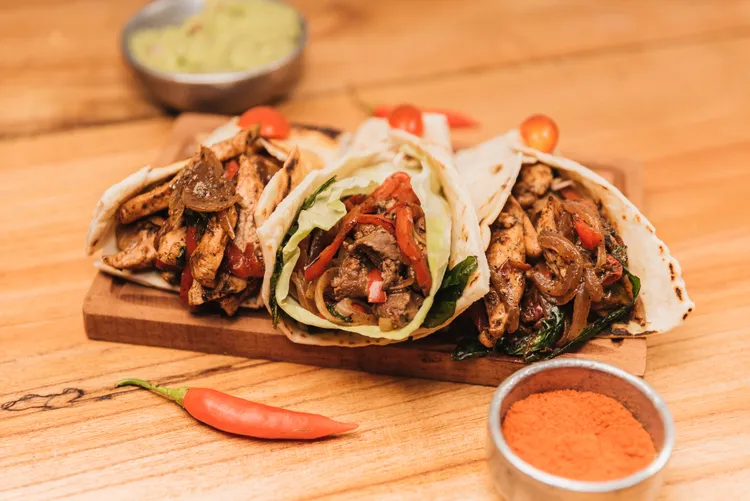
Fajitas are one of the best macro-friendly orders in any cuisine - grilled protein, peppers, and onions with minimal added fat, and you control the tortillas, cheese, and sour cream yourself. A burrito bowl works the same way: protein, beans, and vegetables without the tortilla. Skip the chips that arrive automatically, or ask for a smaller basket - a full basket with salsa can run 500+ calories before the meal starts.
Fast casual (bowls, salads, sandwiches)
These chains are usually the most transparent with nutrition info, often posted or available on request. Build-your-own bowls let you pick protein, base, and toppings individually, which makes hitting a target almost as easy as cooking at home. Double the protein scoop if the base menu portion runs light - most places charge a small upcharge and it's worth it for the macro math.
When Nutrition Info Isn't Posted
For chains, checking the nutrition page on the restaurant's website before you go takes two minutes and removes the guesswork entirely. For independent restaurants, estimate using portion comparisons: a palm-sized piece of protein is roughly 20-30g, a fist-sized portion of starch is roughly 30-40g carbs, and a thumb-sized portion of added fat (oil, butter, dressing) is roughly 100-120 calories. It won't be exact, but it gets you within a reasonable range without needing a food scale at the table.
Alcohol and Macros
A glass of wine or a light beer runs 120-150 calories with no protein or fiber to offset it. Mixed drinks and cocktails are worse - many run 250-400 calories per glass from sugar-heavy mixers. If alcohol is part of the plan, account for it in your pre-meal budget the same way you'd account for an extra side dish, and consider spirits with a low-calorie mixer (soda water, diet tonic) over anything pre-mixed or syrupy.
Don't Let One Meal Derail the Week
A single restaurant meal that runs 300-400 calories over target isn't a setback that needs correcting the next day with a big deficit. Weekly totals matter more than any single meal, and cooking your next couple of meals a bit leaner - back to something like pan-roasted chicken thighs or baked salmon with asparagus - balances it out without needing to skip meals or over-restrict.
Look at the menu online before you arrive so you're not deciding under pressure at the table. Order protein first and build around it. Ask for sauces and dressings on the side by default - it's a small ask servers handle constantly. And treat one meal out as one data point in a week, not the thing that determines whether the week worked.
Latest