Protein per 100 kcal: Common Foods Ranked
Common foods ranked by grams of protein per 100 kcal, what 30g of protein costs in calories, and when the ranking is worth using.
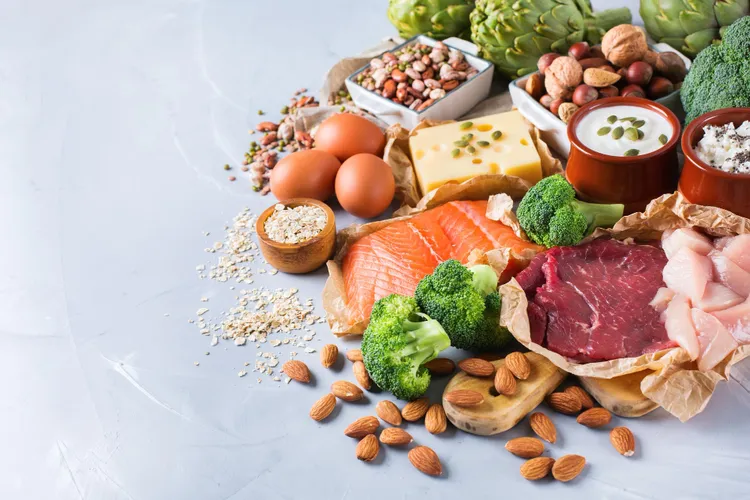
Protein per calorie is one of the most useful numbers in nutrition and one of the least checked. Two foods can both be called "high protein" and still cost very different amounts of energy: 30g of protein from shrimp costs about 125 kcal, while the same 30g from peanut butter costs about 700. This guide ranks common foods by grams of protein per 100 kcal, shows what 30g of protein costs in calories, and explains when the ranking matters and when it does not. All values are approximate and based on typical cooked weights and common nutrition databases. To find the protein target and calorie budget that fit you, start with the Consillar calculators.
How to Read the Ranking
The number is simple: grams of protein divided by calories, multiplied by 100. Chicken breast has about 31g of protein and 165 kcal per 100g cooked, so 31 divided by 165, times 100, is about 19g of protein per 100 kcal. A higher number means more protein for the same energy. Values below use cooked weights for meat, fish, legumes and grains, and standard retail forms for dairy and nuts. Fat content, cooking method and brand shift them, so treat each as a typical figure rather than an exact one.
One more caveat: the tier boundaries are arbitrary lines on a continuous scale. A food at 19g and one at 21g are practically identical, so do not agonize over which side of a cutoff something falls on. Look for the big gaps instead, such as 20g versus 4g.
The Ranking, in Tiers
Grouping foods into tiers is more useful than a single numbered list, because the differences within a tier are small and the differences between tiers are large.
Tier 1: 20g or more per 100 kcal
- Shrimp, cooked: about 24g
- Cod and other white fish, cooked: about 22g
- Canned tuna in water: about 22g
- Egg whites: about 21g
- Turkey breast, cooked: about 21g
- Whey protein powder: roughly 20 to 25g, depending on the product
Tier 2: 15 to 20g per 100 kcal
- Chicken breast, cooked: about 19g
- Pork tenderloin, cooked: about 18g
- Seitan: about 18g, though brands vary widely
- Skyr: about 17g
- Greek yogurt, 0% fat: about 17g
Tier 3: 10 to 15g per 100 kcal
- Lean beef, cooked: about 14g
- Low-fat cottage cheese: about 13g
- Salmon, cooked: about 12g
- Sardines, canned: about 12g
- Firm tofu: about 10g
- Tempeh: about 10g
Tier 4: 6 to 10g per 100 kcal
- Part-skim mozzarella: about 9g
- Whole eggs: about 9g
- Shelled edamame: about 9g
- Parmesan: about 8g
- Cooked lentils: about 8g
- Semi-skimmed milk: about 7g
- Cooked black beans: about 7g
Tier 5: 3 to 6g per 100 kcal
- Cooked chickpeas: about 5g
- Pumpkin seeds: about 5g
- Peanut butter: about 4g
- Oats: about 4g
- Whole wheat bread: about 4g
- Cooked quinoa: about 4g
- Almonds: about 4g
Tier 6: under 3g per 100 kcal
- Cooked white rice: about 2g
- Olive oil: 0g
What 30g of Protein Costs in Calories
The ranking becomes more concrete when you ask what it takes to reach a fixed amount. Here is the approximate energy cost of 30g of protein from each source:
- Shrimp: about 125 kcal
- Cod: about 135 kcal
- Chicken breast: about 160 kcal
- Greek yogurt (0%): about 175 kcal
- Lean beef: about 215 kcal
- Salmon: about 250 kcal
- Firm tofu: about 290 kcal
- Whole eggs: about 340 kcal
- Cooked lentils: about 385 kcal
- Peanut butter: about 700 kcal
- Cooked white rice: about 1,400 kcal
The spread is more than tenfold. If a day has 1,600 kcal and a 130g protein target, getting there from the top three tiers is straightforward. Getting there from lentils, nuts and grains alone is not, because the calories run out before the protein does.
Why Foods Land Where They Do
Protein per calorie is mostly a story about what else is in the food. Lean meat, white fish, egg whites and fat-free dairy are mostly protein and water, with very little fat or sugar, so their calories are almost all protein. Eggs, salmon and tofu carry more fat, which raises calories without adding protein. Legumes and grains add carbohydrate, which is a perfectly good source of energy but dilutes the protein. Nuts and seeds are mostly fat, which is why they sit near the bottom despite having decent protein by weight. Cooking matters too: water evaporates, so the same food reads higher per 100g cooked than raw, while frying in oil adds calories without protein. Knowing why a food ranks where it does makes the numbers easier to remember and the swaps easier to spot.
What 200 kcal Buys
Another way to feel the ranking is to fix the calories and see how much protein they buy. For a 200 kcal snack:
- Chicken breast, about 120g: about 37g protein
- Greek yogurt (0%), about 340g: about 34g protein
- Low-fat cottage cheese, about 240g: about 26g protein
- Firm tofu, about 260g: about 21g protein
- Whole eggs, about 140g (nearly 3 eggs): about 18g protein
- Cooked lentils, about 170g: about 15g protein
- Peanut butter, about 34g: about 8g protein
- Almonds, about 35g: about 7g protein
The same 200 kcal gives you a 37g protein hit or a 7g one. Neither is wrong, but they do different jobs. If protein is the goal, the top of the list serves it. If you want fats, fiber or a satisfying crunch, the bottom of the list serves that, and you pay for it in protein per calorie.
Per 100 kcal Versus Per Serving
A ranking by density hides portion size. Parmesan scores 8g per 100 kcal, which is respectable, but you eat about 10g of it at a time, so it contributes under 4g of protein to a meal. Chicken breast scores 19g and you eat 120 to 150g, so it contributes 37 to 46g. A protein anchor has to be both dense and eaten in a meaningful amount. That is why the plans in this cluster build each meal on a portion that gives 25 to 40g, then use denser or lighter foods around it. When comparing two foods, ask both questions: how much protein per calorie, and how much protein in the portion I will actually eat. A food can fail one test and pass the other.
When the Ranking Matters
Protein per calorie matters most when the two numbers are in tension. A 130g target is 520 kcal of protein, which is about a third of a 1,600 kcal day and only about a fifth of a 2,500 kcal day. The smaller the calorie budget relative to the protein target, the more the top tiers do the work. This is common for people with smaller frames, lower energy needs or a deliberate calorie deficit. In those cases, a few swaps from lower tiers to higher ones free up room for carbs and fats without lowering protein.
When It Does Not Matter So Much
With a generous calorie budget, protein density is rarely the limiting factor, and other things matter more: fiber, taste, cost, convenience and how filling a food is for you. Lentils sit in the middle of the ranking but bring fiber and low cost. Salmon sits lower than chicken but brings a different fat profile that many people want in their diet. Eggs are mid-ranked and extremely convenient. A day built only from Tier 1 foods would be high in protein and likely monotonous, low in fiber and expensive. Use the ranking as a lever, not a rulebook.
Cost works differently from calories. Per gram of protein, dried lentils, eggs and canned tuna are usually cheaper than shrimp, cod or skyr, even though the latter rank higher here. If your constraint is the grocery bill rather than calories, build around the cheap anchors and use the ranking only to catch calorie-heavy additions.
A Day Built From the Ranking
Here is a day aimed at about 130g of protein and about 1,650 kcal, built mostly from the upper tiers. Weights are cooked unless stated otherwise.
Breakfast: ~275 kcal, ~30g protein
- 250g plain 0% Greek yogurt
- 100g berries
- 15g pumpkin seeds
Lunch: ~385 kcal, ~31g protein
- 1 can tuna in water, drained
- 100g cooked quinoa
- 150g salad vegetables
- 1 tbsp olive oil
Snack 1: ~230 kcal, ~18g protein
- 150g low-fat cottage cheese
- 1 apple
Snack 2: ~220 kcal, ~5g protein
- 1 banana
- 20g almonds
Dinner: ~520 kcal, ~44g protein
- 150g baked cod
- 300g baked potato
- 150g green beans
- 1 tsp olive oil
Day total: about 128g protein and 1,640 kcal. Protein supplies roughly 31% of calories, and no single meal is huge. Notice that the second snack is almost pure carbs and fat. That is deliberate: once the protein is covered, the leftover calories can go to whatever you like. For a step-by-step method for building plates like these from your own targets, see macros to meals.
Swaps That Raise Protein Without Raising Calories
- Greek yogurt for sour cream: 100g of 0% Greek yogurt has about 10g of protein and 59 kcal, while 100g of sour cream has about 2g and 190 kcal.
- Cottage cheese for cream cheese: 100g of low-fat cottage cheese has about 11g of protein and 84 kcal. Cream cheese has about 6g and 340 kcal.
- Egg whites for some of the whole eggs: 2 whole eggs are about 12.6g of protein and 143 kcal. 1 whole egg plus 3 whites is about 17g and 121 kcal.
- Tuna in water for tuna in oil: Water-packed tuna saves roughly 70 kcal per 100g.
- Chicken breast for skin-on thighs: Skin-on thighs are about 10g of protein per 100 kcal, while breast is about 19g.
None of these is better in every sense. A skin-on thigh is juicier, and a whole egg has a texture a white does not. The point is to know what each swap costs and to use it where it will not bother you.
Common Misreadings
- Mixing raw and cooked values: 100g of raw chicken breast has about 23g of protein and 120 kcal, which ranks the same as cooked, but the weights differ. Always compare like with like.
- Reading a label per serving instead of per 100 kcal: A bar with 20g of protein and 400 kcal is 5g per 100 kcal, which is Tier 5. A pot of Greek yogurt with 17g of protein and 100 kcal is 17g.
- Assuming "high protein" on packaging means dense protein: Many products add protein to a base of sugar and fat. Check the calories next to the grams.
- Treating the ranking as a verdict on healthiness: It measures one property of a food. A low-ranked food can be an excellent choice for other reasons.
Using the Ranking for a Vegetarian Day
Most of Tier 1 and Tier 2 is animal protein, which makes vegetarian days harder when calories are tight. The top vegetarian foods on the list are egg whites, skyr, Greek yogurt, cottage cheese, tofu and tempeh, with lentils, edamame and eggs in the middle. A day built from those can reach a high protein number at a moderate calorie level. Our vegetarian plan for 120g of protein puts exactly that mix into three complete days, and what 150g of protein looks like in a day shows how it scales higher.
Putting It Into Practice
Pick a protein anchor from the first three tiers for each main meal, then use the lower-tier foods for flavor, fiber and fuel. If you want help turning those anchors into a day, the Consillar meal planner builds meals around your numbers, and the meal prep tool scales them into a week of cooking. To split a calorie total across meals and snacks once you have the anchors, our guide on how to split 2,000 calories across 3 meals and 2 snacks compares four templates.
A Note on These Numbers
All figures here are estimates based on typical cooked weights and common nutrition databases. Brands, cuts and cooking methods shift them by 10% or more, so use them as a planning guide rather than exact values. This is general food information, not medical or dietary advice. If you have a medical condition or follow a medically supervised diet, talk to a qualified professional before changing how you eat.
Latest