Vegetarian Meal Plan for 120g of Protein
Three full vegetarian days that each reach about 120g of protein, plus a one-week rotation, shopping list and swaps for eggs, dairy and time.
Reaching 120g of protein on a vegetarian diet is entirely doable, but it takes more planning than it does with meat. A 120g portion of cooked chicken breast brings about 37g of protein and almost no carbs. A 200g portion of cooked lentils brings 18g of protein and 40g of carbs. That difference is why vegetarian high-protein days need a mix of anchors, from dairy and eggs to tofu, tempeh and legumes, rather than one star ingredient. This plan gives you three complete days that each land at roughly 120g, a one-week rotation with a shopping list, and swaps for when you are short on time, eggs or dairy. If 120g is not your number, the Consillar calculators will find the right one for your stats and goal, and the same structure scales.
How 120g Adds Up Without Meat
Spread across four eating occasions, 120g works out to about 35g at breakfast, 35g at lunch, 20g at a snack and 30g at dinner. Each occasion needs one clear protein anchor, and the rest of the plate fills in around it. A day that leans only on beans and grains tends to stall somewhere between 80 and 90g, so the plan below mixes dairy, eggs, soy foods and legumes. For a look at the same logic on a bigger target, including a vegetarian version, see what 150g of protein looks like in a day.
Why the Anchor Comes First
The most reliable way to hit a vegetarian protein target is to decide the protein anchor for each meal before anything else. If you start by choosing the rice or the pasta, protein ends up as an afterthought and the day lands 30g short. If you start with 250g of Greek yogurt, or 150g of tempeh, the meal is already two-thirds of the way done and the rest is garnish. This is the same order the plan uses: anchor, then starch, then vegetables, then fat. It also makes substitution easy, since swapping one anchor for another of similar size changes almost nothing else about the day. Tofu for tempeh, cottage cheese for yogurt, lentils for chickpeas: the shape of the plate stays the same.
What 25 to 30g of Vegetarian Protein Looks Like
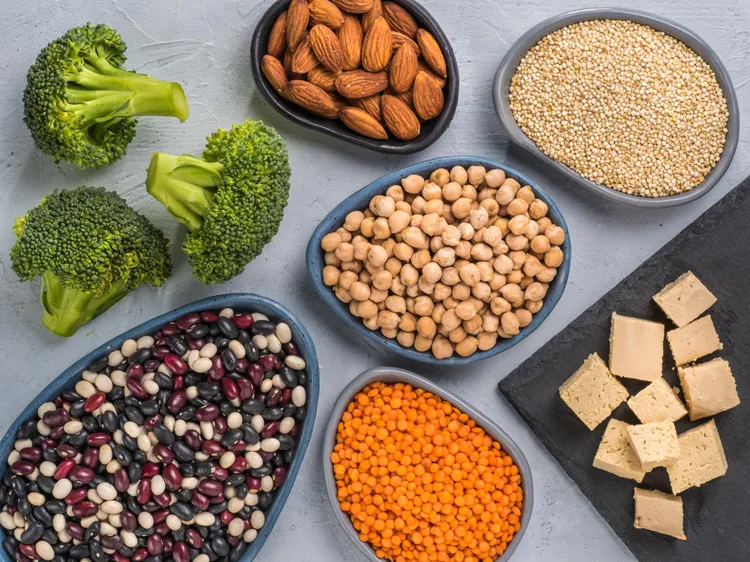
These are the anchors used in the plan. Each of these gives roughly 25 to 30g of protein, using cooked weights where relevant:
- Greek yogurt (0% fat): about 250g
- Low-fat cottage cheese: 200 to 250g
- Eggs: 4 to 5 large
- Firm tofu: about 300g
- Tempeh: about 150g
- Cooked lentils: about 300g
- Shelled edamame: about 250g
- Cooked chickpeas: about 350g
- Whey or plant protein powder: 1 scoop
Notice the range. Yogurt and cottage cheese are compact. Lentils and chickpeas take far more volume and bring carbs along with their protein. Mixing them is what keeps a day from feeling either too small or too heavy.
Day A: Eggs, Lentils and Tempeh (~124g Protein, ~1,800 kcal)
Breakfast: ~475 kcal, ~35g protein
- 50g oats cooked in 200ml milk
- 150g plain 0% Greek yogurt stirred in
- 100g berries
- 10g pumpkin seeds
Lunch: ~540 kcal, ~35g protein
- 200g cooked lentils
- 2 boiled eggs
- 100g spinach
- 150g cherry tomatoes
- 1 tbsp olive oil
Snack: ~235 kcal, ~19g protein
- 150g low-fat cottage cheese
- 1 pear
Dinner: ~545 kcal, ~35g protein
- 100g tempeh
- 100g firm tofu
- 150g cooked brown rice
- 200g stir-fried vegetables in 1 tsp sesame oil
Day total: about 124g protein and 1,800 kcal. This is the leanest of the three days, so it suits lower calorie targets without changes.
Day B: Chickpeas, Edamame and Dairy (~124g Protein, ~1,990 kcal)
Breakfast: ~530 kcal, ~34g protein
- 3-egg omelet with 100g spinach and 30g feta, cooked in 1 tsp oil
- 2 slices whole wheat toast
Lunch: ~595 kcal, ~34g protein
- 150g cooked chickpeas
- 150g shelled edamame
- 150g cucumber and tomato
- 60g hummus
- 1 tsp olive oil
Snack: ~265 kcal, ~25g protein
- 200g plain 0% Greek yogurt
- 25g almonds
Dinner: ~600 kcal, ~31g protein
- 250g cooked lentils as a simple dal
- 150g cooked white rice
- 150g sauteed vegetables in 1 tsp oil
- 30g plain yogurt on top
Day total: about 124g protein and 1,990 kcal. This is the highest-calorie day and the best fit if your target is closer to 2,000.
Day C: Minimal Cooking (~118g Protein, ~1,840 kcal)
Breakfast (overnight oats): ~460 kcal, ~39g protein
- 40g oats soaked overnight in 250g plain 0% Greek yogurt
- 100g berries
- 20g pumpkin seeds
Lunch (chickpea and feta wrap): ~585 kcal, ~24g protein
- 1 large whole wheat tortilla
- 150g canned chickpeas, drained
- 40g feta
- 100g salad vegetables
- 1 tsp olive oil
Snack: ~230 kcal, ~18g protein
- 150g low-fat cottage cheese
- 1 apple
Dinner (tofu and edamame noodles): ~560 kcal, ~38g protein
- 200g firm tofu, pan-fried
- 100g shelled edamame
- 150g cooked whole wheat noodles
- 150g vegetables
- 1 tbsp soy sauce and 1 tsp sesame oil
Day total: about 118g protein and 1,840 kcal. To cross 120g, add one boiled egg (about 6g and 70 kcal) or a small scoop of protein powder. This day needs almost no stove time beyond the noodles and the tofu.
A Week on a Page
You do not need seven different days. Rotating A, B and C keeps variety without a long shopping list. A simple week:
- Monday, Thursday, Sunday: Day A
- Tuesday, Friday: Day B
- Wednesday, Saturday: Day C
Across that rotation, the main items to buy come to roughly:
- Plain 0% Greek yogurt: about 1.5 kg
- Low-fat cottage cheese: about 750g
- Eggs: 12 to 14
- Dried lentils: about 500g (it cooks to roughly 1.1 kg)
- Firm tofu: about 700g
- Tempeh: about 300g
- Canned chickpeas: 3 cans
- Frozen shelled edamame: about 500g
- Feta: about 150g
- Oats: about 250g
- Rice (dry): about 300g, a mix of brown and white
- Berries and spinach: about 500g of each
- Almonds, pumpkin seeds, hummus: small amounts, 50 to 120g each
The average across the rotation is about 1,880 kcal and about 122g of protein a day, which is close enough to 120g that a single missed snack will not break it.
Adjusting Up or Down From 120g
The plan flexes easily because every day is built from four anchors. To aim for about 100g, drop the snack's protein anchor from each day, which removes 18 to 25g, and keep the rest. To aim for about 140g, add one 20g anchor, such as an extra 200g portion of Greek yogurt, a scoop of whey or 150g of extra tofu. To aim for around 160g, add two anchors and increase the lunch or dinner portion. When you change protein, check the calories as well: a day that gains 20g of protein from yogurt gains about 120 kcal, while a day that gains it from lentils gains about 260.
Making the Calories Fit Your Number
These days run from about 1,800 to 2,000 kcal, because many vegetarian protein sources bring carbs and fat along with the protein. If your calorie target is lower, trim the starch (rice, quinoa, tortilla, toast) first and keep every protein anchor. If it is higher, add rice, oats, fruit and olive oil. For guidance on dividing a calorie total across meals and snacks, see how to split 2,000 calories across 3 meals and 2 snacks, and for building each plate from protein, carb and fat targets, macros to meals walks through the method step by step. If calories are the tighter constraint, our ranking of protein per 100 kcal shows which vegetarian foods give the most protein for the energy.
Shopping Smart on a Budget
Vegetarian protein can be one of the cheapest ways to eat, but only if you buy the right forms. Dried lentils cost a fraction of canned ones and cook in about 20 minutes with no soaking. Eggs are cheap per gram of protein, and large tubs of plain yogurt and cottage cheese cost much less than single-serve pots. Frozen shelled edamame is cheaper than fresh and keeps for months. Tofu is usually the least expensive soy product, and tempeh costs more, so use it for the meals where texture matters. Skip flavored yogurts and pre-seasoned products, which cost more and add sugar. Prices vary by store and country, so check the unit price printed on the shelf label and compare per 100g rather than per package.
Common Problems on a Vegetarian High-Protein Day
- Calorie creep from legumes and nuts: Lentils, chickpeas, nuts and seeds are good foods, but they carry carbs and fat. Measure them for a week so you know what a portion looks like.
- Relying on cheese: Cheese is a convenient protein source but a calorie-dense one. A 30g piece of feta is about 4g of protein and 80 kcal, while the same 80 kcal of Greek yogurt is about 14g.
- Too much volume too quickly: If beans and lentils are new for you, raise portions gradually over a week or two. A sudden jump in legumes can be uncomfortable for some people.
- Eating the same thing daily: A week of identical breakfasts is easy to prep and easy to abandon. Keep the anchor and change the flavors.
- Counting the plant protein as complete on its own: This plan includes dairy and eggs every day, and mixing legumes, grains and soy across the day is enough. You do not need to pair them in a single meal.
Easy Swaps
- No eggs: Replace 2 eggs with about 150g of tofu scrambled with turmeric and a pinch of salt, which gives about the same protein.
- More protein: Add a scoop of whey (about 24g) in milk as a snack, or swap the pear in Day A for a second portion of cottage cheese.
- Less cooking: Use canned lentils and chickpeas, pre-cooked tempeh, and frozen edamame, which need only a few minutes.
- Different flavor: Switch the stir-fry sauce, spice the lentils with cumin and coriander, or turn the cottage cheese snack savory with herbs and cucumber.
Backups for Busy Days and Eating Out
Plans fail on the days nothing goes to plan, so keep a short list of fallbacks that still land protein. At home, that means a tub of cottage cheese, a few boiled eggs, a can of chickpeas and a packet of tofu, any of which becomes a 20g protein meal in minutes. When eating out, look for dishes built around an obvious anchor: omelets, lentil dal, tofu stir-fries, falafel plates with hummus and yogurt sauce, or a bean-and-cheese burrito bowl. Ask for extra eggs, tofu or beans if the menu offers them, and treat the rest of the plate as flexible. When travelling, single-serve yogurt cups, cheese, boiled eggs and roasted chickpeas keep well. A day that lands at 100g instead of 120g is still a good day, and the next one does not need to compensate.
If You Are Vegan
All three days can be adapted, but expect to do more work to reach 120g. Soy yogurt carries about half the protein of Greek yogurt, and most other plant milks and yogurts carry much less. Swap eggs for tofu scramble, dairy snacks for soy yogurt or edamame, and add one or two scoops of pea or soy protein powder through the day. Seitan, tempeh and firm tofu become the main anchors. Expect a day to need slightly more food volume, and check labels, since protein content varies widely between brands.
Prep for the Week
Most of this plan can be prepped in one session. Cook a large pot of lentils and a batch of rice, pan-fry or bake tofu and tempeh, boil a dozen eggs, and portion yogurt, cottage cheese, berries and nuts into containers. Cooked lentils, rice, tofu and tempeh keep for 3 to 4 days in the fridge, so cook a second smaller batch midweek or freeze single portions. Cool everything within 2 hours of cooking. The Consillar meal planner can arrange these meals around your own numbers, and the meal prep tool scales the batch cooking for the week.
A Note on These Numbers
All figures here are estimates based on typical cooked weights and common nutrition databases. Brands, cuts and cooking methods shift them by 10% or more, so use them as a planning guide rather than exact values. This is general food information, not medical or dietary advice. If you have a medical condition or follow a medically supervised diet, talk to a qualified professional before changing how you eat.
Latest