Ajvar: The Roasted Red Pepper Condiment That Goes on Everything
Ajvar is a slow-cooked roasted red pepper and aubergine relish from Serbia and North Macedonia - made every autumn and jarred for winter. It goes on bread, eggs, grilled meat, and cheese. Here's how to make it from scratch and where it fits in a Balkan kitchen.
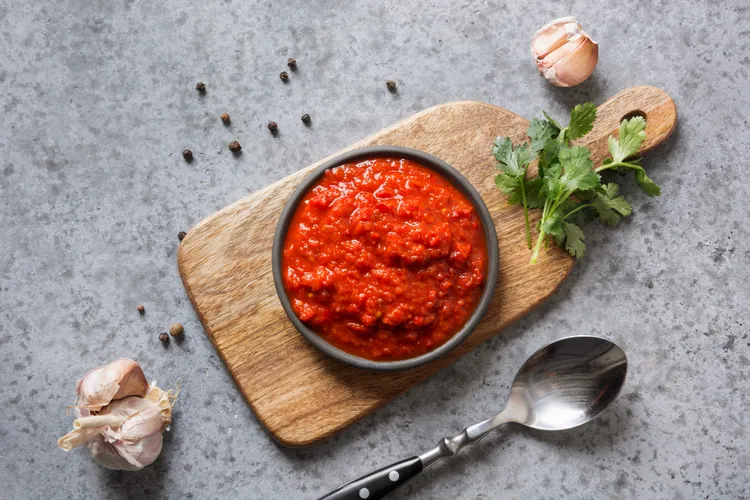
Every autumn in Serbia, the air in residential neighbourhoods smells faintly of roasting peppers. Families buy red peppers by the crate, roast and peel them over open flames, and spend the day cooking ajvar in enormous pots. The jars that line basement shelves through winter are both a condiment and a point of pride - every household's ajvar is slightly different, and everyone's is definitively correct.
For home cooks new to Balkan food, ajvar is often the first thing they want to replicate after tasting it. The commercial versions sold in jars are decent but can't match fresh-made. It's also straightforward to produce in reasonable quantities on a standard kitchen stovetop.
The Ingredients
Traditional ajvar has three main ingredients: red peppers, aubergine (eggplant), and oil. Some recipes add garlic. Some don't. The ratio of peppers to aubergine varies - a 3:1 or 4:1 pepper-to-aubergine ratio produces a sweeter, more pepper-forward ajvar; a more equal ratio creates something earthier.
The peppers matter. The traditional variety is the long, fleshy red Roga pepper (also called Kapija). Regular large red bell peppers are the best substitute. Don't use small peppers - you need flesh volume and low moisture content. The drier the pepper variety, the less time you spend cooking out water at the end.
Recipe (makes approximately 4 small jars)
Ingredients
- 2kg large red bell peppers (or Roga/Kapija if available)
- 500g aubergine (1 large or 2 medium)
- 100ml sunflower oil
- 3 cloves garlic, minced (optional)
- 1 tbsp apple cider vinegar
- Salt to taste
- 1 tsp sugar (optional, to balance acidity)
Method
- Roast the peppers and aubergine directly over a gas flame or under a very hot grill, turning regularly, until the skins are fully charred and the flesh is soft. This takes 15-20 minutes for peppers, 20-25 minutes for a large aubergine.
- Place in a bowl covered with clingfilm or a sealed bag for 15 minutes. This steams off the charred skin.
- Peel and de-seed the peppers. Scoop the aubergine flesh from the skin. Discard as much liquid as possible - line a sieve with a cloth and press the flesh through, or chop finely and leave in a sieve for 20 minutes.
- Chop or blend the pepper and aubergine mixture. Traditional ajvar is roughly textured - not a smooth puree. A few quick pulses in a food processor, or hand-chopping to a coarse mince.
- Heat oil in a wide, heavy pan. Add the pepper-aubergine mixture and cook over medium heat, stirring regularly, for 45-60 minutes until the mixture has thickened significantly and the oil has separated slightly.
- Add garlic (if using), vinegar, salt, and sugar to taste. Cook for 5 more minutes.
- Jar immediately into sterilised jars. Seal and leave to cool upside down. Unopened jars keep for 12 months in a cool, dark place. Refrigerate after opening.
Macro Breakdown
Per tablespoon (approx. 20g):
- Calories: ~35 kcal
- Protein: ~0.3g
- Carbohydrates: ~3g
- Fat: ~2.5g
A two-tablespoon serve (typical with a meal) adds about 70 kcal, most of it from the oil. The peppers and aubergine themselves are very low calorie - it's the oil content that drives the numbers.
How to Use Ajvar
The short list: on bread with white cheese for breakfast. As a dip for grilled meat. Spread inside a burger or pljeskavica. Stirred into scrambled eggs. As a sauce base for pasta. With zucchini fritters as a dipping condiment.
The longer answer is: ajvar goes on most things. It adds sweetness, smoke, and depth without competing aggressively with other flavours. Once a jar is in the fridge, it gets used daily.
Spicy Versions
Ljutenica is the spicy variant - add 1-2 dried chilli peppers (or fresh hot peppers, seeded and finely chopped) at the roasting stage. The rest of the method is identical. Spicy ajvar is labelled as such in shops; mild is the default.
For more on the Balkan condiments and how they fit into the broader cuisine, see the Balkans table guide.
Latest