Brown Butter: The One Technique That Makes Everything Taste Expensive
Beurre noisette takes four minutes and costs nothing extra. It turns scrambled eggs into something you'd order in a restaurant, makes shortbread taste like it came from a patisserie, and fixes a sauce that's missing depth. Here's exactly how to make it and use it.
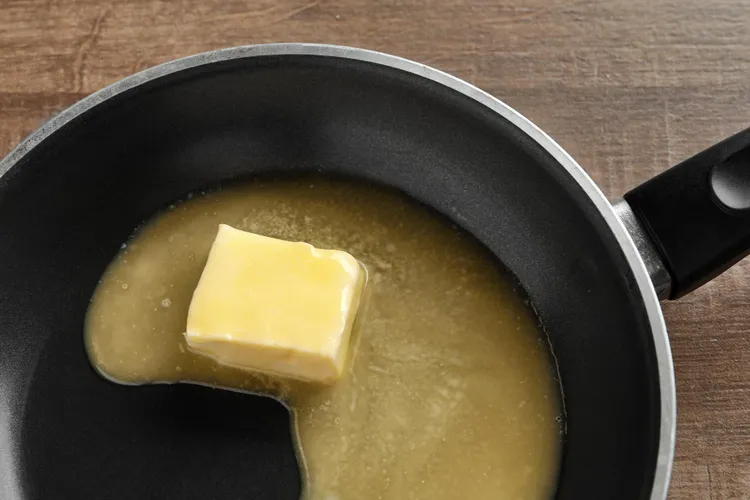
The French name is beurre noisette - hazelnut butter - named for the colour and the smell, not the ingredient. You're not adding anything to the butter. You're cooking it past the point where most people stop, until the milk solids toast and the whole thing smells like something roasting. It takes four minutes. The difference in flavour is substantial.
What Actually Happens When Butter Browns
Fresh butter is roughly 80% fat, 18% water, and 2% milk solids (proteins and sugars). When you melt butter, the water steams off first - that's the initial foam and spitting. Once the water is gone, the temperature climbs above 100°C and the milk solids start to undergo Maillard reaction: the same browning chemistry behind seared meat, toasted bread, and roasted coffee. Those milk solid particles turn from pale to golden to deep amber, releasing hundreds of new flavour compounds. The result tastes nutty, complex, and rich in a way that plain melted butter doesn't.
Stop too early and you miss it. Go too far and it burns - which happens fast. The window is narrow, which is why people skip it. They shouldn't.
How to Make Brown Butter
Use a light-coloured pan - stainless steel or enamelled cast iron. You need to see the colour of the milk solids at the bottom, and a dark non-stick pan hides them until it's too late.
- Cut butter into roughly equal pieces (optional but helps even melting). Add to cold pan over medium heat.
- Butter will melt, then foam as the water steams off. Don't stir constantly - let it do its work. A gentle swirl every 30 seconds is enough.
- The foam will subside. You'll see the butter becoming clear, then golden. At this point stay close - you're 60-90 seconds from done.
- Watch the bottom of the pan. When you see golden-brown specks forming and the butter smells unmistakably nutty, remove from heat immediately.
- Pour into a cold bowl or ramekin to stop the cooking. Left in the hot pan, it continues to cook and will burn within 30 seconds.
Total time from cold pan to brown butter: 4-6 minutes depending on quantity. 250g takes about 8 minutes.
Savoury Applications
Brown butter replaces plain butter or olive oil in almost any savoury context where fat is a flavour carrier rather than just a cooking medium.
Scrambled eggs: Make brown butter in the pan, let it cool slightly, then add eggs over low heat and stir slowly. The nuttiness transforms a simple breakfast into something that tastes deliberate.
Pan sauce finish: After cooking a protein, make your reduction with wine and stock, then mount with brown butter (cold, cubed, added off the heat) instead of plain butter. The depth is immediately noticeable.
Pasta: Sage and brown butter is a classic for a reason. Brown the butter, fry sage leaves until crisp, toss with cooked pasta and Parmesan. Five ingredients, ten minutes, looks expensive.
Roasted vegetables: Drizzle brown butter over roasted cauliflower or squash instead of olive oil. The fat carries the nutty flavour into every surface.
Mashed potato: Swap half the butter in your mash for brown butter. It changes the character of the whole dish.
Sweet Applications
In baking, brown butter adds a dimension that plain melted butter simply doesn't have. It works in anything where butter is a liquid component - not creamed.
Financiers: The classic application. Financiers are essentially a brown butter delivery vehicle. The recipe in our quiet luxury cooking guide covers the full method.
Chocolate chip cookies: Brown the butter instead of creaming it. The cookies will be chewier (less water content) and taste more complex. Refrigerate the dough overnight for even better results.
Shortbread: Brown butter shortbread has a toffee-like quality that standard shortbread lacks. Use the same ratio, same method, just replace melted butter with brown butter at the same weight.
Banana bread: The combination of browned butter and ripe banana produces something that tastes like it was made by someone who actually knows what they're doing.
Track your macro targets for brown-butter-forward meals with the daily macro planner.
Storage and Make-Ahead
Brown butter keeps refrigerated for up to two weeks in an airtight container. It solidifies back to a spreadable consistency - slightly darker than regular butter with a more complex smell. You can make a large batch and use it across the week. It also freezes well for up to three months.
Some recipes call for clarified butter (ghee), which is butter with the milk solids removed. Brown butter is the opposite - you want the milk solids, because they are the flavour. Don't confuse the two.
The One Rule
Light-coloured pan. Non-negotiable. Everything else - heat level, stirring frequency, butter temperature - is adjustable. But if you can't see the colour of the milk solids, you cannot accurately judge when to stop. Dark pans produce burned butter and confusion in roughly equal measure.
For the broader context of how brown butter fits into quiet luxury cooking - and nine other techniques worth building - the complete guide to quiet luxury cooking covers the full picture.
Brown Butter vs Clarified Butter vs Ghee
These three are often confused but serve different functions. Clarified butter (and ghee) involves removing the milk solids and water, leaving pure butterfat. The result has a high smoke point and a clean, neutral flavour - excellent for frying, but without the complexity of brown butter. Brown butter keeps the milk solids in and cooks them until they toast. It has a lower smoke point and a shorter shelf life than clarified butter, but dramatically more flavour.
Ghee is essentially the South Asian version of clarified butter, cooked slightly longer so trace amounts of milk solids caramelise before straining - which gives it a faint nutty quality that standard clarified butter lacks. It sits somewhere between clarified butter and beurre noisette in flavour terms. Useful to know: ghee can substitute for brown butter in baking applications where you want depth without the actual milk solid particles, though the result is subtler.
Quantities and Ratios for Baking
When substituting brown butter for melted butter in a recipe, use the same weight. However, brown butter has less water than fresh butter (the water has cooked off), so baked goods made with it will be slightly drier - which is usually an advantage in cookies (chewier) and financiers (crispier edges) but might need adjusting in cakes by adding a tablespoon of milk per 100g butter used.
Brown butter also weighs less than the original butter by the end because of water loss. If you start with 200g butter, you'll end with roughly 160-170g of brown butter. Account for this when scaling recipes - weigh after browning, not before.
Savoury Compound Butters with Brown Butter
Brown butter can be the base of a compound butter rather than plain butter - which adds a layer of complexity to every application. Make the brown butter, cool it to just solid (not fully cold), beat with herbs and seasoning, and re-chill. A brown butter and tarragon compound served over a steak melts into something far more interesting than a standard herb butter. Brown butter and anchovy on grilled fish. Brown butter, preserved lemon, and capers on roasted cauliflower.
The process is the same as any compound butter: soften or partially melt to workable consistency, add flavourings, beat well, roll into a log in cling film, chill. Slice to order. Keeps two weeks in the fridge, a month in the freezer.
Common Mistakes and How to Fix Them
The most common mistake beyond burning is making brown butter in a pan that's too small. Butter foams significantly as the water cooks off - a pan that's too small will spill, and the foam hides the colour of the milk solids underneath, making it impossible to judge when you're done. Use a pan at least three times the volume of the butter you're browning.
Second most common: not cooling it down fast enough. Brown butter in a dark stainless pan will continue to cook from the residual heat of the metal for 30-60 seconds after you remove it from the flame. Pour into a cold bowl or ramekin immediately. If you're making it ahead of time, set the bowl in a larger bowl of ice water for 2 minutes to stop cooking completely.
If you've taken it slightly too far and it smells sharp rather than nutty, you can often rescue it by straining out the burned milk solid particles through a fine sieve. The butter itself (now clarified) retains some brown butter flavour without the burnt notes. Not perfect, but salvageable for baking applications where it will be mixed with other strong flavours.
Brown Butter in Global Cuisines
Beurre noisette is the French name, but the technique appears across culinary traditions under different names with different applications. In South Asian cooking, ghee is brought to a state close to brown butter before aromatics are added - the Maillard-reacted milk solids are strained out in the classic version, but many home cooks leave them in, producing a flavour profile essentially identical to French brown butter. In Moroccan cooking, smen (aged fermented butter) represents a further development of the same principle: butter whose milk solids have been allowed to develop deep, complex flavour over time. In Scandinavian baking, smörbakad (butter-baked) pastries rely on a browned butter base to achieve their characteristic caramel-toffee flavour.
The universality of this technique across cultures separated by thousands of miles and centuries of independent culinary development is not coincidental - it reflects a basic truth about flavour. Maillard reaction in milk solids produces flavour compounds (pyrazines, furans, lactones) that are deeply appealing to human taste perception regardless of cultural background. The technique was discovered repeatedly because it produces results that are reliably and obviously better.
Equipment Notes
Beyond the light-coloured pan requirement, a few equipment notes worth having. Stainless steel conducts heat more evenly than aluminium and gives a more reliable result. A long-handled pan is safer because the butter spits at the foam stage. A fine-mesh strainer is useful if you want to remove the milk solid particles after browning (producing a clarified brown butter) - relevant for some baking applications where you want the flavour without the texture of the particles.
A silicone spatula is better than a wooden spoon for scraping the brown bits from the bottom of the pan when pouring - it gets into the corners and ensures you capture all the flavour. Store the butter in a glass jar rather than a plastic container; the fat absorbs flavours easily and plastic can affect the taste after extended storage.
Serving Brown Butter as a Table Sauce
In French brasserie cooking, brown butter with lemon juice (beurre meunière) is served as a sauce directly at the table, poured tableside from a small pan or ramekin. The theatre is part of the experience, and the sauce is made immediately before service so it's still frothing when it arrives. Skate wing with beurre meunière is one of the most classic preparations in the repertoire - the delicate, sweet fish contrasts with the intense nuttiness of the butter and the sharp acid of the lemon in a combination that's been on Parisian brasserie menus for more than a century.
This presentation style - simple, direct, slightly theatrical - is entirely in keeping with the quiet luxury cooking philosophy. The sauce is honest: three ingredients (butter, lemon, capers if you're making grenobloise) made with precision and served immediately. Nothing hidden, nothing overcomplicated. The quality is in the execution, not the ingredients list.
Brown Butter Vinaigrette
One of the most underused applications: brown butter used warm as the fat component of a vinaigrette. The technique is simple - make the brown butter, let it cool to about 60°C (still liquid but not scorching), then whisk with acid and seasoning as you would a standard vinaigrette. The warm fat stays emulsified longer than room-temperature oil and the nuttiness adds a layer that cold-pressed oils can't provide.
Classic brown butter vinaigrette: 60g brown butter (warm), 2 tbsp sherry vinegar, 1 tsp Dijon, pinch of salt, white pepper. Whisk the vinegar and mustard together first, then drizzle in the warm brown butter while whisking. Use immediately over roasted vegetables, grains, or a frisée salad with a soft egg. The vinaigrette will solidify slightly as it cools - if you're not using it immediately, reheat gently in a bain-marie and whisk again before serving.
This application connects to the broader seasoning principle of fat as a flavour carrier - the brown butter carries both fat-soluble flavour compounds from the Maillard reaction and the aromatic molecules from the vinegar and mustard, creating a dressing that's far more complex than the sum of its parts.
Troubleshooting and Variations
Salt brown butter: add a generous pinch of flaky salt while the butter is still warm and liquid, then pour into a jar and refrigerate. Used in place of regular salted butter at the table, or as a finishing element on bread, grilled corn, or roasted sweet potato. The salt distributes through the fat as it cools and every bite has both the nuttiness of beurre noisette and the burst of salt.
Honey brown butter: a tablespoon of honey stirred into warm brown butter while it's still fluid creates a compound sauce used in baking glazes, as a pancake topping, or drizzled over roasted squash. The honey caramelises slightly on contact with the hot butter, adding a second layer of Maillard reaction on top of the one already present in the butter itself.
Latest