Cornstarch vs. Flour for Thickening: The Ratio Difference
Cornstarch and flour thicken at different strengths, so swapping one for the other 1:1 usually wrecks the texture. Here's the actual ratio and when to use each.
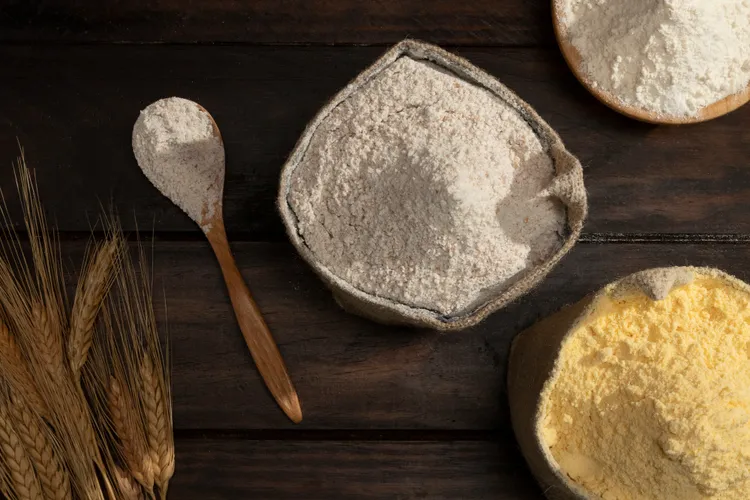
Cornstarch thickens about twice as strongly as flour by volume. That's the number that matters: 1 tablespoon of cornstarch does roughly the same job as 2 tablespoons of all-purpose flour. Miss that ratio and you either end up with a thin, watery sauce or a gluey one that sets like paste as it cools.
Why the Two Don't Thicken the Same Way
Flour is about 75% starch, with the rest made up of protein and fiber. That protein content is why flour-thickened sauces turn opaque and slightly matte, and why they need real cooking time (5-10 minutes at a simmer) to lose their raw, pasty taste. Cornstarch is close to 100% pure starch. It thickens fast, usually within a minute of hitting a simmer, and it turns glossy and translucent instead of cloudy.
The starch granules in cornstarch also swell more per gram when they absorb liquid and heat. That's the entire reason for the 2:1 ratio: gram for gram, cornstarch simply grabs more water.
The Basic Ratio Conversion
If a recipe calls for flour and you only have cornstarch, or the other way around, use this:
- Flour to cornstarch: use half as much cornstarch. 2 tbsp flour becomes 1 tbsp cornstarch.
- Cornstarch to flour: use double the flour. 1 tbsp cornstarch becomes 2 tbsp flour.
That's the standard conversion used in most professional kitchens, and it holds for the vast majority of home cooking - gravies, pan sauces, soups, pie fillings, stir-fry sauces. Where it gets less reliable is in baked goods, where flour is doing structural work beyond thickening, and cornstarch can't substitute cleanly.
Ratios by What You're Making
The 2:1 rule is a starting point, not a fixed law. How much starch you need per cup of liquid depends on the final texture you want.
Gravy and Pan Sauces
For a medium-bodied gravy that coats the back of a spoon: 1.5 to 2 tablespoons of flour per cup of liquid, or 3/4 to 1 tablespoon of cornstarch per cup. Make a roux with flour (cook it in fat first) or a slurry with cornstarch (cornstarch mixed cold with water or stock before it goes in). Adding dry cornstarch straight to a hot pan creates lumps that never fully dissolve.
This is the same ratio that works for a quick pan sauce after searing chicken - balsamic chicken and mushrooms uses the pan drippings as the base, and a small cornstarch slurry (1 teaspoon cornstarch in 1 tablespoon cold water) tightens it up in under a minute without diluting the balsamic reduction.
Soups
Soups usually want a lighter thickening than gravy, closer to 1 tablespoon flour or 1.5 teaspoons cornstarch per cup of liquid. Keto egg drop soup is a good example of cornstarch doing the job flour can't: the slurry keeps the broth clear and glossy, which matters visually in a soup where flour would leave it cloudy and slightly gritty.
Pie Fillings
Fruit pies need more starch than sauces because they set on cooling, not on the stove. For a standard 9-inch fruit pie: 3 to 4 tablespoons of cornstarch, or 6 to 8 tablespoons (about 1/2 cup) of flour. Cornstarch gives a clearer, more jewel-toned filling. Flour gives an opaque, slightly duller filling but holds up better to a second bake if you're doing a lattice top that needs extra oven time.
Stir-Fry Sauces
Almost always cornstarch, and almost always thin. A standard stir-fry slurry is 1 to 2 teaspoons cornstarch dissolved in 1 to 2 tablespoons cold water or stock, added at the very end. Flour doesn't thicken fast enough for stir-fry heat and leaves a starchy taste that doesn't cook out in 30 seconds of tossing.
Scaling a Recipe Up or Down
Because both starches thicken proportionally to the amount of liquid, the ratio scales linearly - double the liquid, double the starch. Where people run into trouble is scaling past about 3x a single sauce recipe. At larger volumes, the liquid takes longer to come to temperature evenly, so the starch at the edges of the pot can start gelling before the center catches up, leaving streaks of thicker and thinner sauce. Fix it by whisking constantly for the first minute after adding the slurry, and by adding it once the full volume of liquid is already hot rather than thickening in stages.
Worked example: a gravy recipe calls for 2 cups of stock and 3 tablespoons of flour, and you're doubling it for a crowd. That's 4 cups of stock and 6 tablespoons of flour - or, if you'd rather use cornstarch for a cleaner finish, 4 cups of stock and 3 tablespoons of cornstarch (half the flour amount). The liquid-to-starch ratio stays fixed; only the total volume changes.
Freezing and Reheating
Flour-thickened sauces freeze and reheat more predictably. The protein network that flour builds holds together through a freeze-thaw cycle with only minor separation, which is why stews and casseroles destined for the freezer are almost always flour-based. Cornstarch-thickened sauces tend to break when frozen - the starch structure can't survive ice crystal formation, and on reheating the sauce often separates into a thin liquid with clumps. If you're batch-cooking a sauce specifically to freeze, use flour or a flour-cornstarch blend rather than cornstarch alone, or plan to re-thicken with a fresh small slurry after reheating.
How Cornstarch and Flour Compare to Other Starches
Cornstarch and flour cover most home cooking, but a few recipes call for something else, and it helps to know where they sit on the same scale:
- Arrowroot: thickens at roughly the same strength as cornstarch (use it 1:1 in place of cornstarch), sets up clear like cornstarch, but holds up better in acidic sauces and doesn't break down as fast when reheated. More expensive, harder to find in a regular grocery store.
- Potato starch: slightly stronger than cornstarch - use about 25% less by volume than a cornstarch amount. Also thickens clear, but loses power faster under prolonged heat, so it's best added near the end of cooking.
- Tapioca starch: similar strength to cornstarch, gives a slightly glossier, almost stretchy texture. Common in fruit pie fillings specifically because it holds up well to a second bake without going watery.
None of these change the core logic: pure starches (cornstarch, arrowroot, potato starch, tapioca) thicken roughly twice as hard as flour by volume, because flour is diluted with protein and fiber that isn't doing any thickening work.
Texture and Appearance, Side by Side
- Cornstarch: glossy, translucent, sets firm as it cools, breaks down (thins back out) if boiled too long or reheated repeatedly.
- Flour: matte, opaque, holds its thickness better through reheating, more forgiving if a sauce needs to sit on low heat for a while.
That reheating difference matters for meal prep specifically. A cornstarch-thickened sauce that's been microwaved two or three times over a week tends to thin out and separate. Flour-thickened sauces hold their body better across reheats, which is part of why classic gravies default to a roux rather than a slurry.
Which to Use When
Reach for cornstarch when you want a glossy, clear sauce, need it to thicken fast, or you're avoiding the raw-flour taste that needs long cooking to cook out. Reach for flour when you're making something that needs to hold up to repeated reheating, when you're already building a roux as a flavor base (not just a thickener), or when you want an opaque, classic gravy texture rather than a glassy one.
If you're gluten-free, cornstarch is the default swap for flour in almost every one of these applications at the 2:1 ratio above - it's naturally gluten-free and behaves close enough to flour in sauces and soups that most people can't tell the difference once it's plated.
Carbs and Calories, for Reference
Per tablespoon: cornstarch runs about 30 calories and 7g of carbs, all of it starch. All-purpose flour runs about 28 calories and 6g of carbs per tablespoon, plus roughly 0.8g of protein. Because the ratio means you use less cornstarch to hit the same thickness, a cornstarch slurry often ends up contributing slightly fewer total carbs to the dish than the flour equivalent needed to match it - useful to know if you're tracking macros closely on a sauce-heavy meal.
Common Mistakes
- Adding dry starch straight to hot liquid. Both flour and cornstarch need to be mixed with cold liquid first (slurry) or fat (roux) before they hit heat, or you get lumps that won't smooth out.
- Boiling a cornstarch sauce too hard for too long. Cornstarch's thickening power breaks down under sustained high heat. Bring it to a simmer, thicken, then pull it off or drop to low.
- Using the 1:1 ratio out of habit. This is the single most common error - treating cornstarch and flour as interchangeable cup for cup instead of at the 2:1 conversion.
- Not cooking flour long enough. A flour-thickened sauce needs a genuine 5+ minute simmer or it tastes chalky and raw, no matter how correct the ratio was.
- Salting before you know the final volume. Both thickeners reduce the liquid's apparent saltiness as they set up. Taste and adjust seasoning after the sauce has thickened, not before.
- Reboiling a finished cornstarch sauce hard. If a cornstarch gravy looks thin after it's already set once, don't just crank the heat - whisk in a fresh, small slurry instead of trying to re-cook the same starch harder. It's already done thickening what it can.
A Practical Test If You're Unsure
When in doubt about which one a specific dish wants, look at whether it's served hot immediately or held/reheated. Same-day sauces, stir-fries, and glazes lean cornstarch. Anything going into the fridge for leftovers, into the freezer, or sitting in a slow cooker for hours leans flour. For pies, cornstarch if you want it to look like a bakery case; flour if you want the classic homestyle cut that holds its shape on the plate.
Quick Reference
- Light sauce/soup (1 cup liquid): 1 tbsp flour or 1.5 tsp cornstarch
- Medium gravy (1 cup liquid): 1.5-2 tbsp flour or 3/4-1 tbsp cornstarch
- Pie filling (9-inch pie): 6-8 tbsp flour or 3-4 tbsp cornstarch
- Stir-fry slurry: cornstarch only, 1-2 tsp per 1-2 tbsp cold liquid
Latest