Pizza Dough Math: The Hydration Ratio That Changes Everything
The baker's-percentage hydration ratio behind pizza dough, why 60% vs 70% water produces completely different crusts, and fixes for sticky, dense, or tough dough.
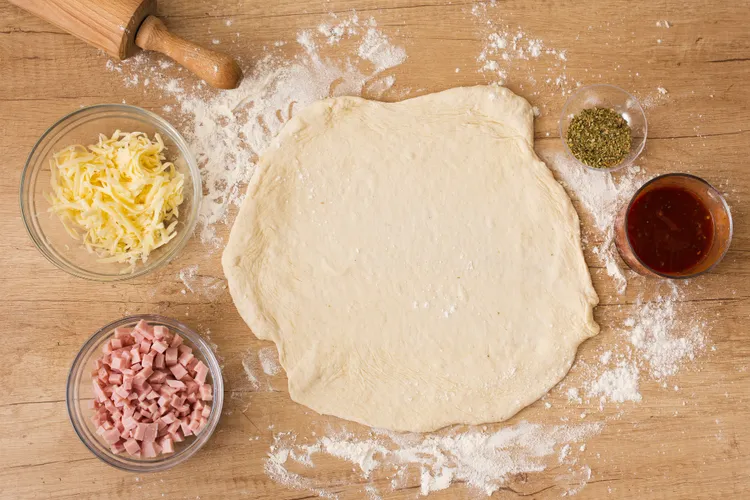
Most home pizza dough problems get blamed on the oven, the flour brand, or "just not having the touch." Almost none of that is the real issue. The variable that actually separates a crust that's crisp outside and open-crumbed inside from one that's dense and cracker-like is hydration, and it's a number you can control precisely instead of guessing at.
The Ratio
Pizza dough is expressed differently than most kitchen ratios, as baker's percentage, everything measured as a percentage of the flour's weight, which stays fixed at 100%:
- Flour: 100% (the baseline everything else is measured against)
- Water: 60-70% (this is the hydration number, and it's the one that changes the crust the most)
- Salt: 2-3%
- Yeast: 0.5-1% (instant yeast; roughly double for active dry)
- Oil: 0-3% (optional, softens the crumb slightly)
In practical terms, for 500g of flour, that's 300-350g water, 10-15g salt, 2.5-5g instant yeast, and up to 15g oil if you're using it. Weighing in grams instead of measuring in cups matters more here than in almost any other kitchen ratio, because a few grams of water shifts the hydration percentage enough to change the dough's entire behavior.
Why Hydration Is the Number That Actually Matters
Everything else in the ratio is relatively forgiving. Salt and yeast have working ranges you can drift within without much consequence. Hydration is different, it directly determines gluten development, crumb structure, and how the crust behaves in the oven, so small changes produce outsized results.
At 60% hydration, dough is firm, easy to shape by hand, and forgiving for beginners, but the baked crust tends to be tighter and denser, less of that open, airy crumb you see in a good Neapolitan-style pie. Push to 65-70%, and the dough becomes noticeably wetter and stickier to handle, but it develops larger gas pockets during fermentation, which is what produces that open, chewy crumb with an audibly crisp exterior. Go past 70% into 75%+ territory, the range used for focaccia and some artisan breads, and the dough gets difficult to shape by hand at all without specific wet-dough techniques.
This is also why two doughs made with the "same recipe" from different sources can behave completely differently, if one recipe measures in volume (cups) and the other in weight, the actual hydration percentage can vary by 5-10 points just from how tightly the flour was packed into the cup.
The Method
- Weigh the flour first, this is your 100% baseline for everything else.
- Dissolve the yeast in a portion of the water (around body temperature, not hot) and let it sit 5 minutes if using active dry yeast. Instant yeast can go straight into the flour.
- Combine flour, the rest of the water, and yeast, mixing until no dry flour remains. Let it rest 20-30 minutes unmixed with salt, this rest (called autolyse) lets the flour hydrate fully and makes the dough easier to work.
- Add salt and knead, by hand or mixer, until the dough is smooth and passes the windowpane test, stretch a small piece thin enough to see light through without tearing.
- Bulk ferment at room temperature for 1-2 hours, or in the fridge for 24-72 hours for better flavor development, higher hydration doughs especially benefit from the longer, colder ferment since it gives the gluten time to relax and strengthen slowly.
- Divide, shape into balls, and let rest again before stretching into a pizza base. Higher-hydration dough needs a lighter touch when shaping, work with wet hands or a bit of oil instead of adding extra flour, which will throw off the ratio you built.
The long cold ferment isn't just about flavor, it's also a workaround for high-hydration dough's biggest handling problem. A wet dough shaped and baked immediately is hard to manage, the same dough given 24+ hours cold develops enough gluten strength to hold its shape even at 70%+ hydration.
Troubleshooting by Hydration
Dough is too sticky to shape: Either the hydration is genuinely high for your comfort level (drop to 60-63% while you build handling skills) or the dough hasn't fermented long enough to develop the gluten strength that makes wetter dough manageable. Try a longer cold ferment before lowering the hydration.
Crust comes out dense with no open crumb: Hydration is likely too low, or the dough was underproofed. Push toward 65-68% and make sure you're giving it a full bulk ferment before shaping, not rushing straight to the oven.
Crust is tough or crackery instead of chewy: Often overworked dough or hydration on the low end combined with a hot, fast bake that doesn't leave time for the crumb to open up. Check both the ratio and the kneading time.
Dough won't stretch, keeps springing back: Gluten hasn't relaxed enough. Let it rest, covered, for 15-20 minutes at room temperature before trying again, this has nothing to do with hydration and everything to do with resting time.
Bottom of crust is pale or soggy despite a hot oven: Usually a heat problem, not a hydration one, higher-hydration dough needs a genuinely hot surface (a preheated stone or steel) to set the bottom fast enough before the top overcooks.
Scaling and Variations
Because everything is a percentage of the flour weight, scaling to any batch size is straightforward, calculate flour weight for the number of pizzas you want, then apply the same percentages to get water, salt, and yeast. A kitchen scale that measures to at least 1g precision matters here, since even 5-10g of water at typical batch sizes can shift you a meaningful percentage point in either direction.
Adjustments that work within the ratio:
- Neapolitan-style, thin and chewy: 65-68% hydration, minimal oil, high-heat bake (700°F+ if your oven allows), short bake time of 90 seconds to 2 minutes.
- New York-style, foldable slice: 60-63% hydration, a bit of oil and sugar in the dough, moderate oven temp around 500-550°F, longer bake for a firmer, more structured crust.
- Pan or Detroit-style: Push hydration toward 70-75%, since the pan supports the wet dough during baking in a way a free-form stretch can't.
- Whole wheat or blended flour: Whole wheat absorbs more water, so hydration often needs to increase by 3-5 percentage points to get the same handling feel as an all-white-flour dough at a lower percentage.
Storage
Shaped dough balls keep well in the fridge for up to 3 days, covered or in individual containers to prevent a skin from forming. For longer storage, freeze dough balls individually after the first rise, then thaw overnight in the fridge before bringing to room temperature and shaping. Fully baked pizza is best fresh, but leftover slices reheat better in a hot skillet or oven than a microwave, which tends to make the crust go soft and chewy in the wrong way.
Once hydration becomes the number you actually think about instead of the recipe as a whole, dialing in "your" pizza dough stops being trial and error and starts being a small, deliberate adjustment from a baseline you already trust.
Latest