Whipped Coffee (Dalgona): The Ratio That Actually Whips
A complete guide to whipped dalgona coffee - the exact ratio, why instant coffee is essential, troubleshooting, and variations for serving it hot, iced, or flavored.
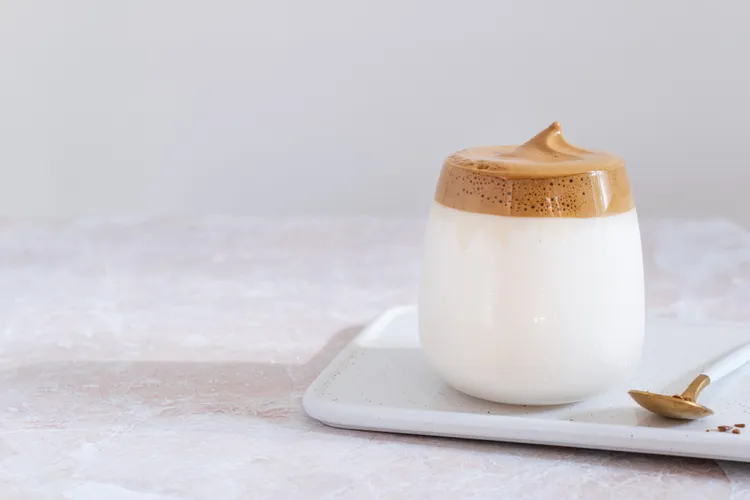
Whipped coffee, widely known as dalgona coffee, went viral for a good reason - it genuinely works, turning three pantry staples into a thick, airy, coffee-flavored foam with nothing more than a whisk and some patience. It's also one of the easiest recipes to get subtly wrong, since the whole thing hinges on one ingredient choice that a lot of people skip past without realizing how much it matters.
The Ratio That Actually Works
Dalgona coffee comes down to equal parts instant coffee, sugar, and hot water, whipped together until the mixture transforms from a thin, dark liquid into a pale, thick, glossy foam that holds its shape. Our ratio guide covers the exact proportions and, just as importantly, why instant coffee specifically is non-negotiable here - regular brewed or ground coffee will not whip into foam using this method, no matter how long you try.
Whipping It Without a Mixer
An electric hand mixer is the fastest way to get to a stable whip, but it's genuinely possible to whip dalgona coffee entirely by hand with a regular whisk - it just takes more time and a bit more arm effort. Our hand-whipping guide covers the technique and roughly how long to expect it to take.
When It Won't Whip
If you've tried making dalgona coffee and ended up with a thin, syrupy mixture that never turns into foam, the problem almost always traces back to one of a small number of causes - the wrong type of coffee, water that's too hot or too cool, or simply not whipping long enough. Our troubleshooting guide walks through each of these and how to fix them.
Serving It
The classic presentation is iced dalgona coffee - a tall glass of cold milk with the whipped coffee foam spooned on top, stirred together right before drinking. It also works hot, floated over steaming milk for a cold-weather version of the same drink, with a couple of small adjustments to keep the foam from deflating too quickly against the heat.
Beyond Coffee
The same whipping technique isn't actually unique to coffee - it works with a couple of other powdered ingredients too. Our guide to dalgona matcha and other variations covers how to adapt the method for matcha and a couple of other powders, and what does and doesn't whip using the same basic approach.
Cutting the Caffeine
Because dalgona coffee relies specifically on instant coffee's structure to whip properly, cutting caffeine isn't as simple as just swapping in a different bean. Our decaf and low-caffeine guide covers what actually works as a substitute and what doesn't whip the same way.
Flavoring It
Once the base technique is reliable, flavoring the whipped foam is a simple matter of small additions - vanilla, cocoa powder, or warm spices all work without disrupting the whip. Our flavoring guide covers a handful of variations worth trying.
Choosing the Right Milk
The milk underneath the foam matters more than people expect, both for flavor and for how well the foam sits on top rather than sinking immediately. Our milk guide covers dairy and plant-based options, including how oat milk behaves under a whipped coffee topping specifically.
Common Mistakes to Avoid
The most common mistake is reaching for ground coffee, whether pre-ground or freshly ground from beans, instead of instant coffee. Ground coffee doesn't dissolve the same way and has none of the dried, concentrated structure that lets instant coffee whip into a stable foam - this swap simply doesn't work, regardless of how vigorously or how long you whip it.
The second common mistake is giving up too early. Whipping by hand genuinely takes several minutes of continuous effort before the mixture transforms - it can look like it's not working right up until it suddenly does, which catches a lot of first-time makers off guard into stopping just before the payoff.
A third mistake is using water that's too cool. The water needs to be genuinely hot - just off the boil - to properly dissolve the instant coffee and sugar, which is a necessary first step before any amount of whipping will produce foam.
A fourth, smaller mistake is measuring the three ingredients loosely rather than precisely. Because the whole technique depends on a true 1:1:1 ratio, eyeballing quantities - particularly under-measuring the sugar, which plays a real structural role in stabilizing the foam - can be the difference between a batch that whips beautifully and one that never quite gets there.
Where the Name and Trend Came From
Dalgona coffee takes its name from a Korean honeycomb toffee candy called dalgona, referencing the whipped coffee's resemblance in color and texture to that candy once fully whipped. The drink itself predates its internet fame by a fair amount as a home recipe in South Korea, but it spread rapidly worldwide during a period when a lot of people were spending considerably more time at home and looking for a low-equipment way to make something that felt a bit like a café treat. The core appeal - a simple pantry trick with a satisfying, almost magical transformation - is a big part of why it caught on as widely and quickly as it did.
Why This Recipe Is Worth Understanding Properly
Dalgona coffee's appeal is really in the transformation - three ordinary ingredients turning into something with genuine body and structure, with no equipment more specialized than a whisk. Once you understand why the ratio and ingredient choice matter, it becomes a reliably repeatable trick rather than something that worked once by luck and never again.
Latest