How to Store Fresh Herbs So They Last More Than Three Days
Fresh herbs are one of the most wasted ingredients in the home kitchen. Most of them die within days not because they're fragile but because they're stored incorrectly. Here's what actually works, by herb type.
A bunch of fresh herbs typically costs $1.50-3.00. Most people use a tablespoon of it and watch the rest turn to slime over the next four days. This happens because refrigeration dehydrates delicate leaves rapidly, and most herbs are sold with their roots cut - meaning they have no way of drawing moisture to replace what they're losing.
The fix is different for different types of herbs, because soft herbs (parsley, coriander, dill, basil) have different storage needs from woody herbs (thyme, rosemary, sage). Getting this right consistently extends herb life from 3-4 days to 10-14 days.
The Water-Glass Method (Soft Herbs)
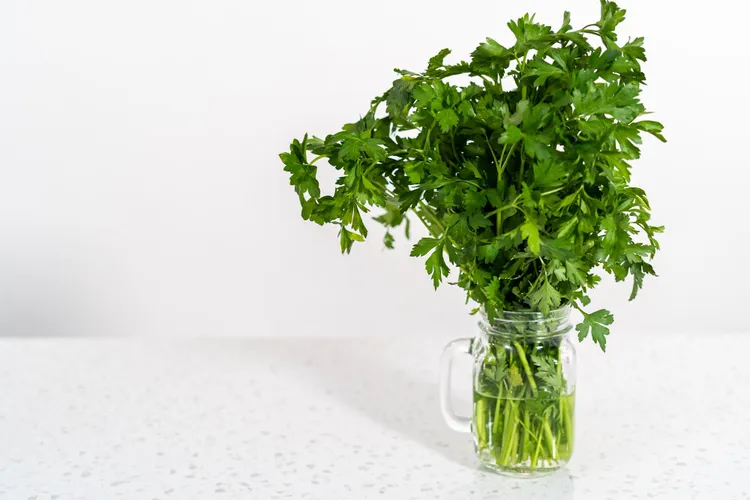
Soft herbs - parsley, coriander, dill, mint, tarragon - store best standing upright in a glass with about 3cm of cold water covering the stem ends, loosely covered with a plastic bag, in the fridge. This mimics what a florist does with cut flowers: the stems continue to draw moisture, replacing what the leaves lose to dehydration.
Before you put them in the glass, trim about 1cm from the bottom of the stems at an angle (more surface area for water uptake) and remove any leaves that would sit below the waterline (they rot quickly and contaminate the water). Change the water every 2-3 days. Done correctly, parsley stored this way will last 2 weeks in the fridge. Coriander and dill last 10-14 days. Without this method, they're typically gone in 3-4 days.
Basil is the exception: it's sensitive to cold and turns black in the fridge. Store basil at room temperature in a glass of water on the counter, not in the fridge. It will last 5-7 days this way versus 1-2 days refrigerated.
The Damp Paper Towel Method (Also Soft Herbs)
If you've already separated the herbs from their bunch, or you have leftover herbs you've partially used: wrap them loosely in a slightly damp paper towel, put the wrapped herbs in a loose plastic bag or open container, and refrigerate. The paper towel maintains humidity around the leaves without waterlogging them. This extends life to 7-10 days for most soft herbs. It's less effective than the water-glass method but more practical when you have small quantities left from a bunch.
Woody Herbs: A Completely Different Approach
Woody herbs - thyme, rosemary, oregano, sage, bay leaves - store in the opposite way to soft herbs. They have much lower moisture content and tolerate (and actually prefer) slightly drier conditions. Wrap them in a barely damp paper towel and store in a container in the fridge, or simply put them unwrapped in the door of the fridge where airflow is higher. They last 2-3 weeks this way with no further attention. Rosemary and thyme can also be left to air-dry at room temperature without any quality loss - in fact, dried thyme and rosemary are often more concentrated in flavour than fresh.
When to Freeze, When to Dry
For herbs you can't use in time, two preservation methods work well - but for different herbs.
Freeze: Soft herbs (parsley, coriander, basil, dill) freeze well when chopped and frozen in olive oil in an ice cube tray. Each cube holds about a tablespoon of herbs and goes directly into soups, stews, or sauces from frozen. Don't freeze them dry - they turn black and lose flavour. The oil protects them. Alternatively, freeze whole herb sprigs in a zip-lock bag and crumble directly from frozen into dishes where texture doesn't matter.
Dry: Woody herbs (thyme, rosemary, oregano, sage, bay) dry excellently at room temperature. Tie in small bundles and hang, or spread on a baking tray in an oven at the lowest setting (50-60°C) for 1-2 hours. Dried woody herbs retain 70-80% of their flavour and last 6-12 months in an airtight jar. Soft herbs don't dry as well - they lose colour and much of their volatile flavour compounds. Freeze them instead.
Using Herb Stems
For parsley, coriander, and dill: the stems are fully edible and often more flavourful than the leaves. Don't discard them. Chop them finely and use exactly as you would the leaves, or save them for stock (especially parsley stems, which are excellent in vegetable stock - see the Vegetable Scrap Stock guide).
For hard-stemmed herbs like rosemary and thyme: the stems themselves are woody and unpleasant to eat, but they're excellent added whole to dishes during cooking (soups, braises, roasts) and removed before serving. They release flavour without requiring any chopping.
The Cost Case
At $2 a bunch and two bunches a week, herbs represent roughly $200 a year in grocery spending. Wasting two-thirds of each bunch means throwing away about $130 annually. The water-glass method takes 2 minutes to set up and pays for itself the first week. For how this fits into a broader system of reducing kitchen waste, the Zero-Waste Cooking Systems guide covers all the key routines.
Latest