Malaysian Desserts Worth Making at Home: Cendol, Kuih, and More
Malaysian desserts are built around coconut milk, palm sugar, pandan, and rice flour - sweet, fragrant, and unlike anything in Western baking. Some are quick and achievable without special equipment; others require patience and practice. This guide rates each one honestly.
Malaysian sweets occupy a different world from Western desserts. Less sweet on average, more fragrant, and often served at room temperature or slightly warm rather than chilled or freshly baked. Many are sold from market stalls by the piece, eaten as snacks throughout the day rather than as a course at the end of a meal. The ingredients are mostly pantry items once you've stocked a Malaysian kitchen - coconut milk, palm sugar, pandan, glutinous rice flour, rice flour.
Cendol
Difficulty: Easy | Equipment: Cendol mould or potato ricer
Cendol is an iced dessert: shaved or crushed ice, coconut milk, palm sugar syrup, and green rice flour noodles flavoured and coloured with pandan. Served in a bowl or cup, it's one of the most refreshing things you can eat on a hot day, and the components are all simple to make separately.
Making Cendol Noodles
- 75g rice flour, 15g green pea starch or tapioca starch
- 300ml water
- 1/2 tsp pandan paste or 3 pandan leaves blended with 100ml water and strained
- Pinch of salt
- Whisk all ingredients together until smooth.
- Cook over medium heat, stirring constantly, until the mixture thickens into a smooth, sticky paste - about 8-10 minutes.
- While hot, press through a cendol mould (or a potato ricer or colander with large holes) directly into a bowl of iced water. The noodles will firm up immediately.
- Drain and refrigerate until needed.
Assembly: Fill a bowl with shaved or crushed ice. Add 3-4 tbsp cendol noodles. Pour over 3-4 tbsp full-fat coconut milk. Drizzle generously with palm sugar syrup (gula melaka dissolved in equal weight of water, simmered 5 minutes). Serve immediately. Calories per serving: ~280 kcal
Ondeh-Ondeh
Difficulty: Medium | Equipment: None special
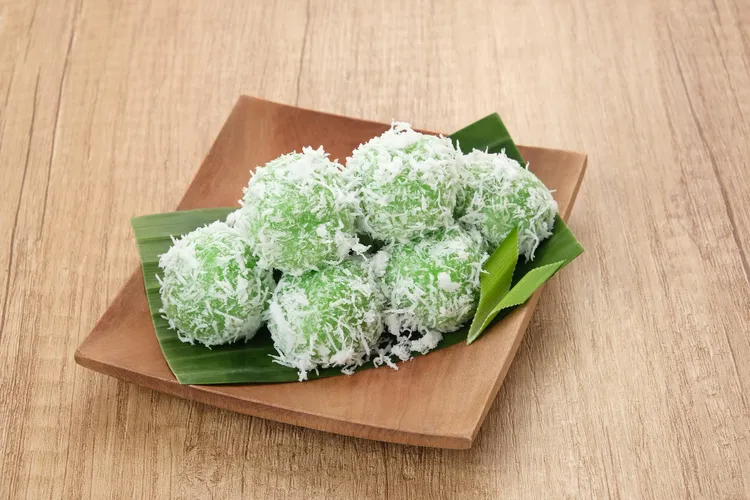
Small glutinous rice balls filled with palm sugar, rolled in freshly grated coconut. When you bite into one, the palm sugar bursts. The dough is pandan-flavoured and slightly chewy. These are sold by the piece at kuih stalls across Malaysia.
Ingredients (makes about 20)
- 200g glutinous rice flour
- 150ml pandan juice (blend 5 pandan leaves with 200ml water, strain)
- 100g palm sugar, grated or chopped into small pieces
- 150g fresh grated coconut (or desiccated coconut moistened with warm water), mixed with a pinch of salt
- Mix glutinous rice flour with pandan juice to form a soft, pliable dough. Add a little more water if it cracks.
- Pinch off a small ball (about 15g). Flatten into a disc. Place a small piece of palm sugar in the centre. Seal and roll into a smooth ball.
- Boil in salted water for 5-6 minutes until the balls float, then cook 2 more minutes.
- Drain. While still warm, roll in the salted coconut to coat.
- Serve at room temperature. Eat the same day - they harden overnight.
Calories per piece: ~65 kcal
Kuih Lapis
Difficulty: High | Equipment: Steamer
Layered steamed rice cake in alternating colours. Each layer is steamed individually before the next is added. The result is visually impressive with a soft, slightly gelatinous texture. Allow 2 hours and don't rush the steaming steps.
Ingredients (for a 20cm square tin)
- 300g rice flour, 80g tapioca flour
- 400ml coconut milk, 400ml water
- 200g sugar, 1/2 tsp salt
- Red food colouring (or pandan juice for green/white layers)
- Whisk all ingredients (except colouring) until smooth. Divide batter in half. Colour one half red.
- Heat steamer. Grease the tin. Pour in a thin layer (~80ml) of white batter. Steam 5 minutes until set but slightly tacky on top.
- Pour a thin layer of red batter over the white. Steam 5 minutes.
- Repeat, alternating colours, until batter is used up. Final steam: 10 minutes.
- Cool completely before cutting - kuih lapis must be fully cooled to slice cleanly.
Calories per piece (1/20 of batch): ~120 kcal
Sago Gula Melaka
Difficulty: Very easy | Equipment: None special
Pearl sago cooked until translucent, set in small moulds, and served with coconut milk and palm sugar syrup. The easiest Malaysian dessert to make well. Simmer 200g pearl sago in plenty of water for 15-20 minutes, stirring often, until the pearls are almost fully translucent. Drain, rinse with cold water, and pack into lightly oiled ramekins. Refrigerate 2 hours until firm. Turn out onto plates, drizzle with palm sugar syrup and coconut milk. Serve cold. Calories per serving: ~210 kcal
A Realistic Difficulty Guide
- Start here: Sago gula melaka, cendol
- Worth the effort: Ondeh-ondeh
- Weekend project: Kuih lapis, kuih dadar (pandan crepes)
- Buy rather than make: Kuih bahulu, apam balik (require specialist moulds and long practice)
Malaysian desserts reward patience and good-quality ingredients more than technical skill. Palm sugar quality matters enormously - cheap substitutes produce flat results. For the savoury Malaysian ingredients that also appear in these desserts (pandan, coconut milk, palm sugar), see the Malaysian pantry essentials guide. And for the full picture of Malaysian cooking, see the Malaysian home cooking guide.
Latest