Moroccan Home Cooking: Tagines, Spice Blends and Batch-Cook Tips
Moroccan cooking is one of the best cuisines for batch cooking at home: cheap cuts, slow cook, extraordinary results. Tagines, couscous, harissa and ras el hanout explained practically.
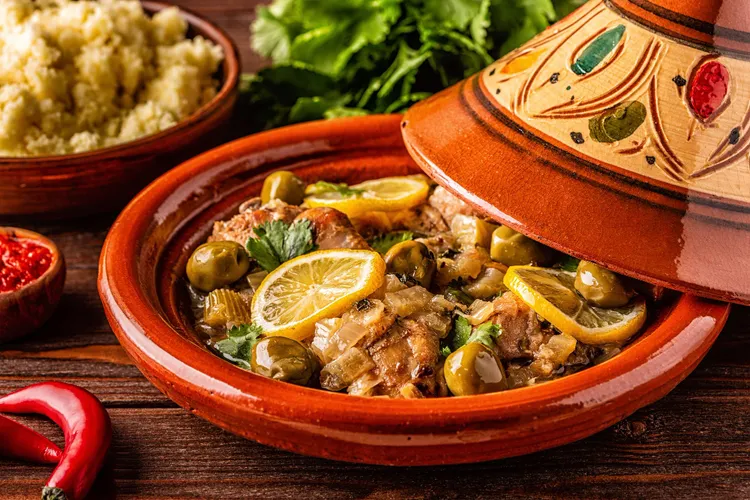
Moroccan food is underrated for home cooking. It sits between Middle Eastern and North African traditions, uses relatively few specialist ingredients, and produces the kind of deeply flavoured, slow-cooked meals that eat well across multiple days. A chicken and chickpea tagine made on Sunday provides four portions of 430 kcal each, keeps refrigerated for four days and improves with reheating. That is the practical appeal of Moroccan cooking in a single sentence.
The Moroccan Pantry
Moroccan cooking uses a smaller spice set than Indian cooking, and the base overlaps significantly with Middle Eastern and Keralan pantries. What you need:
- Ras el hanout - the signature Moroccan spice blend. The name means "top of the shop" - historically the best spices a merchant had. A good bought blend (Bart, Ottolenghi, La Belle Cuisine) is excellent. See the DIY blend below.
- Harissa - North African chilli paste. Sharper and more perfumed than gochujang or sriracha. Used as a condiment, a marinade base and stirred into tagines for heat.
- Preserved lemons - fermented lemons in salt. Deeply flavoured, not acidic in the way fresh lemon is. Use the rind only (discard the flesh); rinse before using. Available in jars in most supermarkets.
- Saffron - expensive, used sparingly. A pinch in chicken tagine or a saffron broth changes the dish. Buy the smallest quantity available and store in the freezer.
- Cumin, coriander, cinnamon, ginger, turmeric, paprika - most of these overlap with your existing pantry.
DIY Ras El Hanout
If you cannot find ras el hanout: 2 tsp cumin, 2 tsp coriander, 1 tsp cinnamon, 1 tsp ginger, 1 tsp turmeric, 1 tsp paprika, 1/2 tsp allspice, 1/2 tsp black pepper, 1/4 tsp cayenne, 1/4 tsp cloves. Mix, store in an airtight jar. Makes roughly 12 tsp (enough for three to four tagines).
Four Core Dishes
1. Chicken Tagine with Preserved Lemon and Olives
The classic Moroccan chicken tagine does not require a tagine pot - a heavy-based casserole or Dutch oven works equally well. Browned chicken thighs (bone-in, skin-on for flavour), slow-cooked with onion, garlic, saffron, ginger and ras el hanout, finished with preserved lemon rind and green olives. The preserved lemon is not optional here - it is the dominant flavour of the dish.
Cook time: 20 minutes active, 60-75 minutes in the oven at 160°C/325°F. Macro estimate: ~430 kcal, 38g protein, 12g carbs, 24g fat. Serve with couscous (adds ~200 kcal, 7g protein per 100g cooked) or flatbread.
2. Lamb Tagine with Apricots and Chickpeas
The sweet tagine - dried apricots, chickpeas, almonds, cinnamon, honey - represents the Moroccan sweet-savoury tradition that connects to Persian and Arab culinary history. Lamb shoulder is the right cut: cheap, well-marbled, becomes completely tender in 2-2.5 hours. This is pure batch-cook food.
Macro estimate: ~520 kcal, 36g protein, 38g carbs, 22g fat. The apricots and chickpeas provide meaningful fibre - around 8g per serving.
3. Harira (Lamb and Chickpea Soup)
Harira is a thick, substantial soup eaten to break the Ramadan fast and as everyday winter food across Morocco. Lamb (or beef), chickpeas, lentils, tomatoes, fresh herbs (coriander, parsley, celery leaves), vermicelli noodles and a base of ras el hanout and ginger. It is unusual in that it is thickened with a flour-and-water paste (tadouira) rather than being a thin broth - the result is somewhere between a soup and a stew.
Macro estimate: ~380 kcal, 26g protein, 42g carbs, 11g fat. High-protein, high-fibre, ideal for batch cooking in the colder months.
4. Couscous with Seven Vegetables
Couscous with seven vegetables (couscous bidawi) is the Moroccan national dish - not tagine, despite what most Western restaurants suggest. It is a steamed couscous served with a broth of mixed vegetables (turnip, squash, carrot, courgette, onion, cabbage, chickpeas) and sometimes merguez sausage. The couscous is steamed in a couscoussier above the broth - if you do not have one, pouring hot broth over instant couscous and resting it works for weeknight cooking.
Macro estimate (vegetable version): ~430 kcal, 14g protein, 72g carbs, 10g fat. Add merguez: ~520 kcal, 24g protein.
Harissa: Make It or Buy It
Good bought harissa (Belazu, Mina, Cle de Voutes) is excellent and worth buying. Making harissa from scratch - dried chillies (ancho, guajillo, or Calabrian), garlic, caraway, cumin, coriander, olive oil - produces a fresher, more complex result if you have the chillies. Blend roasted chillies with the spices and oil; done in 20 minutes. Keeps refrigerated for three weeks.
Batch Cooking Logic
Tagines are the most efficient batch-cook format in this guide. One batch (six portions) from a lamb tagine takes the same active cooking time as a single portion and provides meals for the week. The flavour develops significantly over 24-48 hours. Couscous (instant) takes four minutes to make fresh - there is no advantage to pre-making it.
Storage: tagines keep refrigerated for five days and freeze well for up to three months. Harira keeps refrigerated for four days (thicken slightly with flour-water paste again on reheating if needed). Harissa keeps refrigerated for three weeks.
For a comparison of Moroccan cooking against other slow-cook global cuisines, see the complete guide to global cuisines at home. If you want the full Middle Eastern pantry context - hummus, shakshuka, the shared spice logic - see Middle Eastern Cooking at Home.
Latest