No-Recipe Biscuits: The Ratio Behind Flaky Layers
The 3:1:2 flour-fat-liquid ratio behind flaky biscuits, why cold butter (not the ratio) is what actually creates layers, and fixes for flat, tough, or dense batches.
Biscuits expose bad technique faster than almost anything else in baking. Two people can use the exact same recipe and get completely different results, one gets tall, shaggy layers that pull apart by hand, the other gets a flat, dense hockey puck. The recipe was never the variable. The ratio and what you do with the fat are.
The Ratio
Biscuits are one of the simplest ratios in baking, which is part of why small mistakes show up so clearly:
- 3 parts flour
- 1 part cold fat (butter, shortening, or a mix)
- 2 parts cold liquid (buttermilk or milk)
In cups, that's about 2 cups flour, 2/3 cup cold butter cut into pieces, and roughly 3/4 to 1 cup cold buttermilk, adjusted until the dough just comes together. Add 1 tablespoon baking powder and 1/2 teaspoon salt per 2 cups of flour for leavening, and 1/2 teaspoon baking soda if you're using buttermilk specifically, since the acid needs something to react against.
The ratio is simple. The part that actually makes or breaks biscuits is temperature and handling, not the proportions.
Why Flaky Layers Come From the Fat, Not the Flour
Flaky layers aren't a separate technique from the ratio, they're what the fat-to-flour ratio produces when the fat stays solid. Cold butter cut into the flour in small, pea-sized pieces doesn't fully blend in. Those pieces stay intact through mixing and shaping, and in the oven they melt fast, releasing steam that pushes the surrounding dough apart into distinct layers. That's the entire mechanism behind lamination in a biscuit, and it's why "keep everything cold" isn't a suggestion, it's the technique.
If the butter softens and blends smoothly into the flour instead of staying in visible pieces, you lose the steam pockets and get a texture closer to a scone or a dense roll, not a flaky biscuit. The ratio is identical either way, only the fat's temperature and how it's incorporated changes the outcome.
The Method
- Freeze the butter for 15 minutes if your kitchen is warm, then cut it into small cubes.
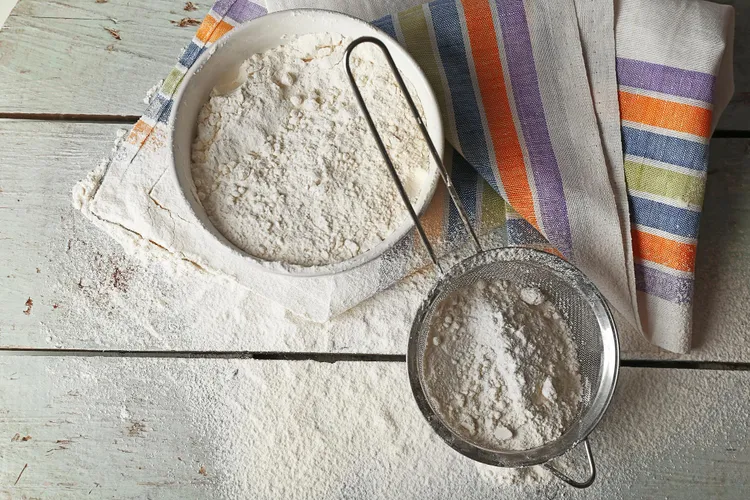
- Whisk the flour, baking powder, baking soda, and salt together in a bowl.
- Work the cold butter into the flour with your fingers, a pastry cutter, or a fork, stopping when the pieces are pea-sized, not sand-fine. Some larger flakes are fine, uniform crumbs are not.
- Pour in the cold buttermilk and stir just until the dough comes together and no dry flour remains. It will look shaggy, not smooth.
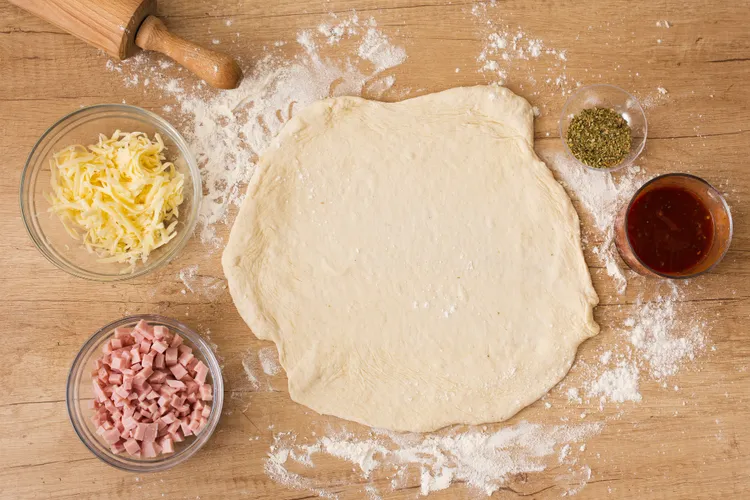
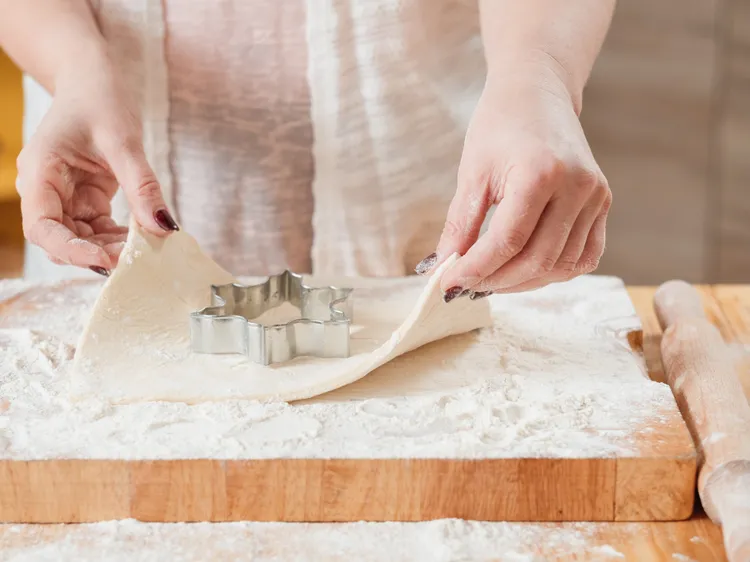
- Turn the dough onto a floured surface and pat it into a rectangle about 1 inch thick. Fold it in thirds like a letter, then pat it out again. Repeat this fold 2 to 3 times, this is what builds visible layers.
- Pat to a final thickness of 3/4 to 1 inch and cut straight down with a sharp cutter, no twisting, which seals the edges and stops the layers from rising evenly.
- Place biscuits close together on a baking sheet so they support each other while rising, and bake at 425°F for 15 to 18 minutes, until tall and golden.
The fold-and-pat step is doing the same job as laminating puff pastry, just in far fewer steps. Each fold creates another plane where butter sits between layers of dough, and each plane becomes a separate layer once the steam pushes through in the oven.
Troubleshooting by Ratio and Technique
Flat, dense biscuits with no layers: Butter was too warm and blended into the flour instead of staying in pieces. Chill the dough for 10 minutes before baking if your kitchen is warm, and work faster next time so the butter doesn't soften from hand heat.
Tough, hard biscuits: Overworked dough. Every extra minute of kneading or handling develops gluten that a light hand should be avoiding entirely. Mix and fold only as much as described above, no more.
Doesn't rise much: Old leavening, or the cutter was twisted when cutting, which seals the edges and prevents even rise. Cut straight down and lift, don't twist.
Dry, crumbly dough that won't come together: Not enough liquid for the flour's absorption that day, humidity affects this more than people expect. Add buttermilk a tablespoon at a time until the dough just holds without being sticky.
Biscuits spread instead of rising tall: Butter fully melted before baking, usually from a warm kitchen or too much time between cutting and the oven. Get shaped biscuits onto the pan and into the oven quickly, or hold them in the fridge if there's a delay.
Scaling and Variations
The ratio scales linearly, doubling for a full sheet of 16 to 18 biscuits is exact multiplication with no change to leavening percentage. What doesn't scale well is the folding step by hand past a certain volume, large batches are easier to laminate in smaller portions and combine at the cutting stage rather than trying to fold one giant slab.
Swaps that hold the ratio intact:
- Shortening instead of butter: Produces a slightly taller, more tender biscuit since shortening has a higher melting point and holds its shape longer in the oven, though it sacrifices some of butter's flavor. A 50/50 blend gets both.
- Heavy cream instead of buttermilk: Works at the same liquid ratio and skips the need for baking soda, since there's no acid to react against. Slightly richer, less tangy result.
- Cheese or herb biscuits: Fold in up to 1 cup shredded cheese or 2 tablespoons chopped herbs at the final fold, after the lamination step, so they don't interfere with layering.
- Whole wheat flour: Replace up to a third of the flour by weight before the texture turns noticeably denser, whole wheat absorbs more of the liquid than white flour does.
Storage
Biscuits are best eaten within a few hours of baking, when the layers are still distinct. They'll keep at room temperature in a sealed container for about 2 days, though the texture softens. For longer storage, freeze unbaked, cut biscuits on a tray until solid, then bag them, and bake straight from frozen with an extra 3 to 5 minutes added to the time.
Once cold fat and minimal handling become automatic, the ratio itself barely matters day to day, you just know what biscuit dough should look and feel like at each stage.
Latest