Oyakodon: One-Pan Japanese Chicken and Egg Rice Bowl
Oyakodon is a 20-minute weeknight dinner built around one pan and a handful of ingredients. Chicken and egg are simmered in a sweet-savoury dashi sauce and served over rice - it comes out at around 480 kcal and 35g protein per serving.
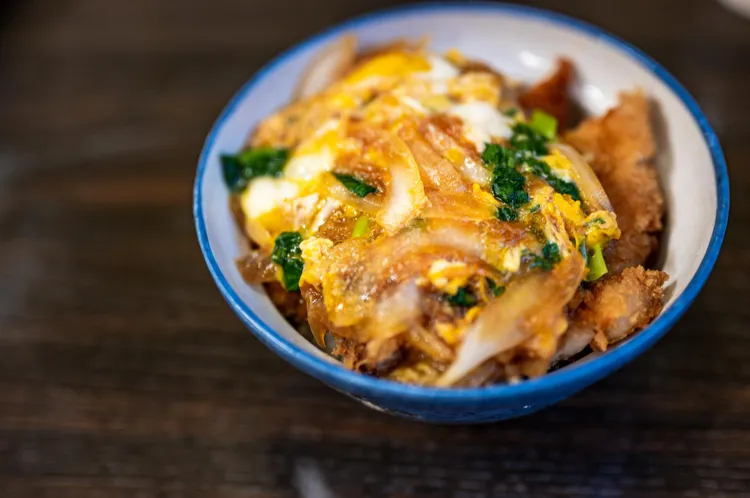
Oyakodon translates as "parent and child bowl" - chicken (the parent) and egg (the child) cooked together in the same pan. It is one of the most popular donburi (rice bowl) dishes in Japan, sold at lunch counters, made at home on weeknights, and eaten by students who have learned it is the cheapest and fastest high-protein meal they know how to make. The technique is simple, the sauce is a variation on the fundamental Japanese soy-mirin-dashi ratio, and the whole thing is on the table in 20 minutes.
Ingredients (serves 2)
- 300g chicken thighs (boneless, skinless), cut into 3cm pieces
- 1 medium onion, thinly sliced
- 3 large eggs
- 200ml dashi stock (instant granules work fine)
- 2 tablespoons soy sauce
- 2 tablespoons mirin
- 1 tablespoon sake
- 1 teaspoon sugar
- 2 portions cooked Japanese short-grain rice (approximately 200g cooked each)
- Spring onion and toasted nori strips to serve (optional)
Method
Combine dashi, soy sauce, mirin, sake and sugar in a wide, shallow pan (a small frying pan or a donburi pan if you have one). Bring to a simmer over medium heat.
Add the onion and cook for 3-4 minutes until softened. Add the chicken pieces in a single layer. Cover and cook over medium heat for 4-5 minutes, turning once, until the chicken is just cooked through.
Beat the eggs lightly - about 10 strokes, you want some white and yolk still visible. Pour the egg evenly over the chicken and onion. Cover the pan and cook for 60-90 seconds over medium-low heat. The egg should be just set on the outside but still custardy in the centre - this is the target texture. Japanese home cooks call this "half-cooked" (hanjuku) and it is not underdone; it is the correct doneness for this dish.
Slide the chicken and egg mixture over the rice in bowls. Pour any remaining sauce over the top. Garnish with sliced spring onion.
The Sauce Ratio
The sauce for oyakodon is a direct expression of the standard Japanese cooking sauce ratio: approximately 3:2:1 of dashi, soy sauce and mirin (adjusted here with a small amount of sake and sugar). Learning this pattern by heart means you can make oyakodon, gyudon, katsudon and most donburi variations without a recipe - just adjust the proportions slightly for each protein. For more on how this applies across Japanese home cooking, see the complete guide.
Variations
- Tanindon ("stranger bowl"): The same dish made with beef instead of chicken. The egg and beef combination is called tanindon because beef and egg are unrelated - the opposite of parent and child.
- Katsudon: Tonkatsu (fried pork cutlet) instead of chicken. Requires making the cutlet first but uses the same egg-simmering method.
- Vegetarian version: Replace chicken with thick-sliced tofu or shiitake mushrooms. Use kombu dashi to keep it fully vegetarian.
Nutrition Estimate (per serving with rice)
- Calories: ~480 kcal
- Protein: ~35g
- Carbs: ~52g
- Fat: ~12g
All values are estimates. Using chicken breast instead of thigh reduces calories by approximately 30-40 kcal and reduces fat to around 8g, but the texture is less tender.
Meal Prep Notes
Oyakodon does not batch-cook well - the egg overcooks when reheated and the texture suffers. Make it fresh, which takes 20 minutes. The sauce ingredients can be pre-measured and stored in a jar in the fridge for up to a week, which reduces prep time on busy evenings. Cook rice in advance and keep warm, or reheat from the fridge.
Latest