Vinaigrette by Ratio: 3:1 Oil to Acid, Every Time
The 3:1 oil-to-acid ratio behind every classic vinaigrette, how emulsification actually works, and fixes for dressings that separate, taste sharp, or turn flat.
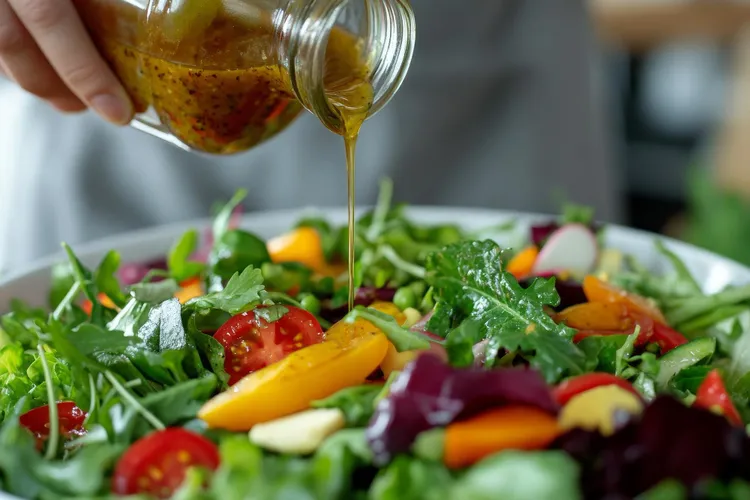
Bottled dressing exists mostly because people think vinaigrette is harder than it is. It isn't a recipe so much as a ratio held together by one bit of technique, and once both are automatic, you'll never reach for a bottle out of convenience again.
The Ratio
Every classic vinaigrette comes down to the same proportion by volume:
- 3 parts oil
- 1 part acid (vinegar or citrus juice)
That's it structurally. In practical terms, 3 tablespoons oil to 1 tablespoon vinegar makes enough dressing for a salad serving two to four, depending how heavily you dress it. Salt, pepper, and anything else, mustard, shallot, herbs, garlic, sit on top of that ratio without changing it.
3:1 is the standard starting point, but it's a range, not a fixed law. Milder acids like rice vinegar or a mellow balsamic can push toward 2:1 without tasting sharp. Sharper acids like fresh lemon juice or a high-acidity red wine vinegar often want closer to 4:1 to avoid puckering. Taste and adjust from there, the ratio gets you in the right zone, not the exact final answer for every bottle in your pantry.
Why 3:1 Is the Starting Point, Not an Accident
Oil coats the tongue and carries fat-soluble flavor, acid cuts through richness and wakes up the other ingredients in the salad. At 3:1, oil dominates enough to feel like a dressing rather than a splash of vinegar, but there's enough acid to keep it from tasting flat or greasy. Push much past 4:1 oil to acid and the dressing stops doing its job, it just coats the greens without adding brightness.
This is also why bottled dressings taste different from homemade ones even when the ingredient list looks similar. Most commercial vinaigrettes lean lower in oil than 3:1 to cut cost and calories, then compensate with sugar, gums, and emulsifiers to fake the mouthfeel that real oil provides. Once you've had a properly ratioed vinaigrette, the bottled version tends to taste thin.
The Method
The only real technique in vinaigrette is emulsification, getting oil and acid to combine into something smooth and cohesive instead of separating.
- Add the acid, plus any mustard, salt, and aromatics, to a bowl or jar first.
- Whisking constantly (or shaking, if using a jar), add the oil in a slow, thin stream. Don't dump it in all at once.
- Keep whisking until the mixture looks uniformly cloudy and slightly thickened, that's the emulsion holding.
- Taste and adjust with more acid, salt, or oil before dressing the salad.
Adding oil slowly is what breaks the oil into tiny enough droplets to suspend in the acid instead of pooling on top. A jar with a tight lid, shaken hard for 15-20 seconds, does the same job as whisking and is faster for small batches. Either way, the mechanism is the same: mechanical energy breaking oil into droplets small enough to stay suspended.
Mustard isn't just flavor here, it's a functional ingredient. A teaspoon of Dijon acts as an emulsifier because it contains compounds that bind to both oil and water, which is why mustard-based vinaigrettes hold together longer than oil-and-vinegar alone and don't separate as fast once dressed.
Troubleshooting by Ratio and Technique
Dressing separates immediately after mixing: Oil was added too fast, or there's no emulsifier in the mix. Slow the stream when whisking, or add a small spoonful of mustard or mayonnaise to help it bind.
Tastes too sharp or vinegary: Ratio is running acid-heavy for that particular vinegar's strength. Add oil a tablespoon at a time and taste, rather than assuming 3:1 is exact for every bottle, acidity varies noticeably between brands and types.
Tastes flat or greasy: Too much oil relative to acid, or the acid itself is mild (some rice vinegars and citrus can be gentler than expected). Add acid in small increments until the brightness comes back.
Separates again after sitting in the fridge: Normal for a basic oil-and-vinegar dressing without an emulsifier. Just shake or whisk again before using, or add mustard next time to hold it together longer.
Dressing is too thick or clings unevenly: Usually happens with cold oil, olive oil especially can thicken and turn cloudy straight from the fridge. Let it come to room temperature before mixing.
Scaling and Variations
The ratio holds at any batch size, scaling from a 4-tablespoon single serving to a full cup for meal prep is exact multiplication. What doesn't scale linearly is emulsifier: a single teaspoon of mustard holds together far more than 3 tablespoons of oil, so for large batches you don't need to increase it proportionally, a teaspoon or two per cup of finished dressing is usually enough.
Swaps that hold the ratio intact:
- Citrus instead of vinegar: Lemon or lime juice works at the same acid ratio and brings a brighter, less sharp profile than most vinegars, good for anything with fish or delicate greens.
- Nut or seed oils: Walnut or sesame oil swapped for part of the base oil (not all of it, they're intensely flavored) adds depth without changing the structural ratio. Start with replacing a third of the oil and taste from there.
- Yogurt-based: Replacing a portion of the oil with plain yogurt shifts this toward a creamy dressing rather than a classic vinaigrette, it's a different texture entirely, not just a lighter version, since yogurt adds water and protein the oil-acid ratio wasn't built around.
- Herb and aromatic additions: Minced shallot, garlic, or fresh herbs fold in without disrupting the ratio. Letting shallot or garlic sit in the acid for 10 minutes before adding oil mellows their sharpness.
Storage
A basic oil-and-vinegar dressing keeps in a sealed jar in the fridge for about a week, expect it to separate between uses and just shake before serving. Versions with fresh garlic, shallot, or herbs are best within 3 to 4 days, since fresh aromatics lose brightness and can turn slightly bitter over time. Let refrigerated vinaigrette sit at room temperature for a few minutes before using, cold oil dulls flavor and can look congealed straight out of the fridge.
Once 3:1 is automatic, dressing a salad stops being a task that needs a bottle in the fridge, it's just oil, acid, and whatever's already on the counter.
Latest