Kajmak: What It Is, How to Use It, and How Much Fat Is Actually In It
Kajmak is the Balkan version of clotted cream - slow-heated milk skimmed and salted, then left to ferment gently for a few days. It's rich, slightly soured, and goes on everything from grilled meat to bread. Here's a plain explanation of what it is and how to use it.
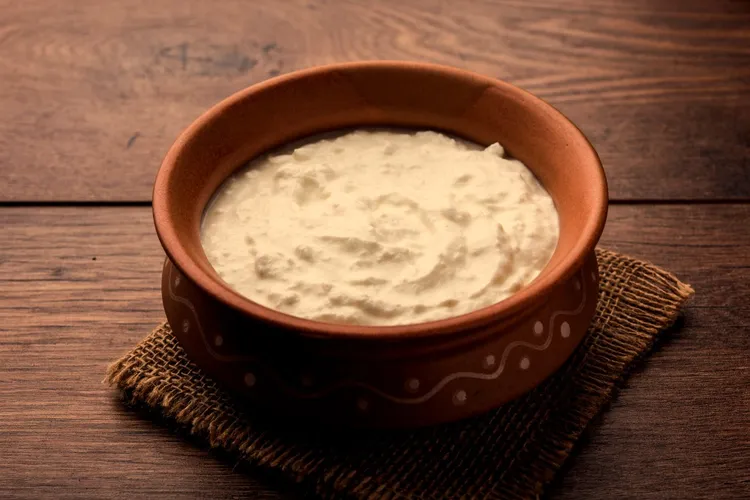
Kajmak has no clean Western equivalent. It's richer than sour cream, less processed than crème fraîche, more complex than butter. The closest analogy is English clotted cream, but kajmak is saltier and has a distinct fermented edge that develops over a few days of ageing.
In Serbia, Bosnia, and North Macedonia, it functions as a condiment in a way that no single ingredient does in most Western kitchens. It goes on grilled meat, it's tucked into burek and pljeskavica, it's spread on bread, it's served alongside bean stews as a fat and flavour element. Understanding kajmak is one of the keys to understanding Balkan food.
How It's Made Traditionally
Traditional kajmak is made by heating whole fresh milk (often sheep's or cow's milk) very slowly in a flat, wide pan. As the milk reaches near-boiling temperature, a thick cream layer forms on the surface. This layer is skimmed off, salted, and placed in layers in a wooden container. The layered cream is left at room temperature for 1-3 days, during which it ferments slightly and develops its characteristic tang.
Fresh kajmak (svježi kajmak) is mild, very white, and only a day or two old. Aged kajmak (stari kajmak) is yellower, more pungent, and has a stronger fermented flavour. Both versions are used in Balkan cooking, fresh for delicate applications, aged for dishes that benefit from a stronger flavour punch.
Home Version
Making authentic kajmak at home requires very fresh full-fat milk and patience. A shortcut that produces something similar:
- Mix 200g full-fat sour cream with 50g salted butter and 50g cream cheese
- Blend until smooth
- Season with a pinch of salt if needed
- Refrigerate for at least a few hours before serving
This is not real kajmak - it lacks the fermented depth - but it serves the same functional role in a recipe and is a practical substitute for home cooking.
Nutrition Facts
Kajmak is not a low-fat ingredient. Per tablespoon (approximately 20g):
- Calories: ~70-90 kcal (varies with fat content of the milk used)
- Protein: ~1g
- Carbohydrates: ~0.5g
- Fat: ~7-9g (mostly saturated)
A generous serve with ćevapi (a heaped tablespoon) adds roughly 80-100 kcal to the meal. Worth accounting for if you're tracking, but not a reason to skip it - the flavour contribution is significant.
How to Use It
The primary uses in Balkan cooking:
- With grilled meat: A spoonful on top of hot ćevapi or pljeskavica, where it melts slightly into the meat
- Inside flatbread: Spread inside lepinja before the meat goes in
- With beans: Stirred into pasulj at the table for richness
- On bread: Spread on warm bread as a breakfast element
It should be at room temperature when served - cold kajmak is firmer and doesn't melt as well. Remove from the fridge 15-20 minutes before eating.
Where to Find It
Eastern European delicatessens and some international supermarkets stock kajmak, usually refrigerated and sold in small tubs. Serbian and Bosnian shops are the most reliable source. Online ordering is practical for non-urban areas.
For more on how kajmak fits into Balkan cooking and what dishes it goes with, the Balkans table guide covers all the key pairings.
Latest