Black Garlic Health Benefits: What the Research Actually Says
Black garlic has a higher antioxidant content than raw garlic and contains elevated levels of S-allylcysteine, a bioavailable compound studied for cardiovascular and immune effects. Here's an honest look at what the evidence shows - and what it doesn't.
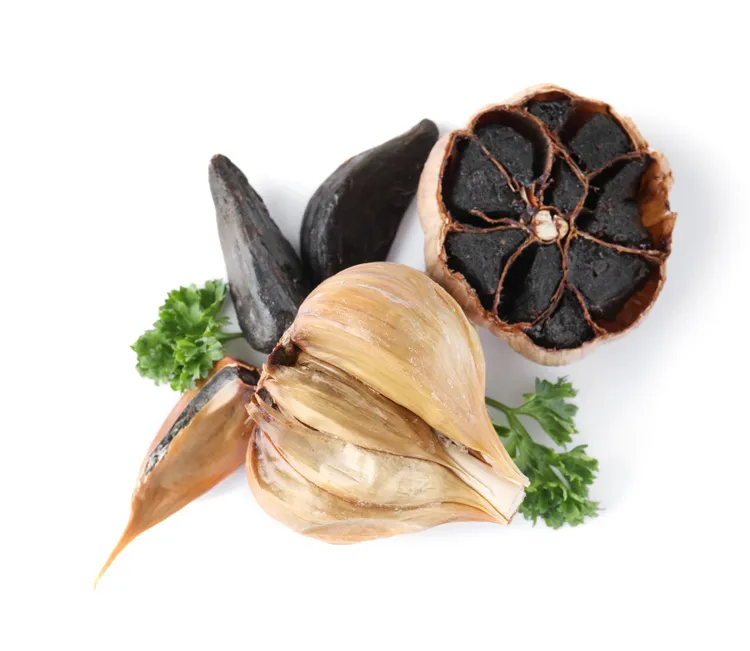
The health claims around black garlic range from credible to wildly overstated. The good news: there's real science behind some of the benefits. The important caveat: most studies use concentrated extracts at doses far higher than you'd get from culinary use. This article sticks to what the research actually demonstrates.
Key Bioactive Compounds in Black Garlic
S-Allylcysteine (SAC)
The most studied compound unique to black garlic. During the fermentation process, allicin (the pungent compound in raw garlic) converts largely into SAC. SAC is:
- Water-soluble and well-absorbed by the body
- More stable than allicin (doesn't degrade as quickly)
- Present in black garlic at concentrations estimated to be 5-10x higher than in raw garlic
Polyphenols and Antioxidants
Multiple studies have measured significantly higher total antioxidant capacity in black garlic compared to fresh garlic. The Maillard reaction during fermentation creates new polyphenol compounds not present in raw garlic. Black garlic consistently scores higher on DPPH and FRAP antioxidant assays.
Melanoidins
The brown-black pigments formed during Maillard browning. Found in other fermented and browned foods (soy sauce, coffee, roasted malt). Preliminary research suggests antioxidant and potential prebiotic effects, though the evidence is early-stage.
What the Research Shows
Cardiovascular Effects
Several human and animal studies have looked at black garlic's effect on cholesterol and blood pressure. A number of small human trials suggest improvements in LDL cholesterol and total cholesterol with supplementation. One frequently cited trial showed a statistically significant reduction in total cholesterol in participants taking black garlic extract over 12 weeks. However, most trials are small, short-term, and use extract doses equivalent to far more than a culinary serving. Treat culinary use as potentially beneficial, not as a substitute for medical treatment.
Antioxidant Activity
This is the most consistently supported benefit. Multiple peer-reviewed studies confirm higher antioxidant activity in black garlic versus raw. The relevance to cooking is that antioxidant compounds from food are part of a broader dietary pattern - they're not meaningfully therapeutic in isolation, but they do contribute to a diet rich in varied plant compounds.
Immune Function
Raw garlic has a longer track record here - allicin has established antimicrobial properties. Black garlic has less allicin but more SAC. Some research suggests SAC has immune-modulating effects, but the evidence base is thinner and mostly preclinical (cell and animal studies).
Anti-inflammatory Properties
In vitro studies (cell cultures) show black garlic extracts suppressing inflammatory markers. This is consistent with polyphenol-rich foods generally. The leap from in vitro to meaningful clinical effect in humans is significant - note the distinction.
Blood Sugar Regulation
Some animal studies suggest black garlic may improve insulin sensitivity. Human evidence is limited. Worth monitoring as research develops, but not currently a supported claim for culinary use.
Honest Caveats
- Most studies use standardized extracts at doses of 2-10g SAC equivalent - far more than typical culinary use
- Many trials are small, underpowered, and have short follow-up periods
- Industry-funded studies exist in this space - read methodology carefully
- No food is a substitute for medication or medical advice
What You Actually Get from Cooking with Black Garlic
A typical dish uses 2-4 cloves of black garlic. At that scale, you're getting:
- A small but real dose of SAC and polyphenols
- No meaningful macros (black garlic is calorie-negligible in culinary quantities)
- No garlic breath (the allicin responsible has converted)
- Easier digestion than raw garlic for many people
The bottom line: black garlic is a genuinely interesting ingredient nutritionally, and the antioxidant evidence is solid. It's worth using. It's not a superfood that replaces anything else. For the full picture on what black garlic is and how its compounds form, see what is black garlic and how is it made - and for how to get it into your kitchen, see the complete black garlic guide.
Latest