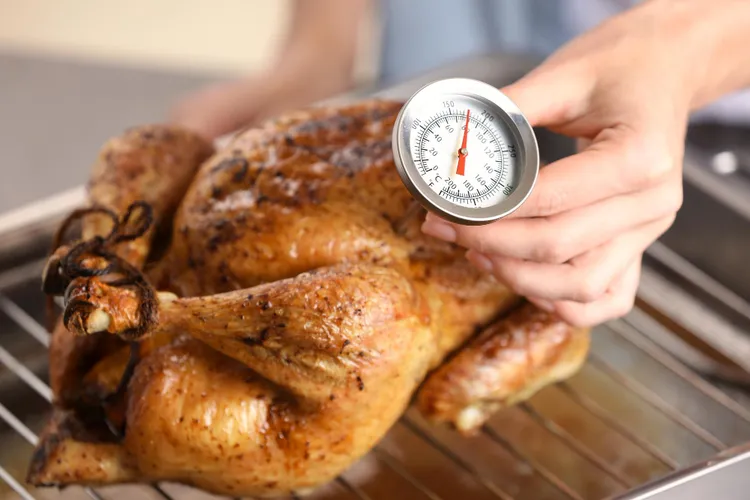
Chicken Cuts Compared: Breast, Thigh, Drumstick and Wing
Each chicken cut has its own fat, connective tissue and best cooking method. Here is how breast, thigh, drumstick and wing compare, and which suits roasting, grilling, braising or frying.
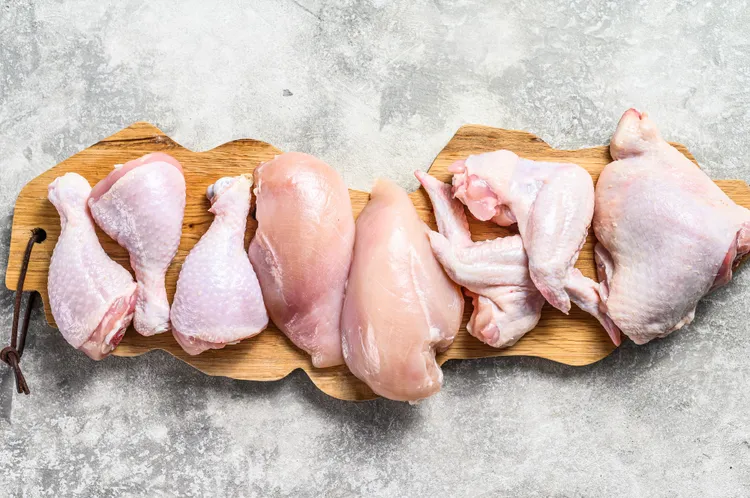
A skinless chicken breast comes in around 165 kcal per 100g cooked. A skin-on wing can pass 270. Both are "chicken," both get logged as chicken, and one can carry nearly twice the calories of the other. Fat, connective tissue and bone decide how each cut cooks, what it costs and what it does to your macros.
Chicken Cuts at a Glance
Typical values per 100g of cooked meat. They are approximations from standard nutrition databases, and they assume roasting.
- Breast, skinless: about 165 kcal, 31g protein, 3.6g fat. Roughly 19g of protein per 100 kcal.
- Thigh, skinless: about 180 kcal, 25g protein, 8g fat. Roughly 14g of protein per 100 kcal.
- Drumstick, skinless: about 155 kcal, 24g protein, 6g fat. Roughly 16g of protein per 100 kcal.
- Wing, with skin: about 250 to 290 kcal, with 16 to 20g of fat. Roughly 10g of protein per 100 kcal.
Price runs the other way. Breast is usually the most expensive per pound, thighs sit in the middle, drumsticks are among the cheapest cuts in the case, and wings vary a lot by store and season. Because bone and skin add weight you do not eat, compare cost per portion of edible meat, not per pound.
Chicken Breast
Breast is the leanest cut, which is both its selling point and its problem. With so little fat and almost no connective tissue, it goes from juicy to dry across a very narrow window. A few degrees past done and it turns chalky.
- Best for: pan-searing, grilling, quick baking, poaching, stir-fries, sliced cutlets, salads and sandwiches.
- Why it works: it cooks fast, takes on marinades and sauces, and slices cleanly for meal prep.
- What to watch: uneven thickness. The thick end overcooks before the thin end is done.
Fix the thickness first. Pound the thick end with a rolling pin, or slice the breast in half horizontally into two thin cutlets. A cutlet about 1.5cm (0.5 inch) thick sears in 3 to 4 minutes per side. A whole breast about 2.5cm (1 inch) thick takes 18 to 25 minutes at 200°C (400°F).
A short brine helps too. Thirty minutes in water with a tablespoon of salt per cup gives the meat a little extra seasoning and some insurance against dryness. A thermometer helps even more than a brine. The safe minimum for poultry is 74°C (165°F). Many cooks pull breast at about 71°C (160°F) and rest it for five minutes so carryover heat finishes the job without overshooting.
Chicken Thigh
Thighs are dark meat. They carry more fat and more connective tissue than breast, which is exactly why they stay moist under rough treatment. Overcook a thigh by ten minutes and you will barely notice. Overcook a breast by ten minutes and everyone will.
- Best for: roasting, braising, grilling, curries, stews, stir-fries, slow cooking and anything that sits on a stove or in an oven for a while.
- Why it works: the fat bastes the meat, and connective tissue turns to gelatin as it cooks, which gives sauces body.
- What to watch: the fat. Skinless thigh runs about 180 kcal per 100g cooked. With skin, about 230 kcal and 15g of fat.
Thighs actually improve above the minimum safe temperature. They are safe at 74°C (165°F) but tend to taste better and feel more tender at 79 to 88°C (175 to 190°F), once more collagen has melted. Bone-in, skin-on thighs roast well at 200 to 220°C (400 to 425°F) for 35 to 45 minutes. Start them skin side down in a cold or moderately hot pan if you want crisp skin, then finish in the oven.
Boneless skinless thighs cook in 6 to 8 minutes per side in a pan, or 20 to 25 minutes in a hot oven. They also work as a drop-in replacement for breast in most recipes if you want more forgiving meat.
Chicken Drumstick
Drumsticks are dark meat with a built-in handle. They are inexpensive, tidy to eat and hard to ruin. The lower leg works hard, so the meat is dense and flavorful with a few tendons running through it.
- Best for: roasting, grilling over indirect heat, air frying, braising, smoking, barbecue and kid-friendly dinners.
- Why it works: the bone conducts heat and keeps the meat moist, and the shape holds sauce and spice rubs well.
- What to watch: edible yield. Bone is a big share of the weight, so a 100g raw drumstick does not give you 100g of meat.
Roast drumsticks at 200°C (400°F) for 35 to 45 minutes, turning once. In an air fryer, 190°C (375°F) for 25 to 30 minutes works well. Take them to at least 74°C (165°F), and push to 80°C (175°F) or a bit more if you like the meat to pull cleanly from the bone. Skinless drumstick is one of the better protein-per-calorie options among the dark cuts, at about 16g of protein per 100 kcal.
Chicken Wings
Wings are mostly skin, bone and connective tissue. Only about 40 percent of the raw weight is edible meat and skin, so a pound of raw wings is a smaller meal than it looks. They are also the highest in fat per 100g, which is why they crisp so well and why they taste so good.
- Best for: baking on a rack, air frying, deep frying, grilling and smoking.
- Why it works: the skin-to-meat ratio means plenty of rendered fat and crisp texture, and the small pieces take sauce evenly.
- What to watch: portions. A typical serving of 6 to 8 wings can run 500 to 700 kcal before sauce, dip or sides.
To bake them crisp without frying, pat the wings very dry, toss them with a little salt and about one tablespoon of aluminum-free baking powder per two pounds, and arrange them on a rack over a tray. Bake at 220°C (425°F) for 40 to 50 minutes, flipping once. In an air fryer, 190 to 200°C (375 to 400°F) for 22 to 28 minutes, shaking halfway, does the job. Deep frying takes about 10 to 12 minutes at 175°C (350°F). Toss in sauce after cooking so the skin stays crisp.
Other Cuts Worth Knowing
- Tenderloins (tenders): the small strip under the breast. Very lean and quick to cook, so treat them like breast and use them for quick sautes or air frying.
- Leg quarters: the thigh and drumstick still joined. Cheap, flavorful and good for roasting or braising.
- Whole chicken: a good value that gives you both white and dark meat. Spatchcock it (remove the backbone and flatten) so the breast and legs cook closer to the same time.
- Ground chicken: varies widely in fat depending on whether it is made from breast, thigh or a mix. Check the label.
White Meat Versus Dark Meat
The difference comes from how the muscles are used. Breast muscles power short bursts, so they are pale, lean and low in connective tissue. Legs and thighs support the bird all day, so they hold more of the pigment protein myoglobin, more fat and more collagen. That is where the darker color, richer flavor and forgiving texture come from.
It also explains cooking behavior. Lean meat dries out when it overcooks because there is no fat to cover for it. Collagen-rich meat can cook far longer, since long heat melts collagen into gelatin and makes it more tender, not less. That is why a braised thigh falls off the bone while a braised breast turns stringy.
Skin On or Skin Off
Skin adds flavor, protects the meat from drying and brings crisp texture. It also adds fat. Roasted thigh goes from about 180 kcal per 100g without skin to about 230 kcal with it. Breast goes from about 165 kcal to about 195 kcal, and the fat rises from 3.6g to roughly 8g.
A simple way to get both is to cook with the skin on and remove it before eating. The meat stays juicier than if you had cooked it skinless, though some of the fat still renders into the meat. If you track macros, log the cut the way you eat it, not the way you cooked it.
Bone-In Versus Boneless
- Flavor and moisture: bone-in meat tends to stay juicier and taste richer, since bones slow heat and contribute gelatin.
- Time: bone-in pieces take longer, often 10 to 20 minutes more at the same oven temperature.
- Yield: only about half to two thirds of a bone-in piece's raw weight ends up as edible meat, depending on the cut. Wings are lower.
- Price: bone-in is usually cheaper per pound. After accounting for bone, the gap shrinks.
- Convenience: boneless pieces slice, stir-fry and meal prep more easily.
Which Cut for Which Method
- Pan-searing: breast cutlets, boneless thighs
- Grilling: boneless thighs, drumsticks over indirect heat, breast brined and pounded even
- Roasting: bone-in thighs, drumsticks, leg quarters, whole chicken
- Braising and stewing: thighs, drumsticks, leg quarters
- Stir-frying: sliced breast or boneless thigh
- Slow cooker: thighs and drumsticks, since breast dries out
- Air frying: wings, drumsticks, tenders, cutlets
- Deep frying: wings, drumsticks, breast pieces
- Poaching and shredding: breast for lean shredded chicken, thighs for richer shredded chicken
- Smoking and barbecue: thighs, drumsticks, wings
Doneness and Temperature Guide
- All poultry, safe minimum: 74°C (165°F) in the thickest part, away from bone.
- Breast: pull at about 71°C (160°F) and rest 5 minutes, or cook to 74°C (165°F) if you prefer no guesswork.
- Thigh, drumstick, wing: safe at 74°C (165°F) but tastes better at 79 to 88°C (175 to 190°F).
- Juices: clear juices help but are not a reliable test. Use a thermometer.
A digital instant-read thermometer is the best cheap upgrade for chicken. It removes the guessing for breast and lets you push dark meat further without worry.
Buying, Storing and Safety
- Raw chicken keeps 1 to 2 days in the fridge and freezes well for several months.
- Cooked chicken keeps about 3 to 4 days in the fridge. Cool and refrigerate within an hour or two of cooking.
- Do not rinse raw chicken. It spreads bacteria around the sink and counters without making the meat safer.
- Use a separate board and knife for raw chicken, and wash hands and surfaces after handling it.
- Thaw in the fridge, not on the counter.
Meal Prep Tips
Thighs reheat better than breast, which is worth knowing if you cook on Sunday and eat on Thursday. Lean breast dries out more when reheated, so slice it thin, keep a little sauce or broth in the container, and reheat gently. Dark meat holds up better in the microwave and oven.
Weigh chicken raw when you cook one meal, or cook a batch, weigh the total cooked weight and divide into portions. Bone-in cuts are easiest to track after you pull the meat off the bone, weigh it, and log the edible portion. Use the macro calculator to set your daily protein target, the meal planner to place chicken meals across the week, and the meal prep tool to turn a big batch into balanced containers.
Common Mistakes
- Treating breast and thigh as interchangeable in time. They cook at different speeds and tolerate heat differently.
- Skipping the thermometer. It is the difference between dry breast and juicy breast, and between a safe thigh and a questionable one.
- Cooking an uneven breast as is. Pound it or slice it.
- Pulling dark meat at 74°C (165°F) and calling it done. It is safe, but often chewier than it needs to be.
- Sauce too early on wings. Toss in sauce at the end to keep the skin crisp.
- Logging bone-in weight as edible weight. A 200g drumstick is not 200g of meat.
- Slow-cooking breast for hours. Lean meat dries and stringifies. Use thighs.
Quick Reference
- Leanest and highest protein per calorie: breast
- Most forgiving and flavorful: thigh
- Best budget cut: drumstick or leg quarter
- Crispiest, richest and most calorie-dense: wing
- Quick weeknight dinner: breast cutlets or boneless thighs
- Set it and forget it: bone-in thighs or drumsticks
Calorie, protein and timing figures in this article are typical values and common guidance. They vary with the bird, the cut, the trim and the cooking method, so use them as a guide and check the label or a thermometer when it counts.
Latest