Types of Olive Oil: Which to Cook With and Which to Finish With
Extra virgin, virgin, light and pomace olive oil are not interchangeable. Here is what each grade means, how smoke point really works, and which bottle belongs in the pan or on the plate.
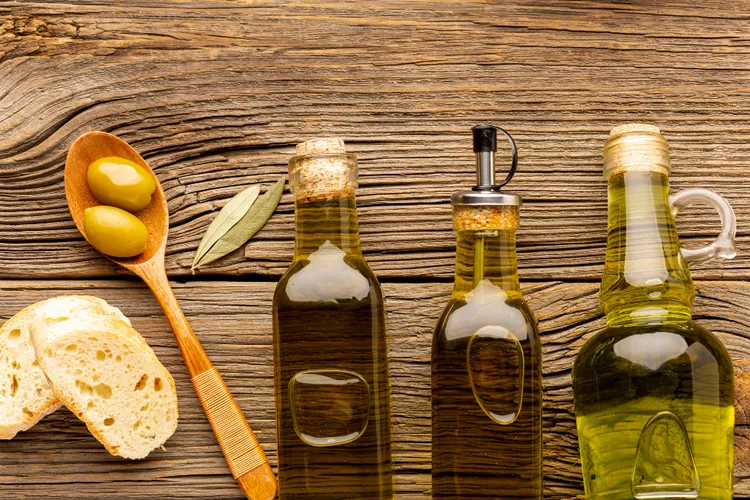
One tablespoon of olive oil is about 120 kcal and 14g of fat, whether it cost $6 a liter or $60. The price tag changes the flavor, the aroma and what the bottle is good for, but it does not change the numbers. That is worth knowing before you spend extra on a bottle you plan to fry chicken in.
The Main Types of Olive Oil
Most of the confusion comes from five grades that sit on the shelf side by side. They differ in how the oil was made and how much it was refined afterward.
- Extra virgin olive oil (EVOO): mechanically pressed from olives with no chemical refining, and it has to pass both a lab test for free acidity (0.8 percent or lower) and a tasting panel. It has the most flavor, from grassy and peppery to soft and buttery.
- Virgin olive oil: also mechanically pressed, but with a slightly higher acidity limit (up to 2 percent) and small flavor flaws allowed. It is less common in supermarkets.
- Olive oil (sometimes labeled "pure"): a blend of refined olive oil with a little virgin or extra virgin oil added back for flavor. The result is mild, golden and neutral.
- Light or extra light olive oil: the same refined style as plain olive oil, with an even milder taste. The word "light" refers to flavor and color only. It has exactly the same calories as any other olive oil.
- Olive pomace oil: extracted from the paste left over after the first pressing, using solvents and heat, then refined and usually blended with some virgin oil. It is the cheapest and most neutral grade and sits well in a deep fryer.
The practical split is simple. Extra virgin and virgin oils are unrefined and full of flavor. Everything else is refined and built for neutral cooking.
Label Words That Mean Less Than You Think
Bottles carry a lot of marketing language. A few terms are worth understanding so they do not steer your buying.
- Cold pressed: means the olives were crushed and the oil was extracted below a set temperature, around 27°C (80°F) in the European Union. Real extra virgin oil is almost always made this way, so on an EVOO bottle it is a nice detail and not a differentiator.
- First press: an old term from when presses worked in stages. Modern oil is made by centrifuge in one run, so there is no second press to compare it to.
- Pure: sounds premium and means the opposite. It is the refined and blended grade.
- Imported from Italy: can mean the bottle was filled in Italy, with olives from several countries. Look for where the olives were grown and harvested.
- Unfiltered: cloudy oil with tiny olive particles. It tastes fresh and vivid, but it goes stale faster than filtered oil, so it suits quick use.
Smoke Point: How Much Does It Matter?
The smoke point is the temperature at which oil begins to break down and give off visible smoke. It is the number most people use to decide what to cook with. These are typical ranges, and they shift with quality, freshness and free fatty acid levels:
- Extra virgin olive oil: about 190 to 215°C (375 to 410°F)
- Virgin olive oil: about 200 to 210°C (390 to 410°F)
- Olive oil and light olive oil (refined): about 230 to 240°C (450 to 465°F)
- Olive pomace oil: about 235°C (455°F)
Now compare those numbers to ordinary cooking. Sauteing happens around 150 to 180°C (300 to 350°F). Roasting vegetables in a hot oven runs 200 to 220°C (400 to 425°F), and the oil on the food stays cooler than the oven air. Pan-searing meat gets the pan surface hotter, but you rarely leave oil smoking in it for long. Deep frying sits around 175 to 190°C (350 to 375°F).
Extra virgin olive oil clears nearly all of that. Its smoke point is in the same neighborhood as many everyday vegetable oils, and its natural antioxidants make it resist breakdown better than the number alone suggests. The idea that you can never cook with extra virgin oil is a myth. The real argument for not frying in it is not safety. It is that heat strips away the delicate aromas you paid for.
Which Olive Oil to Cook With
Choose by method and by how much flavor you want to survive the heat.
- Sauteing onions, garlic and vegetables: everyday extra virgin oil works well. A medium-bodied bottle adds a gentle base flavor.
- Roasting vegetables, potatoes and chicken at 200°C (400°F) or higher: everyday extra virgin or regular olive oil. The browning happens either way, so a mid-priced bottle is the right call.
- Pan-searing steak, pork chops or fish: regular or light olive oil if you want a neutral taste and a very hot pan. Extra virgin works if you keep the heat moderate.
- Deep frying: refined olive oil or pomace oil. They are cheaper, more neutral and more stable at fryer temperatures. Using extra virgin here wastes money.
- Baking: a mild extra virgin or light olive oil in cakes, muffins and focaccia. A very peppery oil can taste sharp in a sweet bake, so pick a gentle one.
- Making mayonnaise or dressings with raw oil: choose a mild extra virgin. A robust bottle can turn bitter once blended hard.
For the bottle you cook with, think of olive oil as an ingredient with a job, not a luxury item. A reasonably priced extra virgin from a good producer is plenty. Save the expensive one for the table.
Which Olive Oil to Finish With
Finishing means adding oil after the heat is off, so every aroma stays intact. This is where a robust, peppery, fresh extra virgin oil earns its price. Use a tablespoon or less per serving, since the flavor is concentrated and it adds up quickly in calories.
- Soups and stews: a thin drizzle over lentil soup, minestrone, white bean stew or gazpacho adds brightness and a peppery finish.
- Beans and legumes: warm chickpeas or white beans with a good oil, flaky salt and lemon is a complete side dish.
- Pasta and grains: toss hot pasta with oil, garlic, black pepper and grated cheese at the end, not in the pan beforehand.
- Salads and raw vegetables: sliced tomatoes, cucumbers or shaved fennel with oil and salt need nothing else.
- Bread: dipping, bruschetta and grilled toast are where a premium oil really shows.
- Grilled fish, chicken and vegetables: a drizzle after the food comes off the heat gives you grill flavor and fresh oil flavor together.
- Hummus, yogurt and soft cheese: a pool of oil on top is a classic finish that is hard to improve on.
- Desserts: a small amount over vanilla ice cream with sea salt, or over citrus segments, is a surprisingly good pairing.
Flavor Profiles: Mild, Medium and Robust
Within extra virgin oil, the style varies widely. Sorting by intensity is more useful than sorting by country.
- Mild and buttery: soft, round, low bitterness. Good for baking, mayonnaise, delicate fish and anything you want to taste of the main ingredient. Many oils made from Arbequina olives fall here.
- Medium and fruity: balanced, with some green fruit notes and a little pepper. The best all-purpose style for sauteing, roasting and everyday dressings.
- Robust and peppery: grassy, bitter and sharp, often with a tickle in the back of the throat. Best as a finishing oil on beans, soup, grilled meat, bitter greens and bread.
A peppery cough after you swallow a spoonful is a good sign, not a defect. Bitterness and pepperiness come from the same compounds that make fresh oil resistant to going stale.
How to Taste Olive Oil at Home
Tasting takes two minutes and teaches you more than reading labels. Do it before you decide which bottle gets which job.
- Pour about a teaspoon into a small glass or spoon. Warm the glass in your palm for a few seconds and cover it.
- Smell it. Fresh oil smells like cut grass, green tomato, herbs or almonds. A smell of crayons, putty, old nuts or sweaty socks means it is stale.
- Take a small sip and let it sit on your tongue. Slurp a little air in to spread the aroma.
- Notice the bitterness on the tongue and any peppery sting in the throat. Both are signs of fresh, high-quality oil.
- Decide where it belongs. Strong and peppery goes on the table. Soft and neutral goes in the pan.
How to Read a Bottle Before You Buy
- Harvest date: the most useful date on the bottle. Choose oil from the most recent harvest. A "best by" date alone tells you much less.
- Dark glass or a tin: light is one of the main things that ruins olive oil. Clear bottles on a bright shelf are a risk.
- Specific origin: a named country, region or estate is a better sign than a vague "product of several countries."
- Protected designations and quality seals: PDO and PGI labels in Europe and independent certification seals can add confidence, though they are not a guarantee on their own.
- Size: buy the amount you will finish in a few months. A giant tin is only a bargain if you use it up while it is fresh.
- Price: very cheap extra virgin oil is a reason to be skeptical. Mid-range is often the sweet spot for cooking, and the premium bottles are for finishing.
How to Store It
Olive oil is not like wine, and it does not improve in the bottle. Heat, light and air all push it toward rancid. Keep it in a cool, dark cupboard away from the stove, not on the counter next to the burner. Close the cap tightly every time. Use a bottle within a few months of opening, and pour a small amount into a little dispenser for daily use so the main bottle is opened less often.
If the oil smells like crayons or old nuts, it has gone off. It will not make you sick, but it will make the food taste flat or stale. Throw out an old bottle and replace it. Do not use it up out of guilt.
The Two-Bottle System
The simplest way to use olive oil well is to keep two bottles on hand.
- The cooking bottle: a good everyday extra virgin, or regular olive oil if you cook at high heat a lot. Buy it in a larger size and use it freely for sauteing, roasting and baking.
- The finishing bottle: a smaller bottle of fresh, robust, single-origin extra virgin oil. Use it on food that is already cooked, and keep it away from the stove.
This approach costs less than using one premium oil for everything and tastes better than using one cheap oil for everything. It also solves the problem of a nice bottle going stale because you were afraid to use it.
Calories and Portioning
All olive oil, from the cheapest refined blend to a boutique estate oil, comes to about 120 kcal and 14g of fat per tablespoon, with no protein and no carbs. A teaspoon is about 40 kcal. Because oil is so dense in energy, pouring straight from the bottle is the biggest source of error when tracking. Two glugs can easily be 3 tablespoons, which is about 360 kcal.
Measure oil with a spoon or weigh it in grams for a few weeks until your eye is calibrated. A gram of olive oil is about 9 kcal, which makes the kitchen scale an easy tool for this. Add the oil as its own entry in your log. For meal prep, add the oil to the whole batch and divide by portions, as covered in the batch method for tracking cooked food. The macro calculator will help you set a daily target, and the meal planner and meal prep tool will build the oil into your meals instead of leaving it as a guess.
Common Mistakes
- Frying in premium oil. The heat erases the aroma, and you pay a premium for something you cannot taste. Use a cheaper bottle.
- Cooking in a cheap oil and then finishing with the same cheap oil. A tablespoon of a fresh, flavorful bottle on top of cooked food makes a much bigger difference than the oil in the pan.
- Storing the bottle next to the stove. Heat and light age it fast. A cabinet beside the oven is better than a shelf above the burner.
- Buying clear bottles of extra virgin on a bright shelf. Choose dark glass or a tin.
- Assuming "light" means fewer calories. It does not. The word describes flavor.
- Treating the smoke point as a hard cutoff. Oil that smokes is past its best, but ordinary cooking rarely reaches that. The more useful questions are how long the oil stays hot and whether you want its flavor to survive.
- Not measuring. Free-pouring is the fastest way to add a few hundred calories without realizing it.
Quick Reference: Which Oil for Which Job
- Everyday sauteing and roasting: mid-priced extra virgin olive oil
- Very hot searing: regular or light olive oil
- Deep frying: refined olive oil or pomace oil
- Baking: mild extra virgin or light olive oil
- Mayonnaise and emulsified sauces: mild extra virgin
- Salads, soups, beans and bread: robust, fresh extra virgin
- Finishing grilled food, hummus and pasta: robust or medium extra virgin, off the heat
Calorie, smoke point and shelf-life figures in this article are typical values and common guidance. They vary with the brand, the harvest and how the oil was handled, so check the label on the bottle in your own kitchen.
Latest